


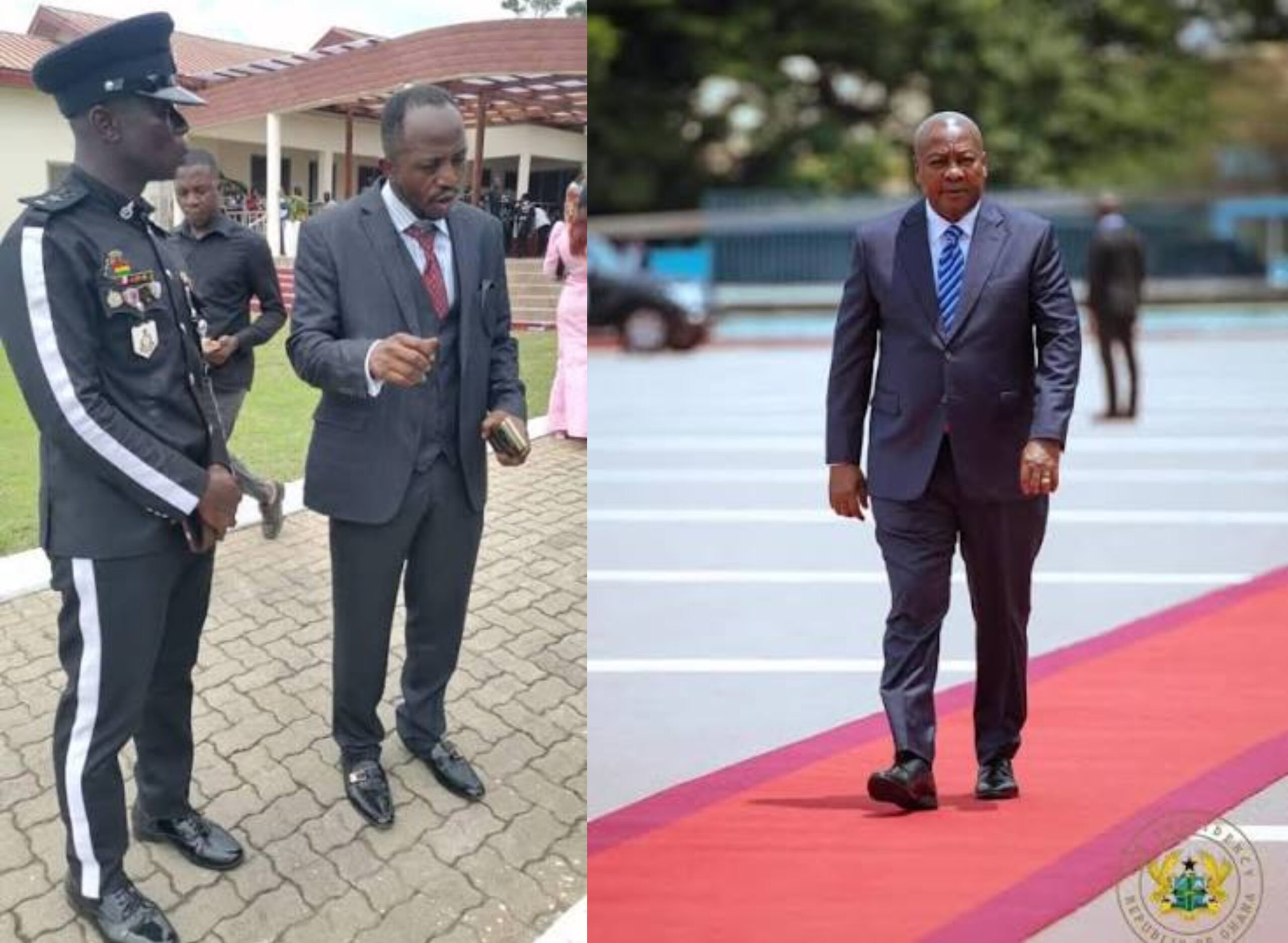
Stephen Atubiga’s latest warning about conditions at the Presidency has raised questions that go beyond staff welfare to the management of the security arrangements protecting President John Dramani Mahama.
In a Facebook post on November 17, the founder and leader of the National Liberation Congress (NLC) alleged that some personnel assigned to protect Mahama were working under duress, facing poor conditions and being prevented from returning to their parent security services.
“Your life is in more danger around your security than the external danger they protect you from,” he warned the President.
Atubiga has not provided publicly verifiable evidence of an internal threat to Mahama. However, this is not the first time in 2026 that he has raised concerns about the treatment of people working at the Presidency. His earlier warning in September makes the latest allegations particularly important to examine, even though the two posts concern different groups whose possible overlap has not been established.
What Atubiga Said in September
On September 9, Atubiga published a post addressed to Col. Abdulie and his deputy, Lt. Adonteng, whom he identified as the heads of security at the Presidency.
He alleged that 158 NDC grassroots members and National Security operatives stationed there were facing poor treatment, inadequate pay and arbitrary removal from duty.
“The 158 NDC Footsoldiers and grassroots National Security operatives posted at the Presidency are very hungry and angry,” he wrote.
He claimed that some had their identification cards taken from them and were sent home without being told when they would be recalled. According to him, some had remained at home for more than three months.
Atubiga also alleged that the personnel received GH¢1,000 monthly, with an additional GH¢1,200 provided through the Chief of Staff, bringing their reported take-home pay to GH¢2,200. He questioned whether that was sufficient for workers supporting families and said some could not report for duty because they lacked transport money.
His warning to the two officials was pointed: “The 158 National Security NDC footsoldiers and grassroots are all sitting on thorns against you people.”
He also warned that something could go wrong if their grievances were ignored, referring to an incident in which Nanka Bruce was allegedly manhandled.
The September post concerned NDC grassroots members and National Security operatives. The November allegations involve personnel assigned to protect Mahama, including individuals Atubiga says belong to the police and military. There is no evidence establishing that the two groups are the same.
Nevertheless, both posts raise questions about the treatment and management of personnel working at the Presidency.
The Latest Claims Raise More Direct Security Questions
On November 17, Atubiga alleged that nine out of every 10 personnel protecting Mahama were working under duress. He claimed some officers had tried to return to their parent police and military units but had been prevented from doing so for more than a year.
“They have all tried to exit the Presidency back to their various units, the police and the military base, and your security leadership has prevented them for over a year now,” he alleged.
He further claimed that some personnel had been threatened against discussing their grievances.
His complaints included inadequate food and drinking water, illness allegedly linked to the water provided, and delays in paying a GH¢200 daily feeding allowance for personnel accompanying the President on official trips.
Atubiga recounted an encounter with an officer who allegedly thanked him for raising the matter, saying: “Mr. Atubiga, thank you so much. We are suffering.”
These accounts remain unverified. But if personnel responsible for presidential protection are experiencing the conditions he describes, the implications extend beyond their individual welfare. Poor morale, unresolved grievances and strained relationships with supervisors can affect the effectiveness of a security operation.
What Are Security Personnel Sharing With an Outsider?
Atubiga says some personnel contacted him to report their grievances. That raises an important question about what information they shared.
An officer reporting inadequate meals, delayed allowances, or poor working conditions is not necessarily disclosing confidential security information. However, sharing details about presidential movements, deployment arrangements, protection methods or security vulnerabilities could compromise the President’s safety.
Police officers are subject to rules governing the disclosure of official information. Regulation 38(k) of the Police Service Regulations, 2012 (C.I. 76), restricts the disclosure of official information relating to the Police Service to unauthorised persons without the required permission.
That provision applies to police officers. Military personnel and members of other security agencies are governed by their respective rules.
The authorities must therefore establish what was disclosed before drawing conclusions about possible misconduct. The issue is not simply that an officer may have spoken to Atubiga, but whether any protected operational information was shared. Welfare complaints should not be confused with the unauthorised disclosure of security information.
Should Atubiga Be Asked to Substantiate His Claims?
Atubiga says he visited Jubilee House, interacted with personnel and was subsequently approached by officers who described their conditions. He has also indicated that he is keeping some sensitive information private until he gets an opportunity to meet Mahama.
If he possesses credible information about weaknesses in the President’s protection, it should be provided to the appropriate authorities through a secure channel.
The police or National Security should consider inviting him to substantiate his allegations and provide any evidence he has. Such an engagement would not mean accepting his claims as fact or presuming that the officers involved have committed wrongdoing. It would give the authorities an opportunity to establish what happened and determine whether further investigation is necessary.
Serving personnel should also have a confidential channel through which they can report legitimate grievances without fear of retaliation.
Welfare Complaints Are Not Mutiny
Atubiga’s claim that some officers have tried to leave their assignments also raises questions about discipline. However, dissatisfaction with working conditions, requests for transfers or conversations with an outsider do not automatically amount to mutiny.
Under Ghana’s Armed Forces Act, 1962 (Act 105), mutiny involves conduct such as combining to resist lawful military authority, disobeying authority in a manner subversive of discipline or impeding the performance of military duties.
There is no publicly available evidence that the personnel Atubiga refers to have engaged in such conduct. Any disciplinary assessment must be based on evidence and the rules applicable to the particular service.
The Presidency Must Establish the Facts
Atubiga’s allegations do not establish that Mahama faces an internal security threat, nor do they prove that the personnel he discussed in September are the same people involved in his November claims.
But the questions he has raised about welfare, morale and management deserve answers. Those assigned to protect the President carry responsibilities that demand discipline, professionalism and discretion. They must also have adequate working conditions and confidence in the leadership responsible for managing them.
The administration should establish whether the allegations are accurate, address any genuine welfare problems and investigate any improper disclosure of security information.
The effectiveness of presidential protection cannot be measured only by the number of officers deployed or the security equipment available. It also depends on the people behind those arrangements, their working conditions and their confidence in the institution they serve.

