


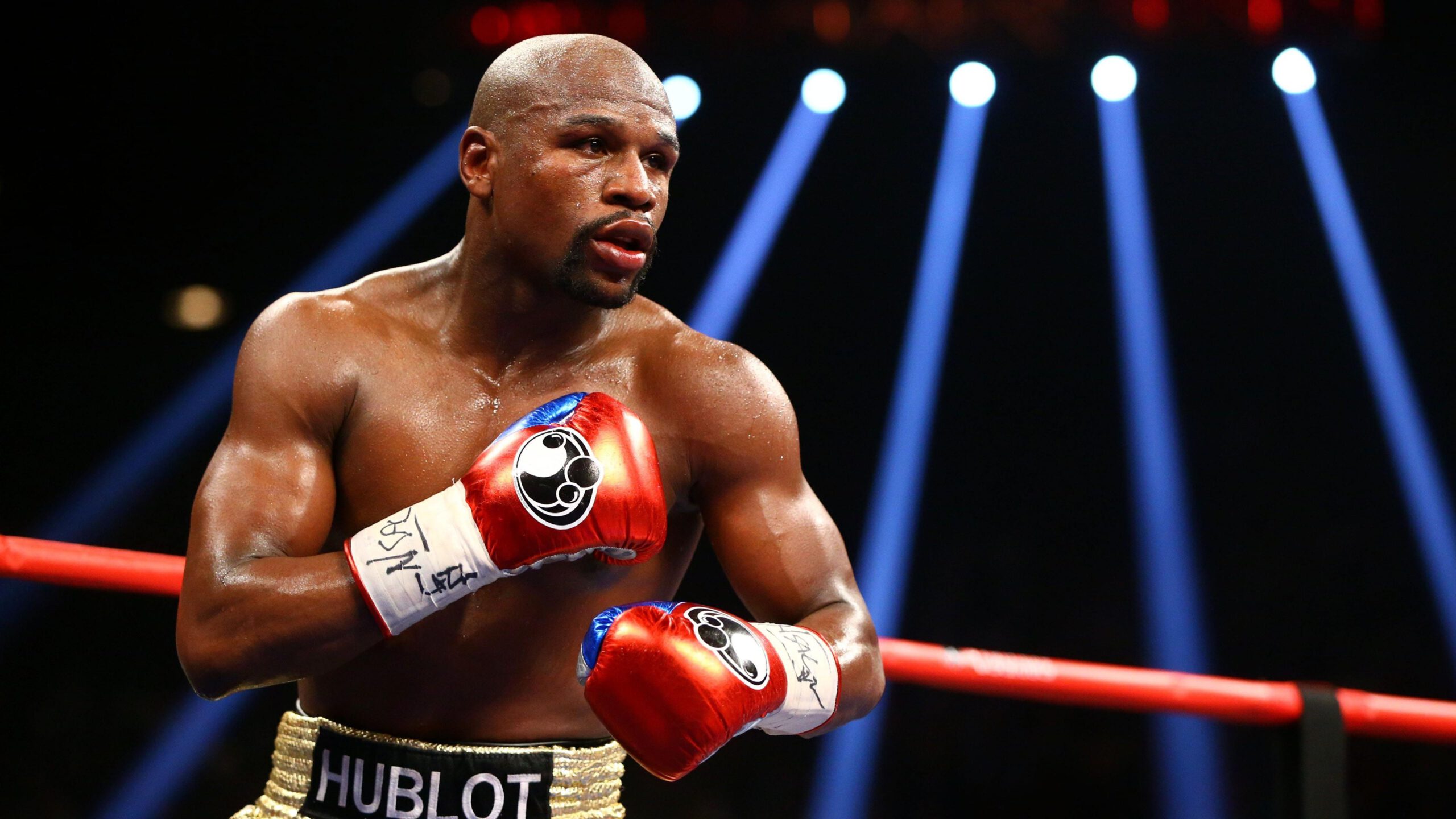
Floyd Mayweather Jr. walked away from professional boxing with something most fighters can only dream of: an unbeaten record of 50 wins and no defeats.
He had beaten some of the biggest names in the sport, won world titles in five weight divisions and spent more than two decades finding ways to win. For his supporters, that is enough to put him above every boxer who has ever stepped into a ring.
But is it really that simple?
Mayweather’s 50-0 record is extraordinary, but boxing history is full of fighters whose achievements cannot be measured by wins and losses alone. Sugar Ray Robinson faced an incredible range of opponents, Muhammad Ali took on some of the most feared heavyweights in history, while Manny Pacquiao achieved something no other boxer has managed by winning world titles in eight weight divisions.
So where does Mayweather really stand?
To answer that, it helps to look beyond his record and consider five things: the fighters he beat, the championships he won, how good he was at his peak, how long he stayed at the top and the challenges he took on during his career.
Mayweather Beat Some of the Best Fighters of His Generation
One of the strongest arguments in Mayweather’s favour is the quality of his opposition.
His record includes victories over Oscar De La Hoya, Ricky Hatton, Juan Manuel Márquez, Shane Mosley, Miguel Cotto, Canelo Álvarez and Manny Pacquiao. These were not ordinary opponents. They were established champions and some of the biggest names in boxing.
Take his fight against Diego Corrales in January 2001. Corrales was undefeated and widely regarded as one of the leading fighters in the super featherweight division. Mayweather dominated the contest before stopping him in the 10th round.
Then came De La Hoya in 2007. De La Hoya was an established star, and many expected his size and experience to trouble Mayweather. Instead, Mayweather boxed his way to a split-decision victory.
Later that year, he stopped Hatton, handing the British fighter his first professional defeat. He also beat Mosley in 2010, Cotto in 2012 and Álvarez in 2013.
His victory over Pacquiao in May 2015 was arguably the biggest fight of his career. After years of speculation and failed negotiations, the two finally met, with Mayweather winning by unanimous decision.
That is a formidable list of opponents. It is difficult to argue that Mayweather built his unbeaten record by avoiding every dangerous fighter of his generation.
However, the timing of some of those fights is worth considering.
Did Mayweather Fight Everyone at the Right Time?
The long wait for Mayweather versus Pacquiao remains one of boxing’s biggest talking points.
For years, the two were considered the best fighters of their generation. Fans wanted to see them fight when both were closer to their physical peaks, but the negotiations dragged on.
Floyd Mayweather Arrives in Ghana, Hints at Major Boxing Event With Cheddar
By the time they finally met in 2015, Mayweather was 38 and Pacquiao was 36. Both had enjoyed long, demanding careers.
Mayweather won, and he deserves full credit for that result. But the fight also left fans wondering what might have happened if they had met several years earlier.
There are other examples worth discussing. Mayweather was 36 when he faced the 23-year-old Álvarez in 2013. The Mexican was already a world champion, so it was a significant victory, but the age and experience difference was considerable.
Then there was his final professional fight against Conor McGregor in 2017.
Mayweather stopped McGregor in the 10th round to secure his 50th victory. The result officially counted towards his professional record, but McGregor was making his boxing debut after building his career in mixed martial arts.
There is nothing wrong with including the victory in Mayweather’s record. It was an official professional boxing contest. However, defeating McGregor is not the same achievement as beating an established world champion.
This is where the 50-0 argument becomes less straightforward. Every win counts on a record, but not every win carries the same historical significance.
His Skills Were Almost Impossible to Match
If there is one area where Mayweather’s claim becomes particularly strong, it is his technical ability.
At his best, he was incredibly difficult to hit cleanly. He understood distance, timing and positioning better than almost anyone of his generation. Opponents often struggled to land combinations because he seemed to know what they were about to do before they did it.
His defensive style was not simply about avoiding punches. He knew how to make opponents miss, create openings and punish mistakes with accurate counter-attacks.
He also changed as he got older.
The younger Mayweather was faster and more aggressive, while the fighter who competed in the later stages of his career relied more on experience, patience and defensive control. He understood that he did not need to throw the most punches to win a fight.
His performance against Álvarez in 2013 was a good example. Despite facing a younger opponent, Mayweather controlled the contest with his movement and timing.
He did something similar against Pacquiao, limiting the Filipino’s opportunities to attack and making it difficult for him to establish his usual rhythm.
There is a strong argument that Mayweather was one of the most complete defensive technicians boxing has ever produced.
But was he more talented overall than Sugar Ray Robinson? That is a much harder question.
Robinson had speed, power, balance and the ability to fight in several different ways. He could box beautifully from a distance or go on the attack and overwhelm opponents. His versatility is one reason so many boxing historians place him at the top.
Mayweather may have been the better defensive specialist, but Robinson’s all-round ability makes the comparison far from settled.
Can Mayweather’s Longevity Match Robinson’s?
Mayweather turned professional in October 1996 and fought his final professional contest in August 2017.
That is more than 20 years in the sport, although his career included periods of inactivity and retirement. More importantly, he remained successful as he moved through different weight divisions and adapted to changing opponents.
Not many fighters can maintain that level of consistency for so long.
But Robinson has an equally impressive, if different, story. His professional career spanned 25 years, and he competed far more frequently than modern boxers generally do.
Robinson won the world welterweight championship in 1946 and became a five-time world middleweight champion. He faced an extraordinary range of opponents and remained a major force across several stages of his career.
The boxing landscape was very different in Robinson’s time, so comparing the number of fights without considering the eras would not be fair. Still, his longevity and the volume of quality opposition he faced make his case difficult to dismiss.
Mayweather’s career was exceptional. Robinson’s was exceptional in a different way.
Why Muhammad Ali Still Belongs in the Conversation
Muhammad Ali did not retire with an unbeaten record. He finished with 56 wins and five defeats.
Yet few people would leave him out of a serious discussion about the greatest boxer of all time.
Ali became a three-time lineal world heavyweight champion and defeated some of the most formidable fighters in boxing history, including Sonny Liston, Joe Frazier and George Foreman.
His victories over Frazier and Foreman are particularly important. These were not routine championship contests. They were defining fights against opponents with very different styles and strengths.
Ali also lost more than three years of his career during his prime after being stripped of his title and kept out of boxing because of his refusal to be inducted into the US military.
His achievements after returning to the sport only added to his reputation.
Mayweather’s record is better on paper, but Ali’s heavyweight accomplishments and influence on boxing make him a serious contender for the greatest title.
What About Pacquiao, Tyson and Joe Louis?
Manny Pacquiao deserves special attention because his achievements offer a different definition of greatness.
He became the first and only boxer to win world titles in eight weight divisions. Moving through that many weight classes meant facing opponents with very different physical advantages while maintaining the speed, power and aggression that made him so difficult to fight.
His victories over De La Hoya, Hatton, Cotto and other established champions helped build an extraordinary career.
Mayweather beat him when they finally met, and that result cannot be ignored. But Pacquiao’s eight-division achievement remains one of boxing’s greatest accomplishments.
Mike Tyson is another name that inevitably comes up.
Tyson became the youngest world heavyweight champion in history at 20 years and 145 days. At his peak, he was terrifyingly fast and powerful. His combinations, head movement and ability to overwhelm opponents made him one of the most feared heavyweights ever.
His career, however, did not maintain that early dominance. His defeat to Buster Douglas in 1990 ended his unbeaten run, and later losses affected his standing among the greatest fighters in history.
Joe Louis offers a different example. He held the heavyweight championship from 1937 to 1949 and made 25 consecutive successful title defences. That level of sustained dominance is difficult to overlook.
Henry Armstrong also deserves mention. In 1938, he became the first boxer to hold world titles in three weight divisions simultaneously: featherweight, lightweight and welterweight. He achieved this when boxing had only eight traditional weight divisions.
These fighters achieved greatness in different ways. Tyson had a frightening peak, Louis dominated the heavyweight division for years, Armstrong made championship history and Pacquiao conquered more weight classes than anyone else.
That is why a perfect record cannot be the only measure.
What Do Boxing Historians Think?
Historical rankings are not the final word, but they can help put the debate into perspective.
The International Boxing Research Organization’s 2019 all-time pound-for-pound poll placed Sugar Ray Robinson first, followed by Henry Armstrong and Harry Greb.
Mayweather finished 22nd, while Pacquiao was ranked 25th.
The poll was based on the assessments of 31 voters. It is an informed historical perspective, not a definitive answer. Rankings will differ depending on how much importance someone gives to peak ability, championship achievements, opposition or longevity.
Still, Robinson’s position reflects the strength of his historical reputation. His achievements across the welterweight and middleweight divisions, combined with his longevity and opposition, have made him the benchmark for many historians.
Mayweather’s position in the poll does not mean he was the 22nd-best fighter in every possible ranking. It does show that his unbeaten record has not automatically convinced historical specialists that he surpassed the greats of earlier generations.
The PSK Verdict: Is Mayweather the Greatest of All Time?
Mayweather has a legitimate claim to the greatest boxer of all time. His 50-0 record is extraordinary, and his achievements go well beyond simply avoiding defeat.
He won world titles in five weight divisions, beat several of the leading fighters of his era and displayed a level of defensive skill that few boxers have matched.
But the argument becomes more complicated when his career is placed alongside the achievements of Robinson, Ali, Louis and Pacquiao.
The timing of the Pacquiao fight, the nature of the McGregor contest and the challenges Mayweather did not face are all relevant when judging his place in boxing history. They do not erase his achievements, but they prevent the unbeaten record from being treated as the final answer.
If the question is who produced one of the greatest unbeaten careers in boxing, Mayweather has an exceptionally strong case.
If it is who combined ability, opposition, longevity and historical achievement to produce the strongest overall career, Sugar Ray Robinson remains the more convincing choice.
Mayweather is undoubtedly one of the greatest boxers ever, but 50-0 does not automatically make him the greatest. For now, Robinson has the stronger claim when the entire history of boxing is taken into account.

