


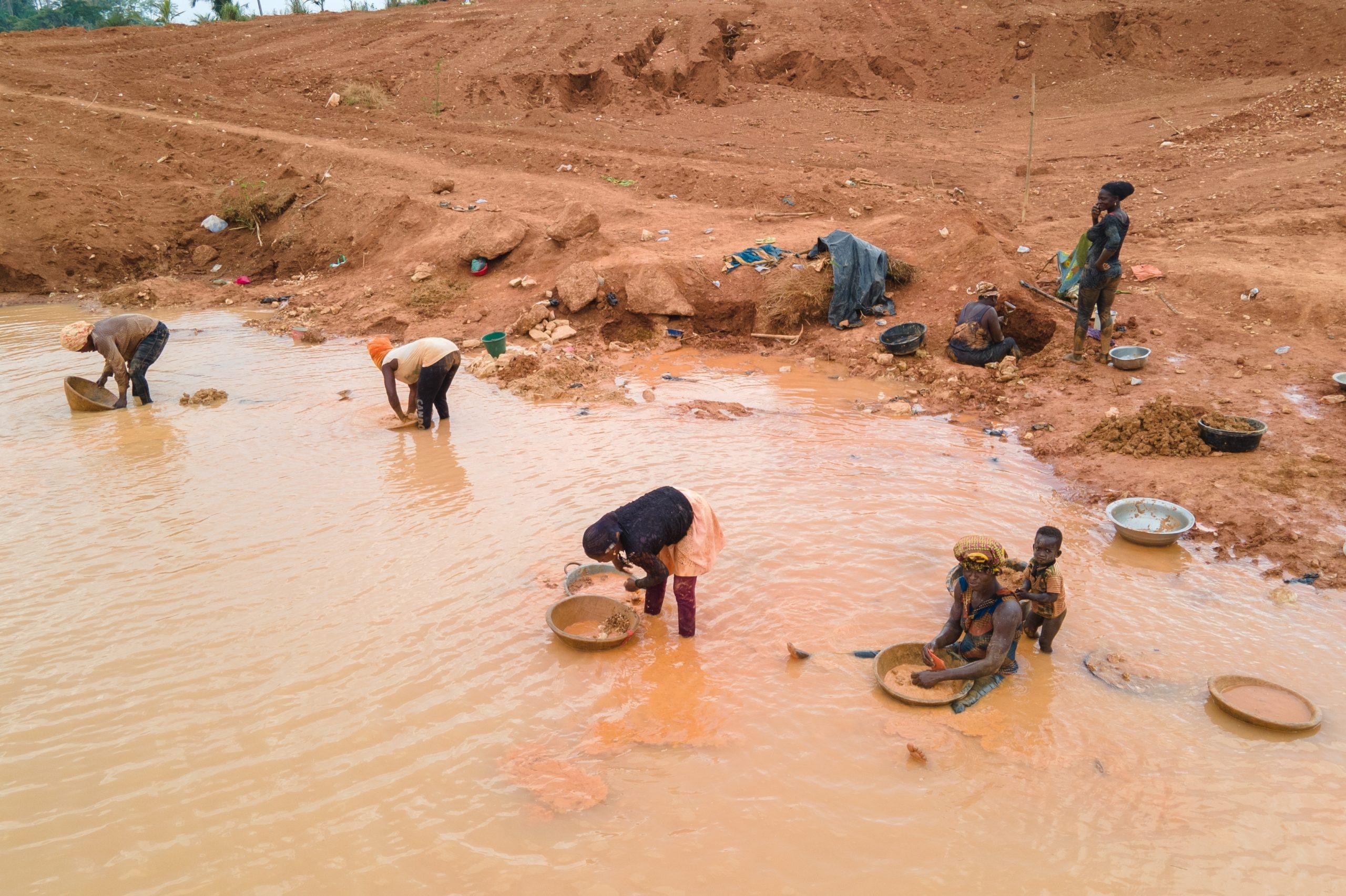
Residents in parts of the Bono Region could face worsening water supply difficulties as illegal mining threatens the Tano River, an important source of raw water for communities in the area.
The Public Utilities Regulatory Commission (PURC) has warned that increasing pollution along the river is making water treatment more difficult and could eventually reduce the volume of safe water Ghana Water Limited (GWL) can produce.
The warning comes as the Abesim Water Treatment Plant in the Sunyani Municipality already struggles to meet demand. The facility produces approximately 600,000 gallons daily against an estimated requirement of two million gallons, leaving a substantial gap between supply and demand.
PURC Executive Secretary Dr Shafic Suleman raised the concern during an inspection of the plant on Monday, November 23, 2026, as part of a two-day tour of utility service providers in the Bono Region.
He said water-quality monitoring over the previous three months had consistently recorded elevated turbidity levels, indicating that the raw water was becoming increasingly difficult to treat.
“We have observed a creeping problem with galamsey that has been occurring at the upper part of the Tano River,” Dr Suleman said.
He called on the Bono Regional Minister and counterparts in neighbouring regions to work together to stop illegal mining from causing further damage to the river.
Rising Pollution Could Increase Water Treatment Costs
Turbidity is the cloudiness of water caused by suspended particles such as soil and silt. When these particles increase, treatment plants may need more chemicals and additional processes to make the water suitable for consumption.
Dr Suleman said the Abesim plant could still manage the contamination levels recorded so far, but warned that further deterioration could increase operating costs and affect production.
“If we are not careful and stakeholders do not begin to talk about the issues of galamsey and it escalates, the cost of treating water will also increase. In the long run, it could even affect the already low volumes of water Ghana Water is able to process for the region,” he cautioned.
He also called for government investment to expand and upgrade the facility to improve water production for communities in the Bono and Ahafo regions.
Communities and Public Services Already Feeling the Impact
The latest warning follows reports of how pollution in the Tano River has affected residents and public institutions.
In May 2026, residents of Tanoso in the Tano North Municipality told the Ghana News Agency that illegal mining had made the river unsuitable for domestic use, forcing some households to rely on sachet water.
Trader Mary Ewusi described the financial pressure this had created.
“We can’t afford to buy the sachet water anymore and we need help now,” she said.
The Bono Regional Command of the Ghana National Fire Service has also reported difficulties using water from the river at the Abesim Headworks for firefighting because of pollution.
A source at the command told the Ghana News Agency that the service had been forced to obtain water from alternative sources, increasing its operational costs.
The consequences therefore extend beyond drinking water. Pollution is affecting household budgets and making it more difficult for public institutions to access a dependable water source.
PURC Calls for Action Before the Situation Worsens
Dr Suleman urged traditional authorities, local government representatives, community leaders and the media to support efforts to protect the Tano River.
He also called for cooperation among regional ministers in areas along the river’s catchment to address illegal mining before the pollution becomes more difficult and expensive to manage.
He warned against allowing the Bono Region to experience the severe water contamination problems already confronting other parts of the country.
“What is happening within the Western and Eastern regions is not funny at all, and we are not expecting the same challenges to be creeping into the Bono Region. So it is better we start now,” he said.
For communities already dealing with inadequate water supply, the warning presents another concern. If illegal mining continues to damage the Tano River, treating the water could become more expensive while the Abesim plant struggles to increase production.
Protecting the river is therefore not just an environmental responsibility. It is also essential to securing a more reliable water supply for communities that depend on it.

