


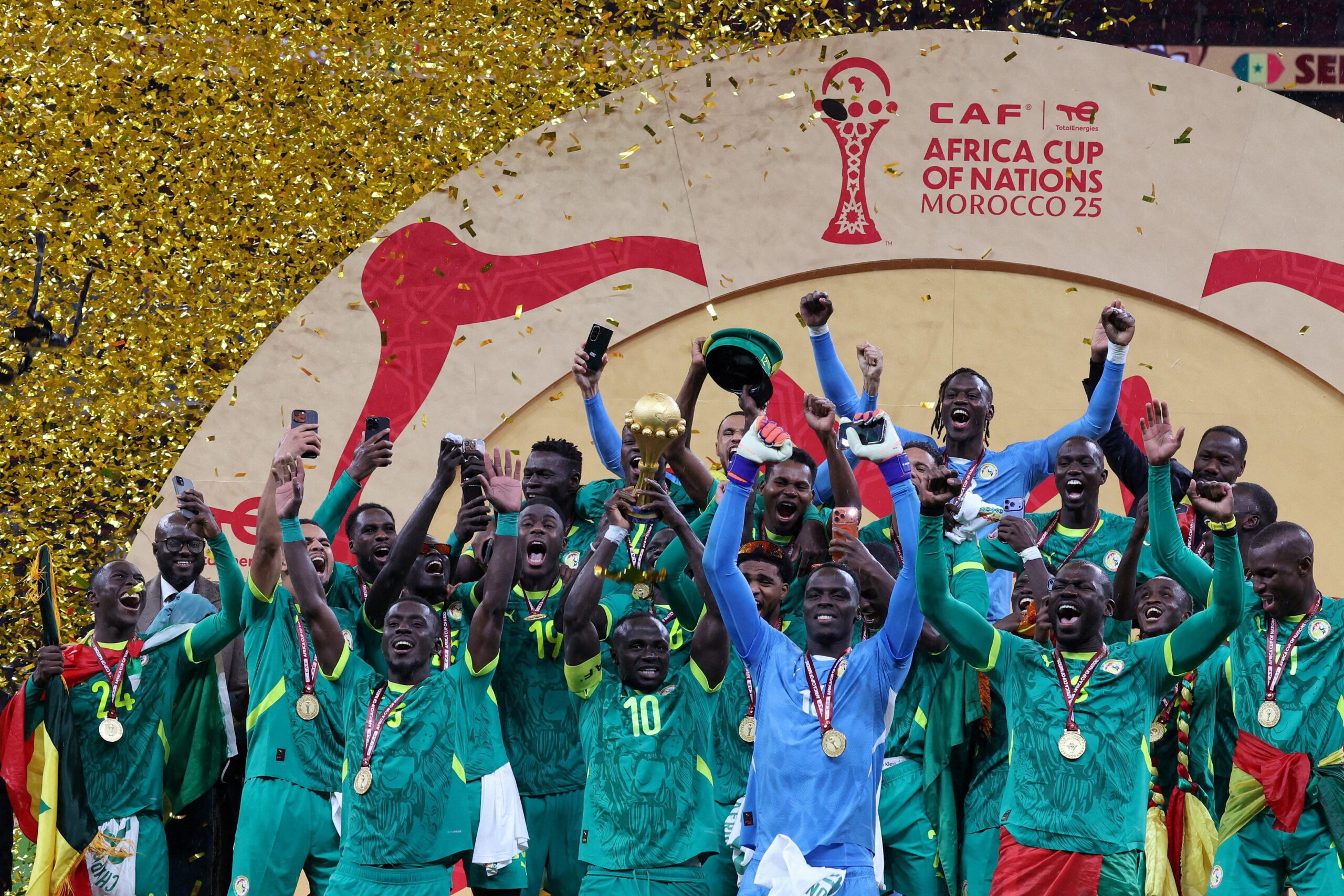
Senegal have their Africa Cup of Nations title back, but the Court of Arbitration for Sport (CAS) ruling that overturned the decision to award the 2025 trophy to Morocco is about more than correcting the tournament’s record.
At the heart of the dispute was a question that goes beyond the two countries: can football’s governing authorities overturn a match result because of a team’s conduct when the referee has allowed the game to resume and reach its conclusion?
CAS answered that question in Senegal’s favour.
On Tuesday, November 24, 2026, the tribunal unanimously upheld an appeal by the Senegalese Football Federation (FSF), setting aside the Confederation of African Football’s (CAF) Appeal Board decision and restoring the original result of the January 18 final: a 1-0 victory for Senegal after extra time.
The reasoning, however, is what makes the decision particularly significant for African football.
How a Walk-Off Became a Fight Over the AFCON Trophy
The controversy began during the final in Rabat, Morocco, when referee Jean-Jacques Ndala awarded the hosts a penalty in the closing stages of normal time.
Senegal’s players protested the decision, and several left the pitch. The match was interrupted for approximately 15 minutes before the players returned and the referee allowed play to continue.
Morocco’s Brahim Díaz missed the penalty. Senegal subsequently scored through Pape Gueye in extra time to win the match 1-0.
The result initially stood, but Morocco challenged it through CAF’s disciplinary process. On March 17, CAF’s Appeal Board ruled that Senegal had forfeited the final and awarded Morocco a 3-0 victory.
The decision relied on Articles 82 and 84 of the AFCON regulations, which deal with a team’s refusal to play or leaving the field without the referee’s authorisation.
Senegal rejected the ruling and took the matter to CAS, arguing that the referee’s decision to restart the match could not be overturned through the regulations Morocco had invoked.
That argument became central to the case.
Why CAS Sided With Senegal
The panel’s reasoning rested on what is known in sports law as the field of play doctrine.
In simple terms, the principle generally protects decisions made by referees during a match from being revisited by sports tribunals, except where there is evidence that the rules were applied arbitrarily or in bad faith.
CAS found that deciding whether to resume or stop the match fell within the referee’s authority.
Its statement explained:
“The Referee’s decision to resume the match or to stop it fell definitively within his sole authority.”
The panel noted that when Ndala blew his whistle to restart play, both teams had returned to the pitch and expressed their willingness to continue.
That mattered because the referee had not permanently abandoned the match. He had decided that play could resume, and the teams went on to complete the final.
CAS therefore concluded that his decision was protected by the field of play doctrine. It also rejected the argument that the decision was arbitrary simply because it had been made under intense pressure.
“The Referee’s judgment did not appear to have been affected by factors external to the game,” the panel stated.
This is an important distinction. CAS was not ruling that Senegal’s players were right to leave the pitch. It was deciding that the referee’s subsequent decision to restart the match fell within his authority and could not be overturned on the grounds presented in the appeal.
Why CAF’s Forfeiture Rules Did Not Apply
The other decisive issue was how CAF’s regulations should be interpreted.
Articles 82 and 84 were central to Morocco’s argument that Senegal’s conduct should have resulted in a forfeiture.
But CAS found that the provisions were intended to determine the outcome of a match when a team’s conduct leads the referee to abandon it permanently.
That was not what happened in Rabat.
The referee allowed the game to resume, both teams continued playing, and the final produced a result on the pitch.
CAS consequently concluded that Articles 82 and 84 were not applicable.
The distinction is significant because a temporary interruption followed by a restart is not the same as a match being permanently abandoned.
The panel was not saying that teams can walk off the pitch without consequences. It was saying that CAF could not use those particular forfeiture provisions to change the result of a match that the referee had allowed to continue and finish.
Did Senegal Escape Punishment?
No. Restoring the trophy did not wipe away the disciplinary consequences of the incident.
CAS specifically noted that the Senegalese Football Federation, coach Pape Thiaw and certain players had already been sanctioned by CAF in separate disciplinary proceedings.
Those sanctions were different from the appeal over the result of the final.
The ruling therefore did not amount to an endorsement of the players’ conduct. It overturned the decision to declare Senegal losers of the final and restore Morocco as champions, while leaving the separate disciplinary proceedings intact.
It is worthy of note that a team can face sanctions for misconduct without necessarily forfeiting a match whose result has been reached under the referee’s authority.
What the Ruling Means for CAF
The decision raises questions about how CAF interprets and applies its own competition regulations, particularly when a dispute threatens to change the outcome of a major tournament.
CAF’s Appeal Board had relied on Articles 82 and 84 to award Morocco the trophy. CAS subsequently found that those provisions did not apply to the circumstances of the final.
The case demonstrates why competition rules must be precise and why disciplinary authorities must distinguish between misconduct and the circumstances in which a match is considered abandoned.
It also highlights the limits of administrative intervention in decisions made on the pitch.
CAF remains responsible for organising its competitions and enforcing its regulations. But those responsibilities do not place its decisions beyond scrutiny. The Senegal appeal shows that an independent sports tribunal can overturn a governing body’s decision when the relevant rules have been misapplied.
For African football, the wider issue is how to ensure that disciplinary processes are consistent, transparent and predictable, particularly when the stakes involve an international title.
Is the Case Completely Over?
CAS has restored Senegal’s original 1-0 victory and upheld the FSF’s appeal unanimously.
However, the court has made clear that its media statement is only an unofficial summary. The full grounds for the decision have been issued to the parties, and the complete award is expected to be published unless the parties request confidentiality.
That written decision will provide the detailed legal reasoning behind the ruling.
There is also a limited possibility of challenging a CAS award before Switzerland’s Federal Supreme Court, but such challenges are restricted to specific legal and procedural grounds. They do not provide a general opportunity to reopen the entire dispute.
For now, the official outcome is clear: Senegal are the AFCON 2025 champions.
The Bigger Lesson From Senegal’s Return to the Top
Senegal’s title has been restored, but the case has exposed a difficult issue for football administrators.
How should a governing body punish a team’s misconduct without overriding the authority of the referee or changing the result of a match that has been completed?
CAS has drawn a distinction between those two responsibilities. It found that the referee’s decision to restart the final was within his authority, while the forfeiture provisions CAF relied on were not applicable because the match had not been permanently abandoned.
The ruling does not give teams permission to walk off the pitch in protest. Nor does it prevent CAF from disciplining players, coaches or national associations for misconduct.
What it does establish in this case is that the result of a completed match cannot be changed simply by applying regulations that do not fit the circumstances.
Senegal can celebrate the return of a title they won on the pitch. For CAF, the decision offers a reminder that the credibility of a competition depends not only on enforcing its rules, but also on interpreting and applying them correctly.

