

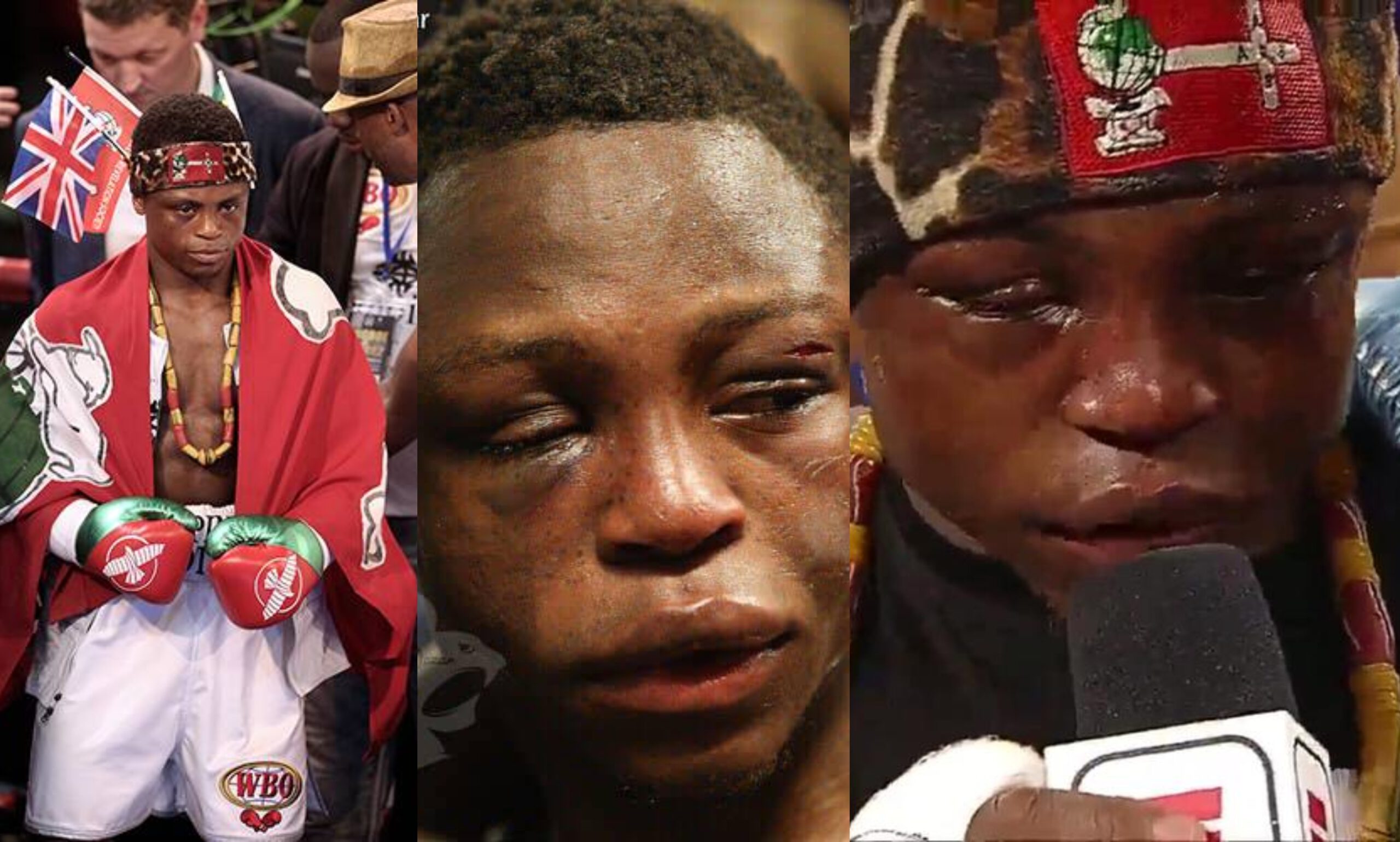
Former WBO super-bantamweight champion Isaac “The Royal Storm” Dogboe has opened up about the financial limitations, mental strain and physical demands that influenced his decision to retire from professional boxing at 31.
Dogboe announced his retirement in an emotional message to fans, bringing an end to a professional career that began in 2013 and included a world title, Olympic representation and 28 professional bouts. He later explained in an interview on Joy 99.7 FM’s Joy Sports Link that his decision was shaped by more than what happened inside the ring.
Ghana’s Black Stars Coaching Crisis: 10 Coaches in 20 Years, Still Searching for Stability
For Dogboe, retirement has also meant freedom from the demanding routine and psychological pressure that came with preparing for his next fight.
Dogboe admits he did not make as much money as he wanted
Despite becoming Ghana’s youngest world boxing champion at 23, Dogboe said his career did not deliver the level of financial success he had hoped for.
“As far as numbers are concerned in boxing, I don’t think I quite achieved the figure or the figures that I would have liked or loved to achieve,” he said.
“I didn’t make a lot of money in boxing, but I made some, which in the latter part anyway was a good thing. But hey, we could have done better. We could have done way, way, way better.”
His admission provides a candid look at a side of professional boxing that is often less visible than the world titles and big fights.
Dogboe reached the sport’s highest level when he stopped Jessie Magdaleno in the 11th round in Philadelphia in April 2018 to win the WBO super-bantamweight title.
But winning a world championship did not mean he had reached the financial position he ultimately wanted.
That reality became one of the factors he considered when deciding whether to continue competing.
The mental relief of becoming a “civilian”
Financial considerations were not the only reason Dogboe chose to walk away.
The former champion also described the psychological demands of professional boxing and the unusual sense of freedom that has come with no longer having to prepare for another fight.
“I just became a civilian,” Dogboe said, explaining that he is still adjusting to life outside the demanding routine of a professional fighter.
He recalled how his training schedule once required him to wake up at 4 or 5 a.m. to run. Now, he can wake up later without having to think about the possibility of facing an opponent in the ring.
“I wake up and realize I don’t have to think about anyone trying to take my head off or spin my jaw,” he said. “I can just get up at 9 a.m. These are the little joys that come with freedom.”
The comment captures the difference between the life of an active fighter and that of a retired one.
For years, Dogboe’s daily routine revolved around training, preparation and the expectation of physical confrontation. Retirement has given him the opportunity to experience what he described as the simpler pleasures of ordinary life.
He also recalled the intensity of some of his training environments in Ghana, including living in a space connected directly to the gym.
The sacrifices helped shape his career, but the former champion now appears ready to embrace a life in which boxing is no longer the centre of his daily routine.
Dogboe questions the support given to Ghanaian boxers
Dogboe also reflected on his experiences representing Ghana, particularly during his amateur career and at the 2012 London Olympics.
He expressed disappointment with what he regarded as insufficient support from officials when Ghanaian boxers faced disputed decisions.
Dogboe recalled seeing representatives from other countries formally challenge decisions by paying protest fees, while Ghanaian officials did not always take similar action.
“When you get the opportunity to represent Ghana, you feel like the support wasn’t there at the time, not from the general public, but from the people who were taking me to the competition,” he said.
“Other countries were contesting decisions and getting them overturned. Why didn’t we do the same? You have people putting their lives on the line… our people should fight a little harder for their people.”
His criticism reflects a broader concern about the support available to Ghanaian athletes competing internationally, but Dogboe’s comments were rooted in his own experience as a boxer representing the country.
He went on to build a professional career that eventually took him from Ghana to some of boxing’s biggest stages in the United States and Britain.
From youngest world champion to his final fight
Dogboe’s biggest achievement came on April 28, 2018, when he recovered from an opening-round knockdown to stop the previously unbeaten Jessie Magdaleno in the 11th round.
The victory made Dogboe Ghana’s youngest world champion at 23.
He successfully defended the WBO super-bantamweight title against Japan’s Hidenori Otake before losing the belt to Mexico’s Emanuel Navarrete in December 2018.
Dogboe lost the rematch against Navarrete in May 2019 but rebuilt his career after moving up to featherweight.
His resurgence eventually earned him another world-title opportunity against Cuba’s Robeisy Ramirez in April 2023.
Ramirez defeated Dogboe by majority decision in their contest for the vacant WBO featherweight title.
Dogboe’s final professional fight came against Britain’s Nick Ball in November 2023. Ball won the WBC featherweight final eliminator by unanimous decision.
Dogboe finished his professional career with 24 wins and four defeats, including 16 victories by knockout.
What Dogboe plans to do after boxing
Retirement has not completely taken Dogboe away from the sport.
Instead of immediately pursuing a prominent promotional or media career, he said he currently prefers working behind the scenes and advising other people in boxing.
“I feel like I can fit into any role, but right now I enjoy being backstage,” he said.
Dogboe said people already approach him for advice, including help with contracts, legal terms and navigating decisions within the boxing business.
Higher education is another priority.
With the demands of professional training now behind him, Dogboe said completing a university degree is part of his plans for the next stage of his life.
He also conducts private fitness training and has been encouraged to establish a gym, although he appears to be taking a measured approach to his post-boxing career.
For now, the former world champion seems more interested in building a life beyond the ring than rushing into another major professional commitment.
Dogboe leaves boxing with a 24-4 record, a world championship and a career that took him from Ghana’s amateur ranks to the biggest stages of professional boxing.
But his explanation for retirement reveals a different side of that journey.
After more than a decade of training to fight, Dogboe now has the freedom to decide what comes next.