


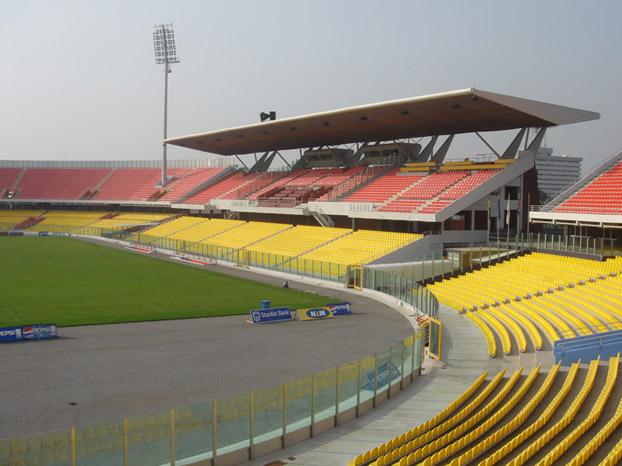
The government has allocated GH¢600 million to construct 10 multipurpose stadiums across the country. However, Ghana’s history of stadium maintenance problems raises questions about how the new facilities will be managed and funded after construction.
Ghana’s plan to construct 10 new regional stadiums could expand access to sporting facilities, particularly in regions that have long lacked modern venues.
The government has allocated GH¢600 million towards the project in the 2027 Budget, presented by Finance Minister Dr Cassiel Ato Forson on Thursday, November 12, 2026.
The amount forms part of the GH¢782 million allocated to the Ministry of Sports and Recreation for the 2027 financial year.
While the proposed investment is significant, Ghana’s experience with existing sports facilities raises an important question: will the government be able to maintain the new stadiums and keep them operational long after their construction?
A 2019 Auditor-General’s performance audit identified weaknesses in the maintenance and management of major sports facilities, highlighting the importance of addressing these issues before another major infrastructure programme begins.
What the GH¢600 Million Stadium Project Involves
Under the 2027 Budget, the government plans to begin construction of 10 multipurpose regional stadiums with capacities ranging from 5,000 to 12,000 spectators.
The proposed distribution is as follows:
- Western North, North East, Ahafo, Upper East, Upper West, Bono East and Oti regions: Seven stadiums, each with a capacity of 5,000 spectators.
- Savannah and Bono regions: Two stadiums, each designed to accommodate 10,000 spectators.
- Volta Region: One stadium with a capacity of 12,000 spectators.
Announcing the allocation, Dr Forson said the investment was intended to bring sporting opportunities closer to communities across the country.
The facilities are expected to support football and other sporting disciplines, host competitions and provide venues for grassroots sporting activities.
For regions with limited access to standard sporting infrastructure, the projects could create opportunities for talent identification and development.
However, the budget announcement does not provide a detailed breakdown of the estimated cost of each stadium, the construction timetable or the arrangements for managing the facilities after completion.
What Ghana’s 2019 Auditor-General’s Report Found
Ghana’s concerns about stadium maintenance are not new.
In its Performance Audit Report on the Sustainability of Sports Stadia in Ghana, dated December 30, 2019, the Auditor-General identified weaknesses in the management, maintenance and revenue-generation arrangements for the country’s major stadiums.
The audit examined the Accra Sports Stadium, Baba Yara Sports Stadium, Essipon Stadium, Tamale Stadium and Cape Coast Stadium.
Among its findings, the Auditor-General reported that the Ministry of Youth and Sports did not have a policy on stadium operations and maintenance, while the National Sports Authority (NSA) lacked a plan to operate and maintain the facilities.
The report also found that management of the five stadiums had not put adequate maintenance and action plans in place, despite having estate units staffed with engineers and other technical personnel.
On revenue generation, the audit identified inadequate measures to ensure that commercial facilities within the stadiums were used effectively to generate income for their physical and financial sustainability.
The Auditor-General recommended that the Ministry develop an operations and maintenance policy, while the NSA should establish systems to monitor implementation and ensure the facilities were managed sustainably.
These findings provide an important historical reference as the government prepares to invest in 10 additional facilities.
Has Anything Changed Since the Audit?
The 2019 report does not establish that all the problems it identified remain unresolved. There have since been efforts to improve the management of existing sports facilities.
In October 2024, the Ministry of Youth and Sports directed the National Sports Authority to strictly implement maintenance schedules for national stadiums, following concerns about the suitability of some facilities for international competitions.
In November 2025, Sports and Recreation Minister Kofi Adams announced that a facilities maintenance manual had been developed and was being applied by the Ministry and the NSA.
According to the minister, the manual included inspection schedules, standard operating procedures for pitch maintenance, anti-corrosion measures for steel structures at coastal stadia and protocols for dealing with encroachment.
The development is significant because it indicates that the authorities have taken steps to formalise stadium maintenance.
However, the key issue is how consistently these arrangements are being implemented, whether adequate funding is available and how compliance is monitored.
The government will also need to clarify whether the maintenance framework will apply to all 10 proposed regional stadiums.
The GH¢600 Million Allocation Raises Questions About Long-Term Costs
The government has earmarked approximately 77 per cent of the Ministry of Sports and Recreation’s GH¢782 million allocation for the construction of the 10 stadiums.
This leaves GH¢182 million for the Ministry’s other responsibilities, although the budget announcement does not provide a detailed breakdown of how the remaining amount will be distributed.
The construction cost is only one part of the financial commitment.
Each stadium will require resources for pitch maintenance, electricity, water, security, cleaning, staffing, equipment replacement and periodic repairs.
There will also be costs associated with keeping the facilities in a condition that meets the requirements for national and international competitions.
The government has not yet outlined how these recurring expenses will be funded or whether each facility will have a dedicated maintenance budget.
It will also be important to establish realistic revenue-generation arrangements. Multipurpose stadiums could generate income through football matches, athletics competitions, concerts, community events and other commercial activities.
However, such revenue should be supported by a clear management structure and should not make the facilities inaccessible to local clubs, schools and community sporting organisations.
Who Will Manage the New Stadiums?
The National Sports Authority is expected to play an important role in the management and administration of Ghana’s public sports infrastructure.
However, the government needs to clarify the specific arrangements for the 10 proposed facilities.
Will each stadium have a dedicated management team? Will regional authorities participate in their administration? Who will be responsible for maintenance costs, repairs and monitoring?
These decisions will influence how effectively the facilities are used and how much additional funding the government may need to provide after construction.
The government should also establish clear performance measures, including the condition of the facilities, frequency of use, revenue generated and opportunities created for athletes and local communities.
What the Government Must Get Right
The GH¢600 million programme could address an important infrastructure gap in Ghanaian sports, but its implementation will require more than completing construction contracts.
The government must ensure that maintenance arrangements are established before the stadiums are handed over. This should include dedicated funding, regular inspections and clearly assigned responsibilities.
Procurement and construction must also be transparent, with the public able to track project costs, contractors, construction milestones and completion dates.
Equally important is ensuring that the facilities serve the sporting needs of their respective regions. Their multipurpose design should provide opportunities for different disciplines rather than becoming venues used predominantly for football.
Ghana’s Stadium Investment Must Deliver Lasting Value
The proposed 10 regional stadiums could improve access to sporting facilities and create new opportunities for athletes across the country.
But Ghana’s experience, including the weaknesses identified in the Auditor-General’s 2019 report, shows why maintenance and management must be treated as essential parts of public sports infrastructure investment.
The maintenance manual announced in 2025 provides a framework that the authorities can build on. The next step is to demonstrate that it is adequately funded, consistently implemented and incorporated into the management plans for the new facilities.
Ultimately, the success of the GH¢600 million investment should not be judged solely by how many stadiums are completed. It should also be measured by whether they remain functional, serve their communities and provide lasting opportunities for Ghanaian sports.

