

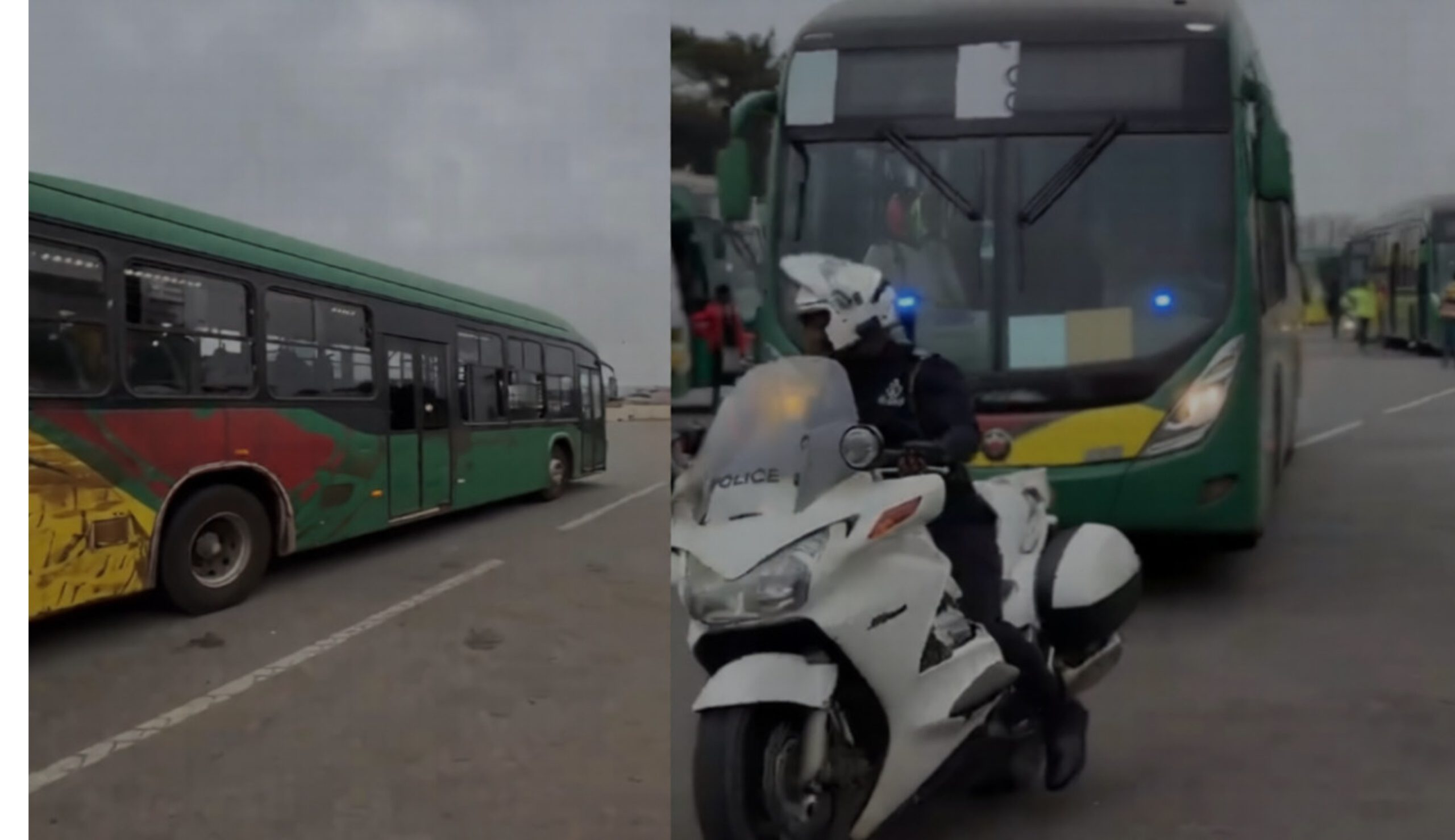
Commuters using the government’s Aayalolo contra-flow bus service in Accra are reporting shorter journey times and lower transport costs, with some calling for the pilot programme to be expanded and made permanent.
Introduced on September 29, 2026, the initiative allows authorised Aayalolo buses to use designated contra-flow lanes during peak traffic periods, helping them bypass congestion on some of the capital’s busiest routes.
Early accounts from passengers suggest the arrangement is making a difference, particularly for people travelling between Accra and surrounding communities. Commuters say extending the service could bring relief to more people who spend long hours on the road every day.
Commuters Report Significant Reductions in Journey Times
A report by the Ghanaian Times published on October 28, 2026, highlighted the experiences of passengers using the pilot service, particularly on the Adenta–Accra route.
One commuter, Foster, said a journey from Adenta to Accra that could take up to two hours in private commercial vehicles had been reduced to less than 30 minutes using the Aayalolo service.
He also put the fare at GH¢8, compared with approximately GH¢13 on private commercial transport.
Another commuter, Nancy Ohene, told the newspaper that travelling from Accra to Adenta took less than 45 minutes, allowing her to return home earlier.
The report also highlighted calls for the service to be extended to other routes. Edward Osae, a public servant who uses the Kasoa–Accra corridor, said the difference in travel time was significant and urged the authorities to sustain the arrangement.
During an observation of the evening service at about 5:30 pm, the newspaper’s reporters saw two motorbikes leading a convoy of 11 Aayalolo buses towards Adenta.
These are individual commuter accounts rather than independently measured average journey times across all four corridors. However, they offer an indication of the benefits some passengers say they are experiencing.
How the Aayalolo Contra-Flow Arrangement Works
The system allows authorised Aayalolo Bus Rapid Transit (BRT) buses to travel in the opposite direction of normal traffic on designated road lanes during specified peak periods.
Motorbike-riding police officers escort the buses, while other police personnel are stationed at major intersections to support the operation and manage traffic.
The service operates during two main periods:
- Morning: 6:00 am to 9:00 am
- Evening: 4:00 pm to 8:00 pm
By allowing the buses to bypass sections of heavy traffic, the arrangement is intended to make public transport faster and more predictable for commuters.
Four Major Accra Commuter Routes Covered
The pilot programme covers four major routes connecting Accra to surrounding communities:
- Amasaman–Accra
- Pokuase–Accra
- Adenta–Accra
- Kasoa–Accra
These corridors serve large numbers of people who travel into and out of the capital for work, education and other daily activities.
Extending the service could potentially benefit more commuters, although any expansion would require consideration of available buses, road conditions, traffic management and enforcement.
What Early Passenger Experiences Revealed
Feedback gathered during the first day of the programme also pointed to improvements in the commuting experience, alongside concerns about how the service was being operated.
On the Amasaman–Accra route, Juliet Agyapong welcomed the improved movement of buses but raised concerns about delays and the cost of alternative commercial transport.
She said fares from Accra to Amasaman varied, with passengers sometimes paying GH¢15 or more and, on some evenings, over GH¢20.
She also recounted an experience in which a bus reportedly waited for about two hours to load traders and their goods before departing.
In response to concerns about delays caused by waiting for buses to fill up, Transport Minister Mahama Ayariga said drivers should follow scheduled departure times rather than wait until their vehicles were full.
Another commuter, Emmanuel Boampong, said the service had reduced overcrowding and improved comfort. He had previously been concerned about the way some commercial drivers loaded passengers and stopped along their routes.
A driver operating between Amasaman and Accra, Philip, also reported completing one journey in about 35 minutes, including the sections around Abeka Junction and Accra. His account reflects one trip rather than an average travel time for the entire route.
Why the Government Wants More Motorists to Use Aayalolo
The government has presented the initiative as part of efforts to encourage more people, including private car owners, to use mass public transport.
Speaking ahead of the launch, Transport Minister Mahama Ayariga said the broader objective was to make public transport sufficiently attractive to persuade motorists to leave their private vehicles at home.
The approach is intended to encourage a shift towards mass transit, potentially reducing the number of private vehicles on the roads and easing congestion.
However, the success of that ambition will depend not only on the contra-flow arrangement but also on the reliability, affordability, availability and convenience of the bus service.
Can the Aayalolo Contra-Flow System Be Sustained?
The calls from commuters for the pilot programme to be expanded and made permanent raise an important question about its long-term operation.
The early passenger accounts suggest that the system can reduce travel times on some routes. But sustaining those benefits will require consistent bus operations, adherence to departure schedules and effective traffic management.
The concerns raised during the first day of the service also show why reliability matters. Long waiting times, inconsistent departure arrangements and the availability of buses could undermine the gains commuters are reporting.
There is also the question of whether the current arrangement can accommodate more routes and passengers without creating new traffic-management challenges.
For commuters who spend hours travelling to and from Accra, the prospect of shorter journeys and lower transport costs is significant. Their calls for expansion suggest an appetite for a wider service, but its long-term future will depend on the authorities’ assessment of its performance and their ability to address operational challenges.