
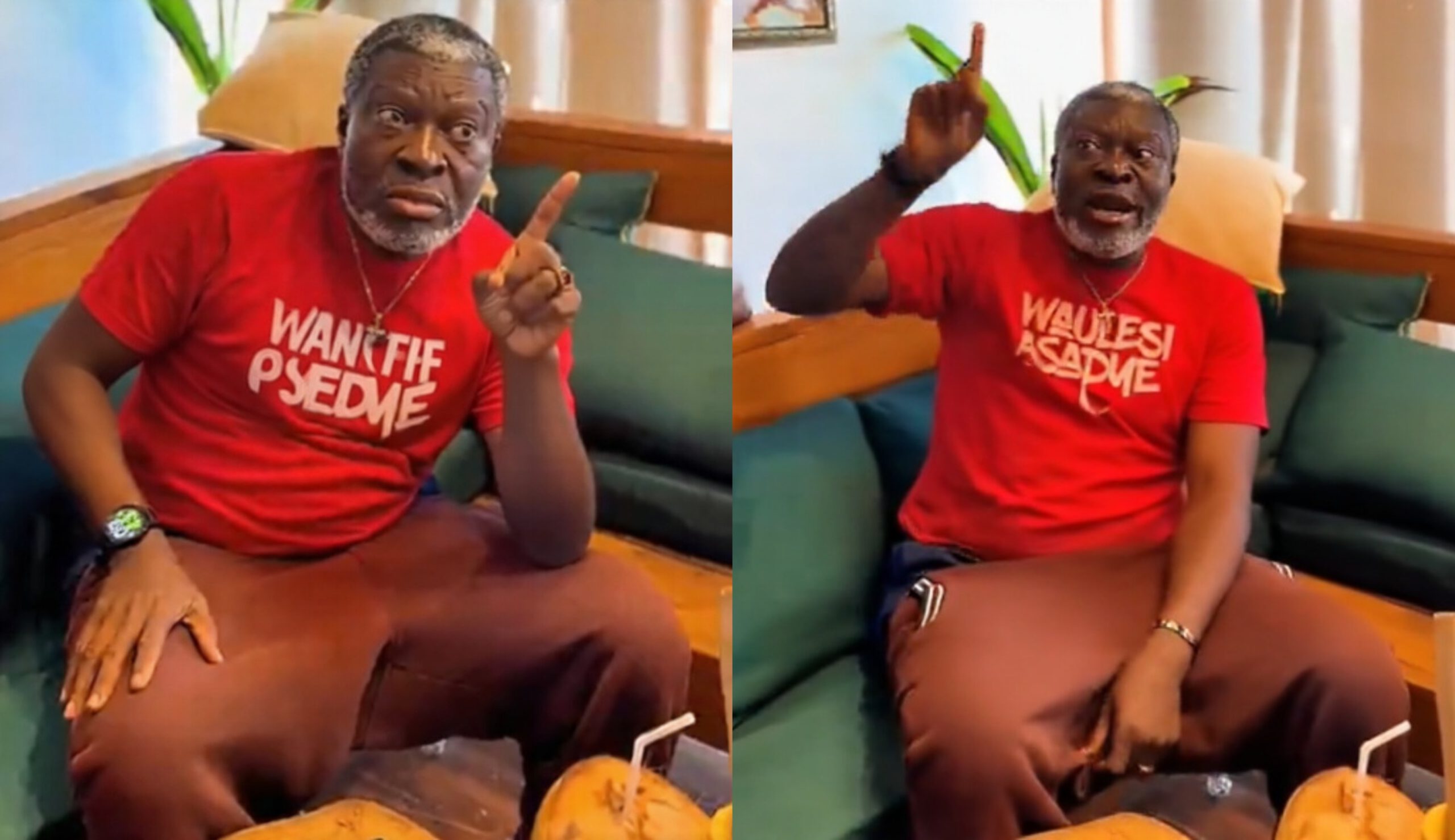
Nigerian actor Kanayo O. Kanayo has pointed to investment and filmmaking apprenticeship as factors behind Nigeria’s stronger movie industry, while veteran Ghanaian filmmaker Socrate Safo has blamed sections of the media for contributing to the decline of Ghana’s film industry.
Kanayo made his comments while in Ghana for Kwadwo Nkansah LilWin’s latest international film project, A Journey to Africa (Nzulezu), alongside Nigerian actors including Patience Ozokwor, Mike Ezuruonye, Zubby Michael and Destiny Etiko.
Kanayo Points To Investment And Apprenticeship
Kanayo argued that Nigeria has a larger pool of wealthy individuals willing to invest in film production.
“There are more rich men in Nigeria than Ghana. More rich men who are more generous,” he said.
He said some Nigerian investors were prepared to risk $10,000 or $20,000 on movie projects, giving filmmakers the financial backing to produce films and develop their craft.
Kanayo also pointed to differences in how practitioners were trained.
He said Nigerian filmmakers traditionally spent years learning through apprenticeship, while some Ghanaians who came to Nigeria to learn filmmaking stayed for only about nine months before leaving.
“Ghana started its apprenticeship under this kind of circumstance in Nigeria, but did not stay to finish the apprenticeship,” he said.
Recalling the early days of Nollywood, Kanayo said filmmakers also had to be resourceful because they often worked with limited production resources.
“We used to stop cars when we were making a movie in 1992, 1993 and say, ‘please, can we use your cars?’” he recalled.
Safo Says Media Coverage Hurt The Industry
Socrate Safo has offered a different explanation, focusing on the relationship between Ghana’s film industry and the media.
His earlier comments on the subject have also centred on the role of the media in the industry’s decline.
Speaking on Okay FM on July 15, 2026, Safo said negative commentary about local films discouraged audiences, investors and producers.
“There was a time the film industry helped the media make so much money in terms of adverts and promotions,” he said.
According to Safo, some broadcasters eventually shifted from promoting local productions to openly criticising them, with negative comments affecting how audiences viewed Ghanaian films.
“I had to go to them after the show to tell them that what they were doing was not good. They were damaging the industry,” he said.
Safo said the decline of the film industry eventually affected the media houses that had benefited from its advertising and promotional spending.
“Eventually, we saw the effects. The movie industry has declined and the money that used to flow towards the media people has dried up,” he said.
He argued that stronger promotion of local films would have helped keep money circulating within the wider creative industry.
Two Perspectives On Ghana’s Film Industry
Kanayo’s explanation centres on the production side, particularly access to capital and sustained training, while Safo points to the media’s role in promoting local films and shaping audience interest.
Their comments come as Ghanaian and Nigerian filmmakers continue to collaborate, with LilWin’s A Journey to Africa (Nzulezu) bringing several established Nigerian actors into a Ghanaian production.