
Ghana has introduced enhanced Ebola screening at its international airports and will monitor travellers arriving from countries experiencing ongoing transmission of the Bundibugyo virus for up to 21 days as part of efforts to prevent the disease from entering and spreading in the country.
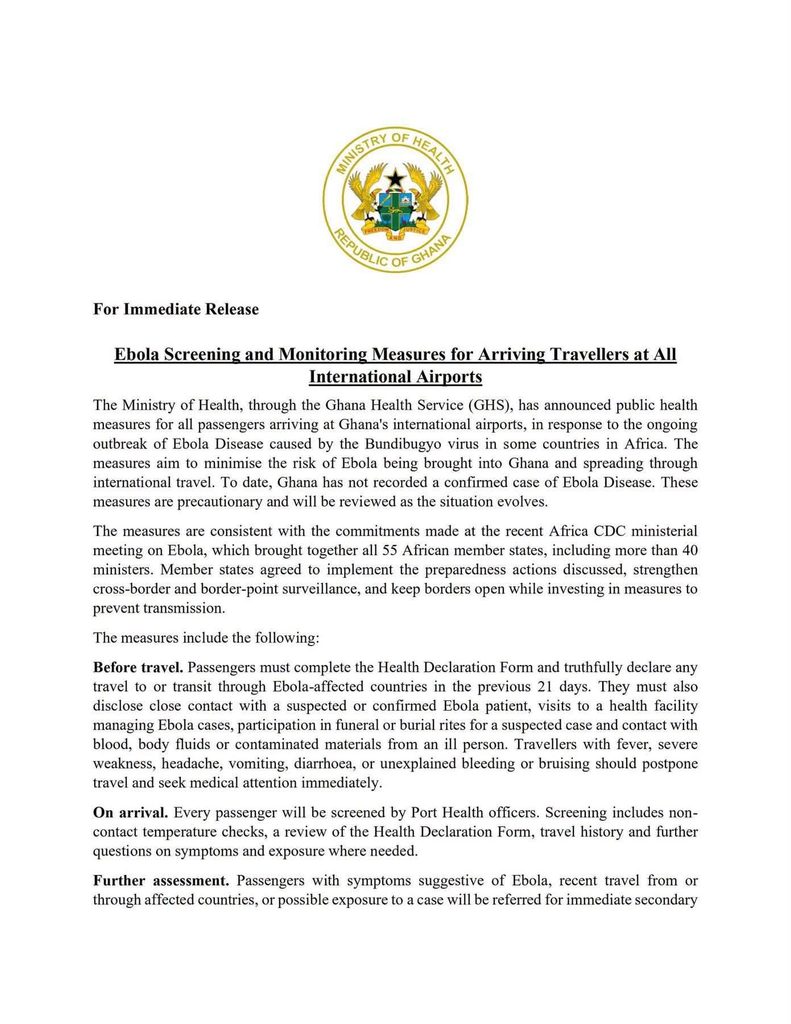
The Ministry of Health announced the measures on Tuesday, November 3, 2026, saying they would be implemented through the Ghana Health Service (GHS) in response to the ongoing outbreak in parts of Africa.
Under the arrangement, travellers arriving from affected countries will be contacted by the GHS for follow-up during the monitoring period. They must remain reachable and immediately report any symptoms that may develop.
The Ministry stressed that Ghana had not recorded any confirmed case of Ebola, describing the interventions as precautionary measures that would be reviewed as the outbreak situation evolves.
How Ghana Plans to Screen Arriving Travellers
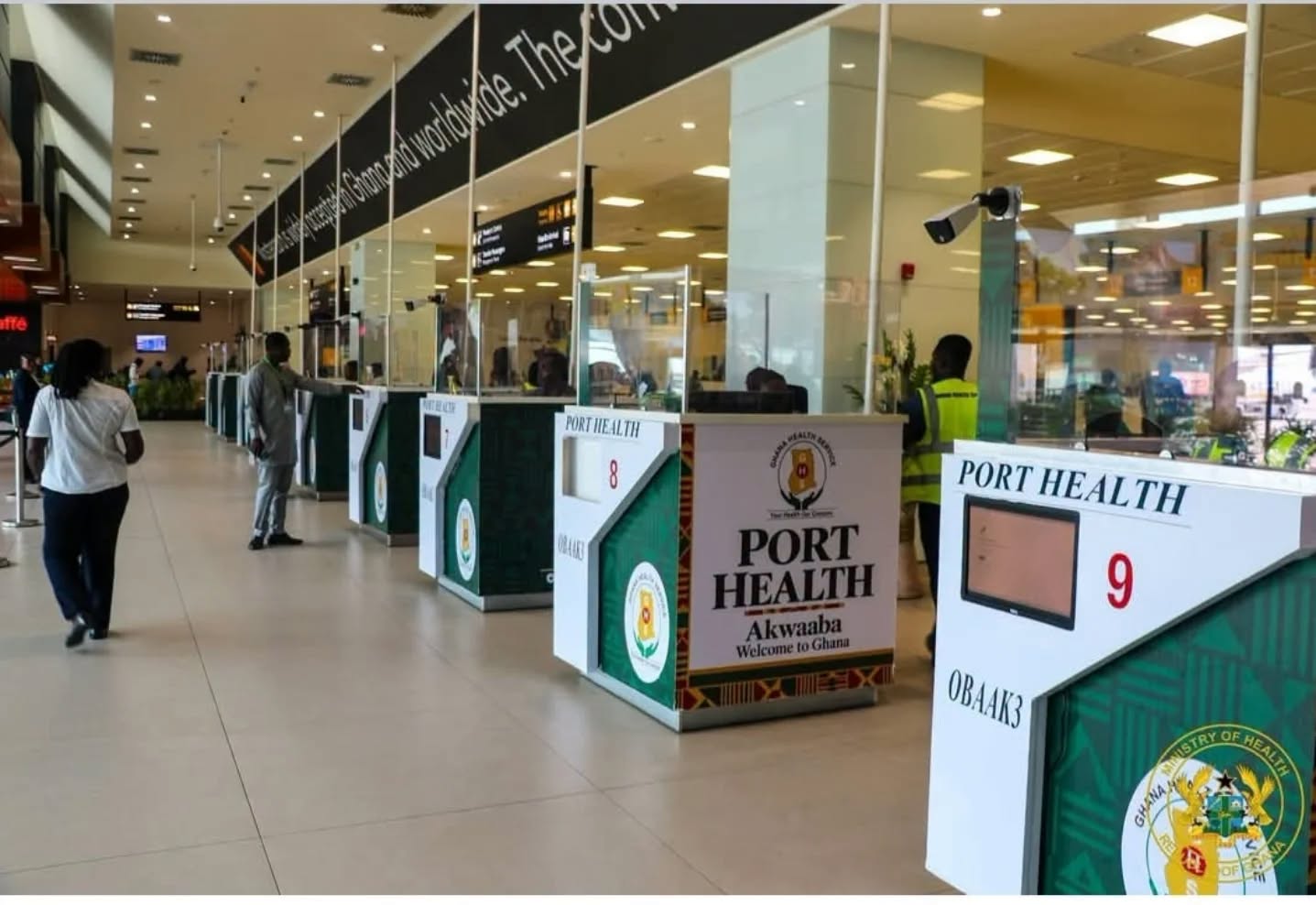
All passengers arriving at Ghana’s international airports will undergo screening by Port Health officers.
The process will include non-contact temperature checks, reviews of passengers’ health declaration forms and travel histories, as well as additional questions about possible symptoms and exposure where necessary.
Travellers must truthfully declare any visits to or transit through Ebola-affected countries within the preceding 21 days. They must also disclose close contact with a suspected or confirmed Ebola patient, visits to health facilities managing Ebola cases and participation in funeral or burial rites involving suspected cases.
The Ministry has further directed passengers to disclose any contact with the blood, body fluids or contaminated materials of an ill person.
Travellers arriving from countries with ongoing transmission will be monitored for up to 21 days. The GHS will contact them during this period, making it necessary for them to provide accurate and accessible contact details.
The monitoring requirement is intended to help health authorities identify symptoms that may develop after a traveller has entered Ghana, rather than relying solely on checks conducted at the airport.
What Happens to Travellers Showing Symptoms?
The Ministry has identified fever, severe weakness, headache, vomiting, diarrhoea, unexplained bleeding and bruising as symptoms requiring attention.
Travellers experiencing these symptoms have been advised to postpone their journeys and seek immediate medical attention.
Passengers who show symptoms suggestive of Ebola, have recently travelled from or through affected countries, or may have been exposed to an infected person will be referred for further assessment.
Where necessary, they will undergo temporary isolation and receive medical attention to determine whether they may have contracted the disease.
The Ministry has warned that passengers who provide false information, conceal symptoms or refuse to cooperate with screening could face public health measures under Ghanaian law.
Hotels and Conference Venues Also Included in Surveillance Measures
Ghana’s preparedness measures extend beyond its international airports to hotels, conference venues and similar establishments.
The Ministry has directed these facilities to report guests arriving from countries experiencing ongoing Ebola transmission to the nearest district health directorate.
They are also required to maintain the guests’ contact details to support follow-up by public health officials.
The directive is intended to strengthen surveillance beyond the points of entry and help health authorities reach travellers who may develop symptoms after arriving in the country.
The Ministry has urged passengers to cooperate with Port Health officers, provide accurate information about their travel histories and health status, and immediately report symptoms that may develop during the monitoring period.
It has also cautioned the public against spreading unverified reports about the outbreak, urging people to rely on official information from the Ministry and the GHS.
How Severe Is the Ebola Outbreak Across Africa?
Ghana’s precautionary measures come amid an outbreak of Bundibugyo virus disease, a form of Ebola, centred on the Democratic Republic of Congo (DRC).
The outbreak has resulted in cross-border transmission, with confirmed imported cases reported in Kenya and Nigeria.
According to the United States Centers for Disease Control and Prevention (CDC), 10,498 confirmed cases and 5,107 confirmed deaths had been recorded across the countries and locations included in its outbreak update as of October 31, 2026.
The DRC accounted for the overwhelming majority of the reported cases and deaths. Kenya also recorded confirmed infections, while Nigeria reported a case involving a traveller linked to the outbreak.
Uganda had previously reported cases during the outbreak, but its outbreak was declared over in August 2026.
The spread of the virus beyond the DRC has heightened concerns about cross-border transmission and the ability of countries to detect and respond to imported infections.
It has also increased the importance of surveillance at airports and other points of entry, particularly for countries receiving travellers from areas experiencing active transmission.
Ghana’s Precautionary Measures Amid Regional Ebola Concerns
The Ministry said Ghana’s interventions were consistent with commitments made at a recent ministerial meeting convened by the Africa Centres for Disease Control and Prevention (Africa CDC).
The meeting brought together African countries to discuss preparedness, cross-border surveillance and measures to limit the spread of the virus.
According to the Ministry, participating countries agreed to strengthen surveillance and preparedness at border points while keeping their borders open and investing in measures to prevent transmission.
Ghana’s decision to introduce airport screening and follow-up monitoring forms part of those broader efforts to reduce the risk of imported infections.
Although the country has not recorded a confirmed case, the Ministry has said the measures will remain under review as the outbreak develops.