


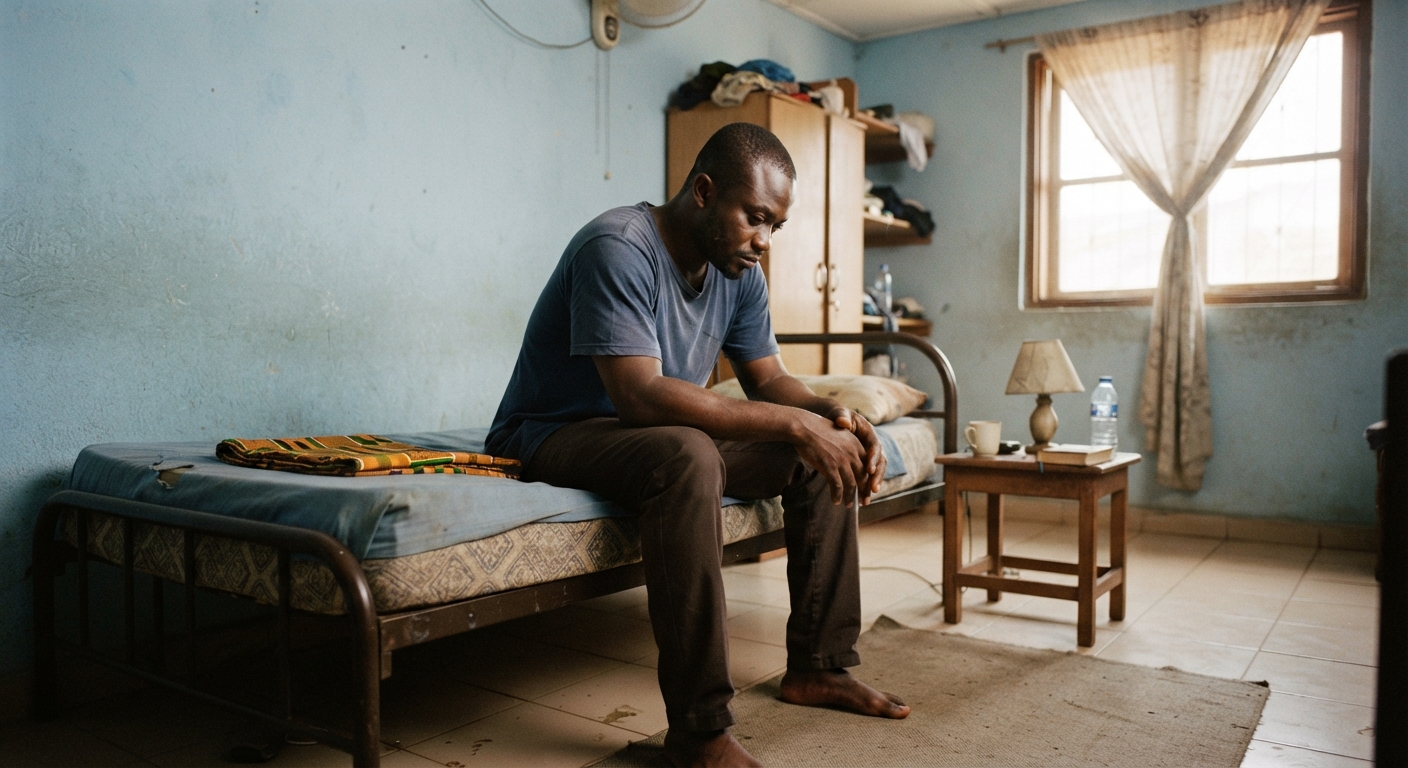
Ghana’s suicide data reveal a troubling gender difference. Women are more likely than men to report having considered suicide or attempted it, but recorded deaths show that men account for a far greater share of people who die by suicide.
The figures appear contradictory at first. They are not necessarily so. They measure different aspects of suicidal behaviour, and together they expose a serious challenge for mental health support and suicide prevention in Ghana.
The 2023 Ghana STEPS Survey found that 4.6 per cent of women aged 18 to 69 had considered attempting suicide in the previous 12 months, compared with 3.1 per cent of men. Yet data from the Births and Deaths Registry, examined in Ghana’s 2026 National Suicide Situational Analysis, showed that men accounted for approximately three to nearly five times as many recorded suicide deaths as women.
Understanding that difference matters. It challenges assumptions about who is at risk, highlights the importance of reaching people before a crisis becomes fatal and raises questions about how accurately Ghana records suicide deaths.
What the 2023 Ghana STEPS Survey Found
The 2023 Ghana STEPS Survey provides one of the clearest national snapshots of suicidal behaviour among adults.
It found that 3.8 per cent of adults aged 18 to 69 had considered attempting suicide during the 12 months before the survey. The proportion was higher among women, at 4.6 per cent, than men, at 3.1 per cent.
The survey also found that 2.7 per cent of women and 1.8 per cent of men reported having attempted suicide. Overall, 2.3 per cent of respondents reported an attempt.
These findings do not mean that women account for more suicide deaths. They show that more women in the survey reported suicidal thoughts and attempts. Recorded deaths are a separate measure, drawn from a different source.
That distinction is important because the number of people who experience suicidal thoughts or survive an attempt cannot, on its own, tell us how many people will die by suicide.
The survey also revealed a major gap in access to professional support. Only 9.1 per cent of people who had considered suicide said they had sought professional help.
In other words, more than nine out of every 10 people who reported having considered suicide had not sought professional assistance.
That finding deserves as much attention as the gender difference. It suggests that many people experiencing suicidal thoughts may be struggling without the support of a trained professional.
Why Are More Men Dying by Suicide?
The 2026 National Suicide Situational Analysis presents a different picture when it comes to deaths.
According to reporting on the analysis by the Ghana News Agency, Births and Deaths Registry data showed that male deaths were approximately three to nearly five times the number of female deaths.
The analysis also found that people aged 35 to 60 accounted for about 51 per cent of recorded suicide deaths. This points to the need to look beyond the assumption that suicide prevention is primarily a concern for young people.
The reasons behind the gender difference are complex. They cannot be reduced to one explanation, and the available figures do not establish that every man who dies by suicide shares the same circumstances.
However, research in Ghana has identified economic pressure, expectations around masculinity and the stigma attached to financial dependence as factors that can deepen distress among some men.
A 2023 study by University of Ghana psychologist Johnny Andoh-Arthur examined the experiences of relatives of nine men who died by suicide. The researchers interviewed 21 close relatives to understand how economic difficulties had affected the men’s relationships before their deaths.
The study found that some men experienced a crisis of identity when they could no longer fulfil the expectation that they should provide financially for their families. Losing income or becoming dependent on relatives could bring feelings of shame, loss of respect and social rejection.
The researchers also found that the expectation that people should seek support from family could become complicated when men asking for help faced ridicule or taunts.
The study does not suggest that financial hardship alone causes suicide. Mental health conditions, relationship difficulties, chronic illness, trauma and other pressures can also contribute to suicidal behaviour. Its findings nevertheless help explain why rigid expectations about what it means to be a man can make it harder for some men to acknowledge distress and seek help.
For men who feel that their worth is tied to their ability to provide, losing a job or struggling financially may become more than an economic setback. It can affect their sense of identity and their relationships with people around them.
That is why suicide prevention must also address the social pressures that discourage people, particularly men, from speaking openly about emotional and financial difficulties.
The Reporting Problem: Ghana May Be Missing Most Suicide Deaths
There is another complication in interpreting Ghana’s figures: the country does not capture every suicide death in its official health records.
At the launch of the National Suicide Situational Report in September 2026, Dr Kwadwo Marfo Obeng, Medical Director of Accra Psychiatric Hospital, said Ghana could be recording less than 10 per cent of estimated suicide deaths through the District Health Information Management System (DHIMS).
He said about 90 deaths were recorded through DHIMS, equivalent to 0.29 deaths per 100,000 people, compared with an estimated national rate of 8.5 per 100,000.
The gap is substantial.
Dr Obeng explained that some deaths occurring in homes and communities were never reported to health facilities or the Police before burial. In other cases, people who died after a suicide attempt reached hospitals, but the records captured immediate physical causes of death rather than suicide.
As he explained: “This information doesn’t make it into the DHIMS because it was never recorded in the hospital records.”
Stigma has also affected the information families and communities provide, while the criminalisation of attempted suicide before 2023 may have discouraged accurate reporting.
The country also has several sources of mortality information, including DHIMS, the Births and Deaths Registry, the Police and research institutions. However, the systems are fragmented, and gaps in transferring cause-of-death certificates can prevent information from being properly captured.
This matters when interpreting the gender figures. The Births and Deaths Registry data provide an important indication of the difference between male and female deaths, but under-reporting means the recorded numbers should not be mistaken for a complete count of every death.
Decriminalisation Was a Step, Not a Complete Solution
Ghana decriminalised attempted suicide in March 2023 through an amendment to the Criminal Offences Act. The change was an important shift away from treating people experiencing suicidal distress as criminals.
However, removing criminal penalties does not automatically remove stigma, improve access to treatment or ensure that people seek help.
DHIMS recorded about 90 suicide deaths in 2022 and 2023, rising to approximately 134 after the legal change before falling again to around 90 in 2025. The Births and Deaths Registry also recorded a 276 per cent increase between 2023 and 2024.
These changes should be interpreted carefully. An increase in recorded deaths after decriminalisation does not, by itself, prove that suicide became more common. Improved reporting may account for part of the increase.
Dr Obeng cautioned that legal reform alone would not produce lasting change.
“The change in the law in itself is not enough to make a sustained change in behaviour. We need to keep on at it,” he said.
That means continuing public education, reducing stigma, improving mental health services and making it easier for people to seek support without fear of judgement.
What the Figures Mean for Suicide Prevention
The data point to a prevention challenge that cannot be addressed through a single intervention or by focusing on one gender.
Women reporting higher levels of suicidal thoughts and attempts need accessible support, early intervention and a stronger response to the pressures affecting their mental health.
At the same time, the higher number of recorded deaths among men calls for greater attention to the barriers that may prevent them from seeking help. Financial hardship, unemployment, relationship difficulties and the pressure to meet social expectations can leave some men feeling unable to speak about what they are experiencing.
The low rate of professional help-seeking is particularly concerning. If only 9.1 per cent of people who considered suicide sought professional help, then awareness campaigns must go beyond encouraging people to talk. They must also make support accessible, confidential and easier to obtain.
Families, workplaces, schools, faith communities and health professionals all have a role to play. Recognising distress, listening without ridicule and helping someone access professional care can make a difference.
The media also has a responsibility. Professor E. Nii-Boye Quarshie, President of the Association for Suicide Prevention Ghana, said: “Media plays a critical role in suicide prevention. How suicide is reported can either protect lives or put vulnerable individuals at risk.”
The comment was made in a WHO Ghana report on efforts to strengthen responsible suicide reporting. It reinforces the need for journalists to avoid sensationalism, respect the dignity of people affected and provide information that encourages help-seeking.
For anyone experiencing suicidal thoughts, support is available through the Mental Health Authority’s toll-free helpline on 0800 678 678. Anyone in immediate danger should seek help at the nearest hospital emergency department or call 112.
The Bigger Picture
Ghana’s figures tell two important stories. More women reported suicidal thoughts and attempts in the 2023 survey, while recorded deaths show that men die by suicide at substantially higher rates.
Neither finding should be used to minimise the experiences of the other group. Suicidal thoughts and attempts are serious, whether or not they result in death, and the higher number of recorded male deaths demands urgent attention.
The figures also expose the limits of Ghana’s suicide data. Better reporting is essential if policymakers are to understand the scale of the problem, identify the groups most at risk and direct resources where they are needed.
Ultimately, the question is not which gender is suffering more. It is why so many people are reaching a point of crisis without getting help, and what Ghana can do to change that.

