


Some tertiary institutions in Ghana are offering programmes with accreditation for only about half of their courses, according to the Ghana Tertiary Education Commission (GTEC), which has warned that institutions found operating below the required standards could face restrictions on fresh admissions for up to two years.
The disclosure comes as GTEC conducts a nationwide audit of doctoral programmes, amid concerns that some universities are expanding PhD enrolment without the academic staff, facilities and supervisory capacity needed to maintain quality.
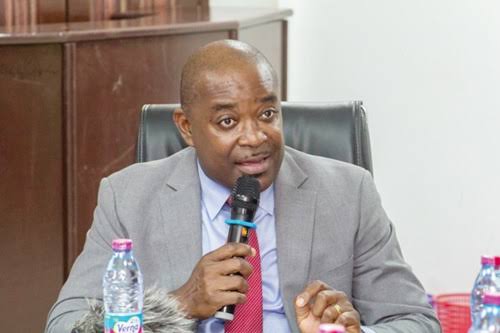
Speaking on Joy News’ PM Express on Tuesday, November 24, GTEC Deputy Director-General Professor Augustine Ocloo said the Commission had identified institutions where only about 50% of the programmes being offered were accredited.
He also raised concerns about universities admitting large numbers of doctoral candidates without adequate supervision and the resources needed to support their research.
The Commission plans to complete the audit within a month, after which institutions will be assessed on their ability to meet the requirements for the programmes they offer.
Institutions Could Face Two-Year Restrictions
Professor Ocloo warned that institutions found to have inadequate academic capacity could be prevented from admitting fresh students into affected programmes for up to two years.
He explained that the restrictions would allow departments time to address weaknesses before resuming admissions.
However, he indicated that existing students would not ordinarily be required to abandon their programmes.
The Commission is also examining whether institutions have maintained the academic standards and resources they presented when they initially secured accreditation.
The audit will consider accreditation status, student enrolment, the availability and qualifications of supervisors, research facilities, completion rates and the integrity of thesis examinations.
GTEC intends to deploy four or five teams to assess information submitted by tertiary institutions.
Professor Ocloo said the Commission expected the data analysis to be completed within a week, with recommendations subsequently presented for consideration.
He also sought to reassure universities that the temporary restriction on new PhD programme applications would not become a prolonged disruption.
“So, for how long, as the GTEC DG has indicated, just after the audit, and this audit wouldn’t take more than a month to complete,” he said.
Why UTAG Is Challenging GTEC’s Approach
While supporting the need to protect the quality of doctoral education, the University Teachers Association of Ghana’s University of Ghana branch has questioned the decision to temporarily freeze applications for accreditation of new PhD programmes nationwide.
Its president, Dr Jerry Joe Harrison, argues that universities which have spent years developing new doctoral programmes should not be held back because other institutions have failed to meet accreditation requirements.
Speaking on Joy News’ PM Express, he said GTEC already had the authority to take action against institutions that breached its regulations.
“If institutions are not following GTEC’s norms and rules, GTEC has every power to visit them to withdraw the accreditation if they’ve actually violated the rules,” he said.
Dr Harrison explained that developing a doctoral programme requires considerable investment, including preparing documentation, establishing facilities, undergoing inspections and sometimes working with foreign academic partners.
He questioned who would bear the cost if universities that had invested in new programmes were unable to secure accreditation because of the nationwide restriction.
“Accreditation is not an instantaneous something; it’s a process,” he said.
He also raised concerns about programmes awaiting reaccreditation and the implications for students already enrolled in them.
The UTAG-UG president maintained that GTEC should strengthen its monitoring and sanction institutions that fail to comply, rather than apply a restriction that could affect universities that have met the necessary requirements.
What the Freeze Actually Means for PhD Applicants
The controversy has partly been fuelled by confusion over whether GTEC’s directive prevents universities from admitting students into all doctoral programmes.
It does not.
GTEC Director-General Professor Ahmed Jinapor Abdulai has clarified that admissions into existing accredited PhD programmes can continue.
The temporary freeze applies to applications from institutions seeking accreditation to introduce new doctoral programmes while the Commission reviews their existing offerings.
Universities that satisfy the requirements after the audit will be allowed to submit applications for additional programmes.
GTEC has also indicated that institutions with compelling reasons for introducing new doctoral programmes could have their applications considered on a case-by-case basis during the period.
The clarification is important for prospective students. Those applying to an existing accredited PhD programme are not affected by the temporary restriction, although they should still verify the accreditation status of the specific programme.
The Bigger Question About Quality in Ghana’s Universities
Ghana needs more researchers, academics and specialists, but the expansion of postgraduate education must be supported by the resources required to deliver it.
A university’s ability to admit doctoral students is not, by itself, evidence that it can provide the supervision and research environment expected of a PhD programme.
GTEC’s audit therefore presents an opportunity to establish whether institutions are maintaining the standards on which their accreditation was originally granted.
But the Commission will also need to explain the extent of the accreditation gaps it has identified, how affected institutions will be treated and how students will be protected when a programme falls short.
For now, the findings raise a difficult question for Ghana’s tertiary education sector: how can universities expand access to advanced education without compromising the academic standards that give their qualifications value?

