


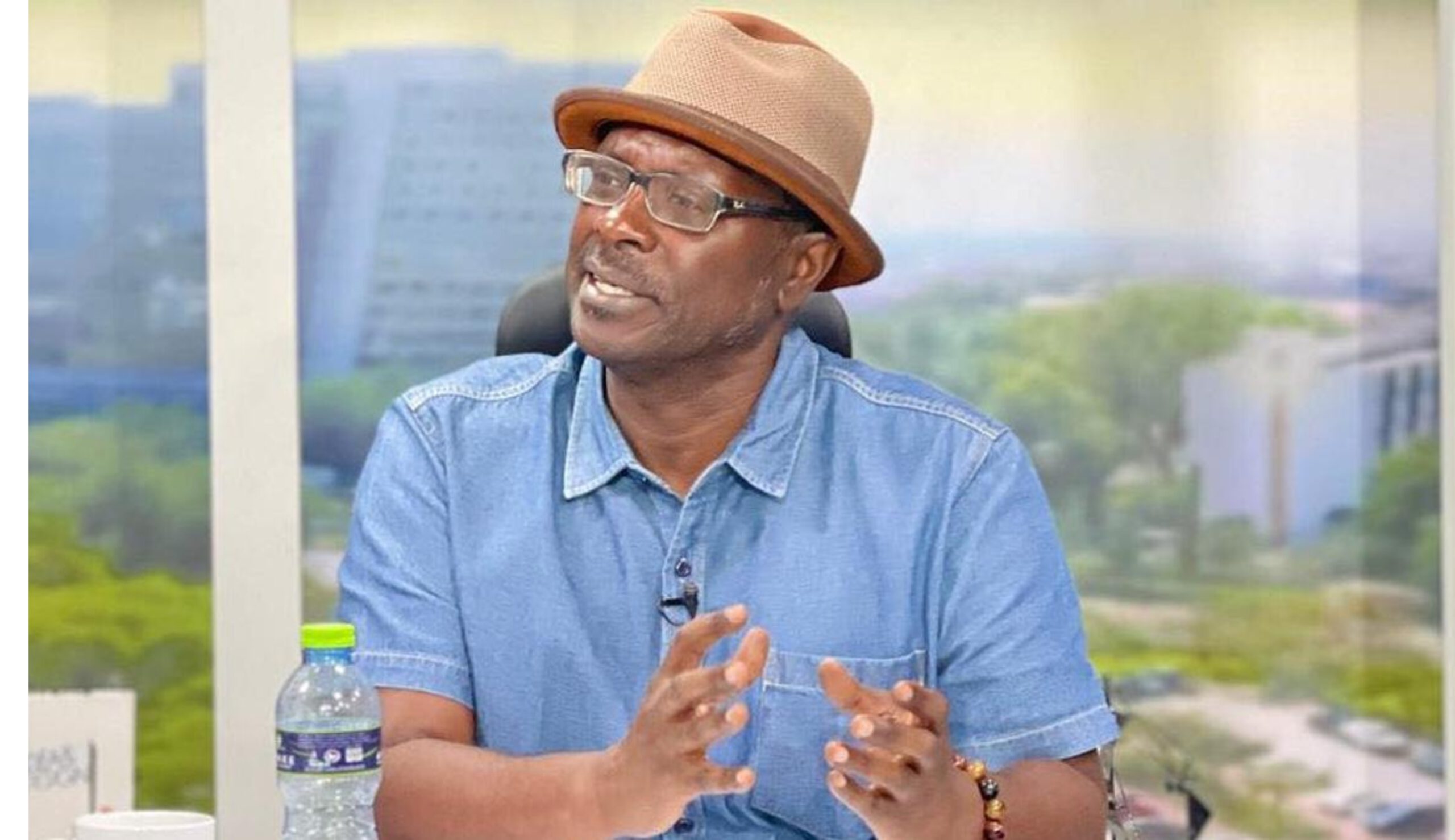
US-based Ghanaian legal scholar and anti-corruption campaigner Professor Kwaku Asare has questioned the growing cost of contesting internal political party elections in Ghana, warning that expensive campaigns could undermine equal participation and increase the risk of corruption.
He has called on the country’s major political parties to reduce the financial demands associated with seeking executive positions, arguing that the cost of securing political office should not be beyond the reach of ordinary party members.
In a commentary published under his popular persona, GOGO, on Monday, October 12, 2026, Prof Asare examined the filing fees charged by the governing National Democratic Congress (NDC) for its national executive elections and compared them with figures previously charged by the opposition New Patriotic Party (NPP).
His analysis also highlighted the amount candidates spend on delegate transportation and other campaign logistics, expenses he believes should be managed centrally by the political parties.
NDC Filing Fees Significantly Higher Than NPP Figures
Prof Asare drew attention to differences in the filing fees for comparable executive positions in the two parties.
According to the figures he cited, the NDC charges GH¢100,000 for the National Chairman position, compared with GH¢50,000 in the NPP.
The NDC’s filing fee for General Secretary is GH¢80,000, while the corresponding NPP figure is GH¢25,000.
Other positions also show significant differences. The NDC charges GH¢70,000 for National Organiser, against GH¢10,000 in the NPP, while Communications Officer aspirants pay GH¢50,000 in the NDC and GH¢10,000 in the NPP.
For Youth Organiser, the figures are GH¢40,000 and GH¢8,000 respectively.
Prof Asare also compared the NDC’s current charges with the fees the party reportedly imposed in 2018, when it was in opposition.
His analysis showed that the National Chairman filing fee had increased from GH¢10,000 to GH¢100,000, while that for General Secretary rose from GH¢8,000 to GH¢80,000.
The National Organiser fee increased from GH¢6,000 to GH¢70,000, representing a rise of approximately 1,067 per cent.
The comparisons formed part of his broader question about whether the cost of administering internal party elections has increased enough to justify the sharp increases in filing fees.
Nana Akomea’s GH¢2.8m Delegate Transport Bill Raises Questions
Beyond the official charges paid by aspirants, Prof Asare questioned the additional financial burden candidates face in transporting delegates to party conferences.
He cited an account by Nana Akomea, who contested the NPP’s First Deputy National Chairman position but was unsuccessful.
Akomea reportedly disclosed that he paid GH¢400 in transport fares for each of more than 7,000 delegates who attended the party’s recent conference.
That would amount to more than GH¢2.8 million in transportation expenses alone.
Prof Asare questioned why political parties do not take responsibility for organising delegate transportation rather than leaving individual candidates to bear the cost.
“₵2.8 million for transportation? That money could buy a bus!” he wrote.
He argued that centralised arrangements by party secretariats could reduce campaign expenses and prevent aspirants with greater financial resources from gaining an advantage through their ability to pay for delegate logistics.
Seven Questions About the Cost of Political Power
Prof Asare raised seven questions about the financial demands associated with internal party elections and their implications for Ghana’s democracy.
Among the issues he challenged political parties to address are whether filing fees are intended to cover election administration or generate revenue for general party activities, and what accounts for the differences in charges for similar positions.
He also questioned whether people without substantial personal wealth or influential financial backers can compete fairly for leadership positions.
Other concerns centred on the influence of campaign financiers, the potential exclusion of young people from party leadership, and whether the actual cost of organising internal elections has increased at the same rate as filing fees.
He further asked whether being in government has contributed to higher financial expectations surrounding internal party positions.
His concerns reflect a wider debate about whether the increasing financial demands of political participation are making party leadership more accessible to wealthy individuals than grassroots organisers.
Kwaku Asare Proposes ‘Operation Prevent All Loot’
Prof Asare linked the cost of winning political office to the broader problem of corruption in public administration.
He argued that candidates who spend substantial sums of money or depend heavily on wealthy sponsors to secure political positions could enter public office with expectations of recovering their investments.
“When politicians spend fortunes to win office, they may see public office as an investment to recover, with interest,” he wrote.
He therefore advocated a shift from relying primarily on investigating and prosecuting corruption after it occurs to preventing the conditions that encourage it.
He described the proposed approach as Operation Prevent All Loot (OPAL), arguing that reducing the financial barriers to political office could help limit incentives for corruption.
Among his proposals are greater transparency in party election budgets, limits on campaign spending, endorsement-based qualification requirements and centralised arrangements for transporting delegates.
He believes these measures could make internal party elections less expensive and give aspirants a fairer opportunity to compete, regardless of their financial standing.

