


Ghana Wants Rice Self-Sufficiency by 2028, But Farmers Are Struggling to Sell Their Harvests
Ghana wants to produce enough rice to meet domestic demand and reduce its dependence on imports. But while the government plans to expand cultivation, farmers across the country are struggling to find buyers for rice they have already harvested.
The problem exposes a major challenge facing the country’s self-sufficiency ambitions: increasing production will mean little if farmers cannot sell their produce at sustainable prices. It also raises questions about the government’s wider agricultural transformation agenda, which includes major investments in commercial farming and agro-processing, as outlined in its US$10 billion economic plan.
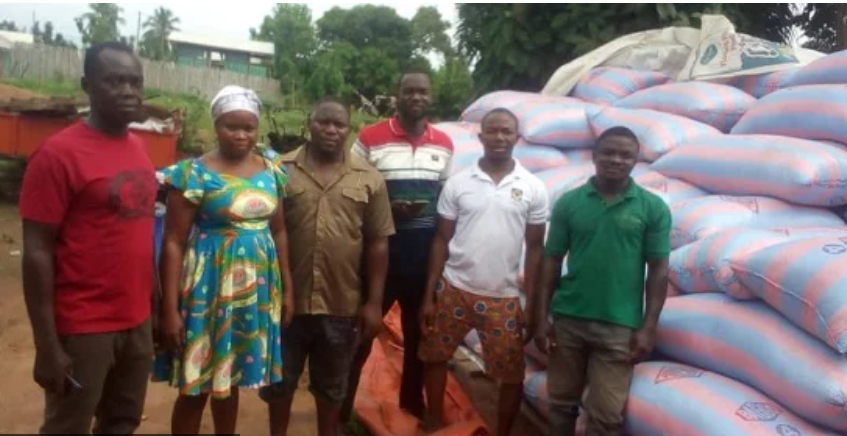
In March 2026, the Ghana News Agency reported that Richard Akoka, Chairman of the Peasant Farmers Association of Ghana’s Kassena-Nankana Municipal branch, was holding approximately 5,000 bags of unsold paddy rice. He said the farm-gate price of a bag had fallen from about GH¢1,200 the previous year to as little as GH¢250, yet buyers remained difficult to find.
In May, the Business and Financial Times reported an industry estimate that approximately one million metric tonnes of paddy rice, valued at GH¢5 billion, remained unsold. A separate estimate published by the newspaper in June put the surplus at more than 700,000 tonnes.
Farmers at the Asutuare-Akuse Irrigation Scheme have also appealed for urgent market support, reporting that thousands of tonnes of rice had remained unsold in warehouses and milling facilities for more than two years. One farmer, Sika Bright, said he was holding more than 100 tonnes.
These figures are estimates from industry representatives and farmers, not a verified national inventory. However, they point to a serious marketing problem that threatens farmers’ incomes and their ability to finance another planting season.
The Self-Sufficiency Target
Agriculture Minister Eric Opoku has publicly spoken of producing 3.31 million metric tonnes of paddy rice by 2028 to achieve self-sufficiency.
However, the government’s 2027 Budget and National Rice Policy 2027–2030 set 2030 as the formal deadline for ending commercial rice imports and meeting domestic demand. The Minister’s 2028 target is an earlier ambition, while the Budget provides the official policy timeline.
The scale of the challenge is considerable. Opoku said Ghana produced approximately 960,000 metric tonnes of milled rice in 2025, meeting about 56 per cent of national consumption. He put the annual rice import bill at approximately US$500 million.
The United States Department of Agriculture’s Foreign Agricultural Service, however, projected that Ghana’s milled rice production could fall to 800,000 tonnes in the 2026/2027 marketing year, while imports could reach 950,000 tonnes against consumption of 1.9 million tonnes.
The USDA identified low domestic prices as one factor discouraging farmers from investing in rice production.
How Government Plans to Increase Production
The National Rice Policy proposes bringing an additional 100,000 hectares under cultivation, raising yields to between five and six metric tonnes per hectare and creating about 125,000 direct and indirect jobs.
It identifies four development hubs: Afram Plains, the Volta Basin, Western Ghana and Northern Ghana. These areas are expected to benefit from irrigation, mechanisation, modern mills, storage facilities, logistics and partnerships between larger farms and smallholder farmers.
The government also plans to improve access to agricultural finance through longer-term loans, credit guarantees and seasonal working capital.
One intervention already launched is the Regional West Africa Resilient Rice Value Chains Development Project, known as REWARD. Supported by a US$18.8 million African Development Bank grant, it is expected to benefit 20,000 smallholder farmers and develop 3,200 hectares in the Northern Savannah Ecological Zone.
The project covers seven areas, including Tamale, Mion, Savelugu, Mamprugu-Moagduri, West Gonja, Wa and Nandom. It will support access to machinery, improved seeds and processing equipment such as rice transplanters, mini combine harvesters, colour sorters and destoners.
These interventions address genuine production and processing constraints. But the additional 3,200 hectares under REWARD represent only part of the wider 100,000-hectare target.
Importers Will Be Required to Buy Locally
A key part of the government’s strategy is to link rice import licences to purchases from Ghanaian producers.
From 2027, importers are expected to provide evidence of purchases from verified local farmers, aggregators or millers to qualify for licences. The required local-purchase share is expected to increase as domestic production expands and import quotas decline.
The government also intends to amend public procurement laws to require publicly funded institutions to buy locally produced food, including rice.
This could create a substantial market through institutions such as schools and hospitals. However, the proposed procurement requirement must still be translated into effective legislation and implementation.
The import-licensing system will also need credible monitoring to prevent companies from presenting false records of local purchases simply to qualify for import permits.
Storage and Funding Remain Major Obstacles
The difficulties facing farmers are compounded by the limited capacity of the National Food Buffer Stock Company (NAFCO) to purchase and store surplus produce.
In May 2026, NAFCO’s Senior Manager for Corporate Affairs, Emmanuel Arthur, told Citi FM that the company needed approximately GH¢770 million to purchase excess rice and other grains. He said an initial GH¢100 million released in 2025 was insufficient to absorb the available surplus.
NAFCO’s Deputy Chief Executive Officer, Osmond Amuah, also identified inadequate warehouse capacity as a major obstacle to purchasing and preserving produce.
The 2027 Budget allocates GH¢200 million to NAFCO and GH¢500 million for silo construction. It also provides GH¢800 million for agricultural machinery under Phase Two of the Farmer Service Centres, GH¢515 million for fertiliser and certified seeds, and GH¢105 million for irrigation infrastructure.
These are budget allocations, not proof that the funds have already been released or the facilities completed. Their impact will depend on timely implementation.
More Rice Must Mean Better Markets for Farmers
The USDA has also identified Ghana’s grain export restrictions as a factor limiting access to buyers from neighbouring Sahelian countries, including Burkina Faso, Mali and Niger. These traders had provided an alternative market for some local producers.
Consumer preference for imported rice, partly driven by perceptions of better quality, presents another challenge. Local processors must be able to deliver consistent quality, attractive packaging and reliable distribution if Ghanaian rice is to compete. Ghana’s experience with domestic agro-processing investments, including the cashew factory commissioned in Techiman, illustrates the importance of turning locally produced raw materials into competitive finished products.
There is also a production question. Using the USDA’s milling rate of 69 per cent, an additional 100,000 hectares yielding five to six tonnes of paddy per hectare would produce approximately 345,000 to 414,000 tonnes of milled rice. That would replace only part of the 950,000 tonnes of imports projected for 2026/2027. This is an indicative calculation, assuming the policy’s yield target refers to paddy rice.
The government has outlined a phased programme: establishing the policy and infrastructure foundations in 2027, expanding production and processing in 2028 and 2029, and pursuing self-sufficiency by 2030.
But the experiences of farmers in Kassena-Nankana and Asutuare show why the market cannot be treated as an afterthought. Without dependable buyers, adequate storage, competitive prices and efficient processing, higher production could deepen the existing surplus rather than strengthen the industry.
Ghana’s rice policy will ultimately succeed not simply when the country grows more rice or imports less, but when farmers can sell their harvests, recover their investments and earn enough to keep producing.

