


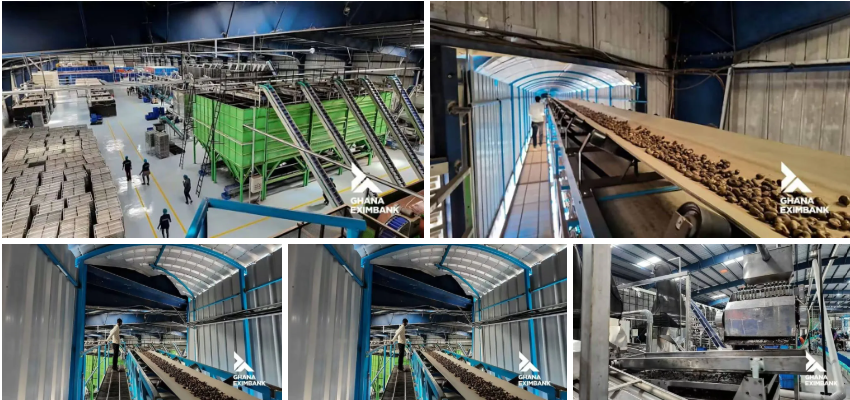
President John Dramani Mahama has commissioned a GH¢148.4 million cashew processing factory in Techiman on Monday, November 16, as Ghana steps up efforts to process more of its agricultural produce locally.
The Nadkansco Cashew Processing Factory, owned by Nadkansco Processing Limited and financed by the Ghana Export-Import Bank (GEXIM), has the capacity to process 100 metric tonnes of raw cashew nuts daily.
At 300 operating days a year, that would amount to approximately 30,000 tonnes of processing capacity. This is a theoretical annual estimate, however, rather than a confirmed production target.
The project also includes GH¢12 million for capacity building. About 600 prospective workers are undergoing training, while the factory’s outgrower network covers 6,000 cashew farmers. Of these, 1,200 have received training funded by GEXIM.
The investment is expected to create jobs, provide a market for farmers and increase the amount of cashew Ghana processes locally.
But the factory is entering an industry where existing processing facilities remain significantly underused. Whether it can help change that will depend on its ability to operate consistently and compete in the market for raw cashew nuts.
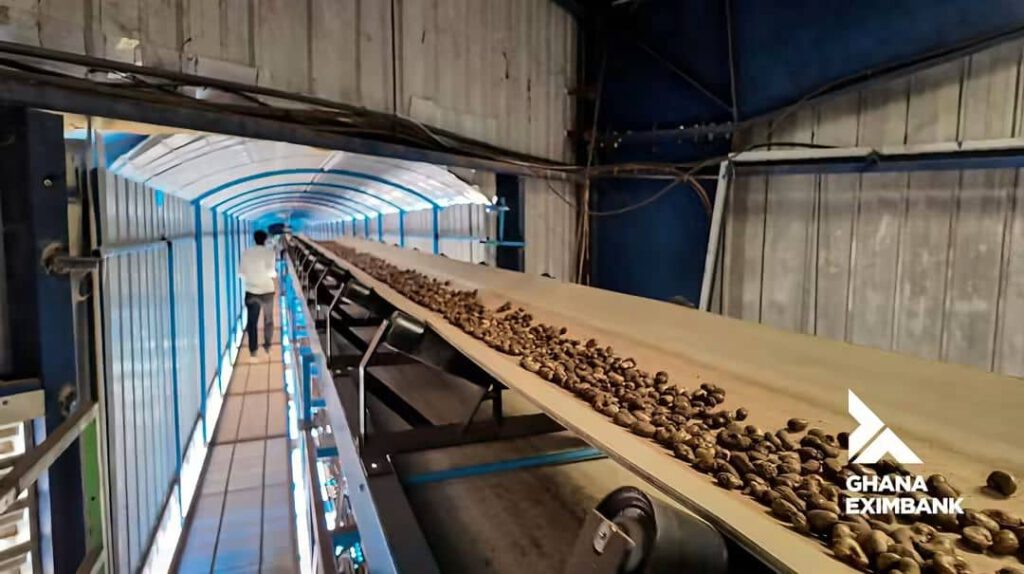
Ghana’s Cashew Processing Industry Has a Capacity Problem
A 2026 study by international agricultural economics consultancy Nitidae, titled Ghana Cashew Processing Sector and Roadmap for a Supportive Cashew Public Policy, provides an indication of the challenge.
The research, supported by the Association of Cashew Processors of Ghana, GIZ and the European Union Delegation to Ghana, estimated that the country had about 65,000 metric tonnes of installed cashew processing capacity in 2025.
However, local processors handled only approximately 15,000 tonnes of raw cashew nuts that year.
That means factories used roughly 23% of their combined installed capacity. Put another way, about 77% remained unused.
The study also estimated Ghana’s cashew production at 262,000 tonnes in 2025. Local processors therefore handled only about 5.7% of the country’s estimated crop.
It is worth noting that the 23% figure measures factory capacity utilisation, while the 5.7% figure measures the share of national production processed locally.
The figures point to a wider problem. Ghana produces substantial quantities of cashew but captures only a small part of the additional value that processing can generate.
The challenge is not unique to cashew. Ghana’s cocoa industry faces a similar question about how to expand local processing and retain more value from agricultural exports, as highlighted in the country’s discussions with Dangote over a proposed 500,000-tonne cocoa processing plan
Why Are Existing Factories Struggling?
The Nitidae study identifies high investment and operating costs, expensive borrowing and limited access to working capital as major obstacles to local processing.
Establishing a modern factory capable of processing 20,000 tonnes annually was estimated to cost about US$9.2 million in Ghana, compared with approximately US$5.3 million in Vietnam.
The cost of borrowing also puts local processors at a disadvantage. Business interest rates were estimated at around 20% in Ghana, compared with about 9% in Vietnam.
Processors must also compete with exporters who buy raw cashew nuts for international markets. When exporters offer attractive prices, local factories can struggle to secure supplies at prices that allow them to operate profitably.
These challenges help explain why having processing facilities does not necessarily translate into higher domestic production.
The Techiman factory will have to navigate the same commercial pressures. GEXIM has said its location gives it access to raw materials from surrounding farming areas, but the consistency and cost of those supplies will be important to its long-term performance.
What Could the Factory Mean for Cashew Farmers?
The factory’s outgrower network of 6,000 farmers could help strengthen the relationship between local processors and producers.
A reliable arrangement could give farmers access to training and a more predictable market for their harvests. It could also help the factory secure the raw materials needed to maintain production.
But farmers will want more than an agreement to supply a processing company.
The prices offered, consistency of purchases and support available to improve production will influence whether they choose to sell to the factory rather than other buyers.
The 1,200 farmers who have already received training are part of the project’s efforts to build that supply network. The bigger test will be whether the arrangement improves their production and earnings.
How Many Jobs Will the Factory Create?
Employment is one of the major promises attached to the investment, but the figures announced so far require clarification.
In a September update published on its website, GEXIM said the factory was expected to employ approximately 450 workers directly across three shifts.
The bank projected total employment of about 1,500 when indirect opportunities in the supply chain were included.
However, a government announcement reported by the Ghana Broadcasting Corporation on November 16 described the 1,500 expected jobs as direct employment.
The two figures are not the same. Until GEXIM or Nadkansco clarifies the discrepancy, the bank’s earlier breakdown provides the clearest distinction between direct factory jobs and wider employment opportunities.
The 600 prospective workers currently undergoing training are expected to help prepare the workforce for operations.
Beyond the factory, transport operators, suppliers and other businesses could also benefit if production expands.
Can the GH¢148.4m Investment Deliver?
The Nadkansco factory is a significant addition to Ghana’s efforts to expand agricultural processing. But its success will depend on how much cashew it actually processes, how many farmers supply it and whether it can operate profitably.
The factory also fits into the government’s wider ambition to expand domestic production, strengthen commercial agriculture and create jobs under its US$10 billion economic transformation programme
The industry’s existing capacity problem shows why those questions matter. Ghana already has factories capable of processing far more cashew than they currently handle.
If Nadkansco can secure reliable supplies, manage its operating costs and maintain demand for its finished products, it could create opportunities for farmers, workers and businesses in the Bono East Region.
It could also help Ghana retain more value from a commodity that has largely been exported in its raw form.
But the investment will have limited impact if the factory encounters the same financing and operating difficulties affecting other local processors.
For Ghana’s cashew industry, the real measure of success will be how much more of the country’s harvest is processed at home.

