


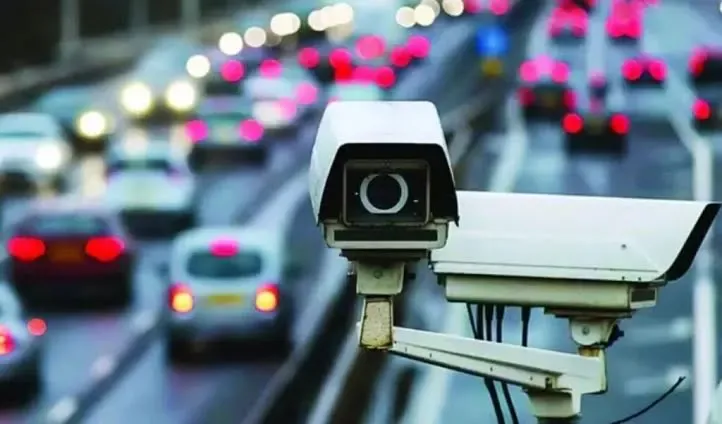
In just seven days, Ghana’s new automated traffic enforcement system detected 13,699 speeding offences, attracting fines estimated at nearly GH¢4 million.
The figures, disclosed by Interior Minister Muntaka Mohammed-Mubarak in Parliament on Wednesday, November 25, 2026, highlight the scale of speeding violations being detected on Ghana’s roads. But they also raise a bigger question: is TraffiTech making the roads safer, or simply making it easier to catch and fine offending motorists?
Speaking during the debate on the 2027 Budget Statement, Mr Muntaka said the system, introduced in November, was already producing encouraging results.
“We have just introduced, this month, what we call the TrafficTech, just to help reduce the carnage that we see on our roads,” he told Parliament.
He said 13,699 traffic infractions had been recorded by the end of the first week, with fines estimated at almost GH¢4 million.
The minister also pointed to a decline in road crashes during the first week of November, describing it as an early indication that the system was having an impact.
However, he did not provide the actual crash totals or a detailed comparison with previous periods in the remarks reported. Those figures will be necessary to establish the scale of the decline and assess whether it can be sustained.
13,699 Offences From Speeding Alone
One detail makes the first-week figures particularly striking: the offences were recorded from speeding alone.
Although the system is expected to cover 49 categories of traffic violations, the initial rollout has focused on overspeeding.
Mr Muntaka said enforcement was being restricted to roads where the necessary speed-limit signs had been installed. He explained that he had instructed officials not to enforce the system on stretches where motorists had not been adequately informed of the applicable limits.
The general speed limits are 50 kilometres per hour in urban or built-up areas, 90 km/h on highways and 100 km/h on motorways. Lower limits apply in designated areas such as school zones, markets and places where pedestrian activity is high.
Detecting nearly 14,000 violations in one week, while enforcing just one category of offence, points to the scale of non-compliance that authorities are confronting.
It also raises questions about what the system could uncover when enforcement is extended to other traffic violations.
Does the Early Decline Prove the System Is Working?
Mr Muntaka’s claim that road crashes declined after TraffiTech was introduced is encouraging. But a reduction recorded after the launch does not, on its own, prove that the system caused it.
Ghana’s road safety figures were already showing some improvement before November. Figures reported in September 2026 indicated that crashes had fallen by 9.4 per cent year-on-year, while deaths had declined by 7.82 per cent compared with September 2025.
Yet the overall toll remains alarming. Ghana recorded 2,949 road deaths in 2025, while police figures showed that 2,151 people had died in crashes between January and September 2026.
The real test, therefore, is whether TraffiTech can help sustain and deepen those improvements.
That will require authorities to publish regular figures showing not only how many violations the cameras detect, but also how crashes, injuries and deaths change over time. Without that information, it will be difficult for the public to distinguish the system’s enforcement results from its actual road safety impact.
What Happens If TraffiTech Catches You?
For motorists, automated enforcement means a traffic violation can be detected without a police officer physically stopping the vehicle.
According to the Ghana Police Service, a motorist who commits an offence can receive an Electronic Notice of Violation (ENV) by SMS. The notice contains details such as the vehicle registration number, location, date and time of the offence, the alleged violation, the fine and the payment deadline.
Recipients can use their ticket number on the official TraffiTech-GH portal to review the photographic or video evidence.
The Police Service says motorists have 14 days from the date the notice is issued to pay the fine or begin the process of challenging it.
Anyone who disputes a notice must first submit a challenge online. The motorist can select a preferred regional Motor Traffic and Transport Department (MTTD) station and appointment date for the matter to be reviewed. If it proceeds to court, the driver will have an opportunity to contest the allegation.
There is also an important point for vehicle owners: the notice is generally sent to the registered owner’s contact details, and the owner remains responsible for the vehicle’s violation even if someone else was driving.
Motorists who fail to pay within the 14-day period face an additional penalty of one per cent of the original fine for every day of default. Outstanding fines can also affect certain transactions at the Driver and Vehicle Licensing Authority (DVLA).
Police Warn Against Fake TraffiTech Notices
The introduction of electronic traffic notices has also created an opportunity for fraudsters to target motorists with fake payment requests.
The Ghana Police Service has urged vehicle owners to verify notices before making payments. Police Director-General of Public Affairs, COP Grace Ansah-Akrofi, advised motorists to check the vehicle details and evidence attached to an electronic notice.
“They should also open the Electronic Notice of Violation (ENV) or ticket to verify the vehicle’s photograph and registration number,” she said.
She warned motorists against paying fines into personal mobile money numbers or unofficial accounts.
Legitimate notices should carry the GPS-MTTD sender ID. The Police Service says motorists can pay through the official TraffiTech-GH portal or by dialling 7100#.
Anyone who receives a suspicious message or call should avoid sending money or opening unofficial payment links. Suspected scams can be reported to the Police through 191 or 18555.
The Bigger Test for Ghana’s Road Safety System
TraffiTech marks a shift towards technology-driven traffic enforcement, allowing authorities to detect violations without depending entirely on physical police patrols.
But its success will depend on more than the number of tickets issued.
Motorists must be able to trust that cameras are properly calibrated, speed limits are clearly displayed and notices are accurate. They must also have a fair opportunity to challenge alleged violations.
The Police Service says the speed-enforcement devices used under TraffiTech-GH are type-approved and periodically calibrated by the Ghana Standards Authority.
As the system expands to cover more traffic offences, clear communication about the rules, locations and penalties will be equally important.
The first-week figures show that automated enforcement can identify a substantial number of speeding violations. What remains to be demonstrated is whether it can change driving behaviour and reduce the human cost of road accidents.
Nearly GH¢4 million in fines may be a significant enforcement result. But the measure that should matter most to Ghanaians is whether fewer people die on the country’s roads.

