


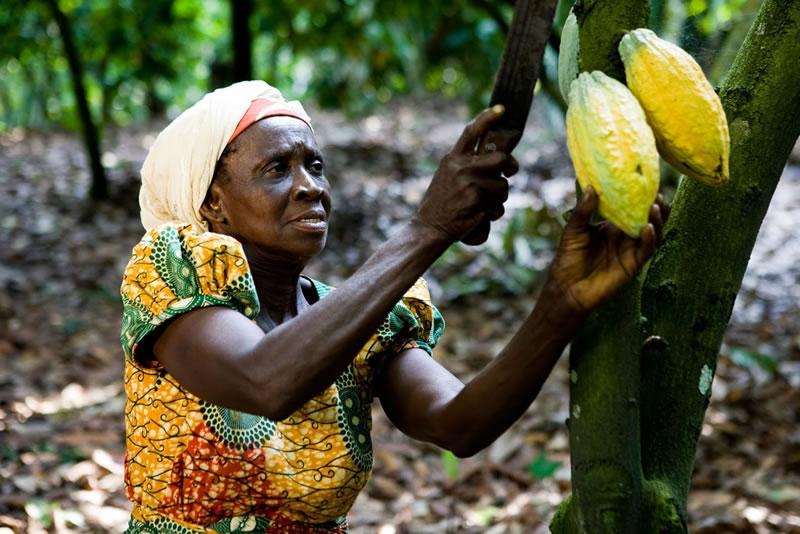
Ghana says it is ready for new European Union rules requiring proof that cocoa entering the European market is not linked to deforestation. The country has rolled out a national traceability system, mapped cocoa farms and received encouraging feedback from the EU.
But with the rules set to apply to large and medium-sized operators from December 30, 2026, can Ghana provide reliable evidence about the cocoa it exports?
The challenge goes beyond registering farms. Ghana must identify where its cocoa was grown, establish that the land meets the EU’s requirements and maintain accurate records throughout the supply chain. Illegal mining adds to the difficulty, but it is only one part of a much bigger test.
What the EU’s Cocoa Rules Require
The EU Deforestation Regulation (EUDR) is designed to prevent products associated with deforestation and forest degradation from entering the European market.
It covers seven commodities: cocoa, coffee, cattle, palm oil, rubber, soya and wood, as well as specified products derived from them.
Businesses placing these products on the EU market must demonstrate that they are deforestation-free, legally produced and supported by the required due diligence information.
For cocoa, this means tracing the beans to the plots where they were grown. The land must not have been subject to deforestation after December 31, 2020, and production must comply with relevant laws in the country of origin.
The regulation begins applying on December 30, 2026, to large and medium-sized operators and traders, as well as certain smaller operators already covered by the EU Timber Regulation. Other micro and small operators have until June 30, 2027.
Although the immediate obligations fall on businesses supplying the EU market, they will depend on accurate information from producing countries. That puts Ghana’s farm records and traceability arrangements under scrutiny.
COCOBOD Says Ghana Is Ready. But What Does Readiness Mean?
The Ghana Cocoa Board (COCOBOD) has expressed confidence in the country’s preparations.
In its September 25, 2026 announcement for the 2026/27 cocoa season, the Board said it had fully deployed the Ghana Cocoa Traceability System (GCTS) across all cocoa-growing areas.
It said the system would enable Ghana to supply the European market with cocoa that is traceable, deforestation-free, child-labour-free and legally produced.
The EU has also acknowledged Ghana’s progress. In May 2026, its ambassador to Ghana, Rune Skinnebach, praised the rollout of the traceability system, the development of a deforestation risk assessment methodology and the Forestry Commission’s 2020 forest map.
These are important steps, but what does full deployment mean in practice?
Can a consignment be traced from the farms where its beans were grown through buying companies, warehouses and exporters? Are farm records regularly updated? And what prevents cocoa from unverified sources from entering supply chains intended for Europe?
The stakes also extend to Ghana’s ambitions to process more cocoa locally. A proposed project involving Dangote to process 500,000 tonnes of Ghanaian cocoa highlights the industry’s potential beyond exporting raw beans. Read more about what Dangote could bring to Ghana’s cocoa industry.
The Galamsey Problem Ghana Cannot Ignore
Illegal small-scale mining, popularly known as galamsey, is another environmental pressure Ghana must account for.
A Forestry Commission assessment released in February 2026 found that 8,923.8 hectares of legally protected forest reserves had been affected by illegal mining as of December 31, 2024. The assessment covered 45 forest reserves and one national park.
That figure does not represent cocoa farms damaged by mining, nor does it mean all cocoa from affected districts is automatically ineligible for the EU market.
Under the EUDR, compliance depends on the specific land where a commodity was produced. Cocoa grown on land deforested after December 31, 2020, cannot qualify as deforestation-free. A farm’s location in a district affected by galamsey does not, by itself, make its cocoa non-compliant.
The concern is whether Ghana can identify changes in land use, distinguish affected plots from unaffected farms and keep cocoa from non-compliant land out of eligible supply chains.
When Farmers Are Pressured to Abandon Cocoa
The pressure on Ghana’s cocoa industry is not limited to new European rules. Farmers are also struggling with ageing trees, declining yields and rising production costs.
In some communities, illegal mining offers the prospect of quicker money. For farmers who are finding it increasingly difficult to earn a decent living from cocoa, the temptation to surrender land to miners can be difficult to resist.
Losing productive farmland affects more than individual households. Local buying networks and communities that depend on cocoa production can also suffer.
This raises an important question: what support is available to farmers whose land or livelihoods are threatened by illegal mining and other pressures? Recording a farm’s location will not, on its own, make cocoa farming profitable or prevent farmers from abandoning their land.
Farm Registration Is Only the Beginning
Mapping a farm is important, but it does not guarantee that its cocoa can be traced throughout the supply chain.
Farm information must be accurate and regularly updated as beans move from farmers to buying companies, warehouses and exporters. Cocoa from different farms may also be collected and aggregated before export, making reliable records and chain-of-custody controls essential.
Partially affected farms present another challenge. If mining destroys part of a registered farm, can the remaining productive area be identified? Can cocoa from the unaffected portion be traced separately?
These practical details will help determine whether Ghana’s system can maintain reliable records as conditions on the ground change.
The Gold Question: Why Is Cocoa Covered but Gold Is Not?
Cocoa is covered by the EUDR, but gold is not.
The regulation focuses on seven specified commodities, including cocoa and wood. Gold falls outside its scope, although it remains subject to other environmental, mining and responsible-sourcing rules.
The distinction matters because illegal gold mining can damage forests and landscapes in areas where cocoa is also produced. The regulation does not cover every activity that contributes to deforestation; it sets requirements for particular commodities and the land on which they are produced.
What Happens If Ghanaian Cocoa Cannot Meet the Requirements?
The EUDR does not automatically ban Ghanaian cocoa because illegal mining occurs in the country. Its requirements apply to the relevant products and the plots where they were produced.
Businesses placing cocoa on the EU market must demonstrate that it meets the regulation’s conditions. If they cannot provide the necessary information, or the cocoa fails to qualify, they cannot assume it is eligible for sale in Europe.
For Ghanaian exporters, this could mean additional checks, delays, rejected consignments or the need to redirect affected cocoa to other markets, depending on the circumstances and buyers’ decisions.
Farmers could also be affected if buyers become more cautious about sourcing from areas where farm records or land-use histories are uncertain.
What Ghana Must Establish Before December 30
With the application date approaching, Ghana needs to demonstrate that its traceability system works beyond farm registration.
COCOBOD should explain how much cocoa can currently be traced from individual farms through to export, how the system handles changes in farm boundaries and land use, and what prevents cocoa from unverified sources from entering compliant supply chains.
The Forestry Commission must clarify how it identifies deforestation and land-use changes, including those associated with illegal mining, and how quickly that information is reflected in relevant records.
The EU Delegation should explain what evidence importers expect from Ghanaian suppliers and how the country’s low-risk classification affects due diligence. Low-risk status can mean simplified requirements and fewer checks for eligible operators, but it does not remove the need to demonstrate compliance.
Licensed Buying Companies and exporters must also explain how they preserve farm-level information as cocoa moves towards export. Farmers need clear guidance on the rules and practical support to keep producing cocoa sustainably.
Is Galamsey Undermining Ghana’s Readiness?
Ghana has taken important steps towards meeting the EU’s deforestation requirements. COCOBOD says the national traceability system has been fully deployed, and the country has established a framework intended to track cocoa through the supply chain.
But the real test is whether Ghana can provide reliable evidence about its exports and keep cocoa from non-compliant plots out of eligible supply chains.
Galamsey makes that task harder, particularly where mining changes land use or threatens cocoa-growing communities. But accurate farm records, effective monitoring, supply-chain controls and support for farmers are just as important.
With December 30 approaching, Ghana must show that its system can do more than register farms. It must demonstrate that the information behind its eligible cocoa exports is accurate, traceable and capable of standing up to scrutiny.

