
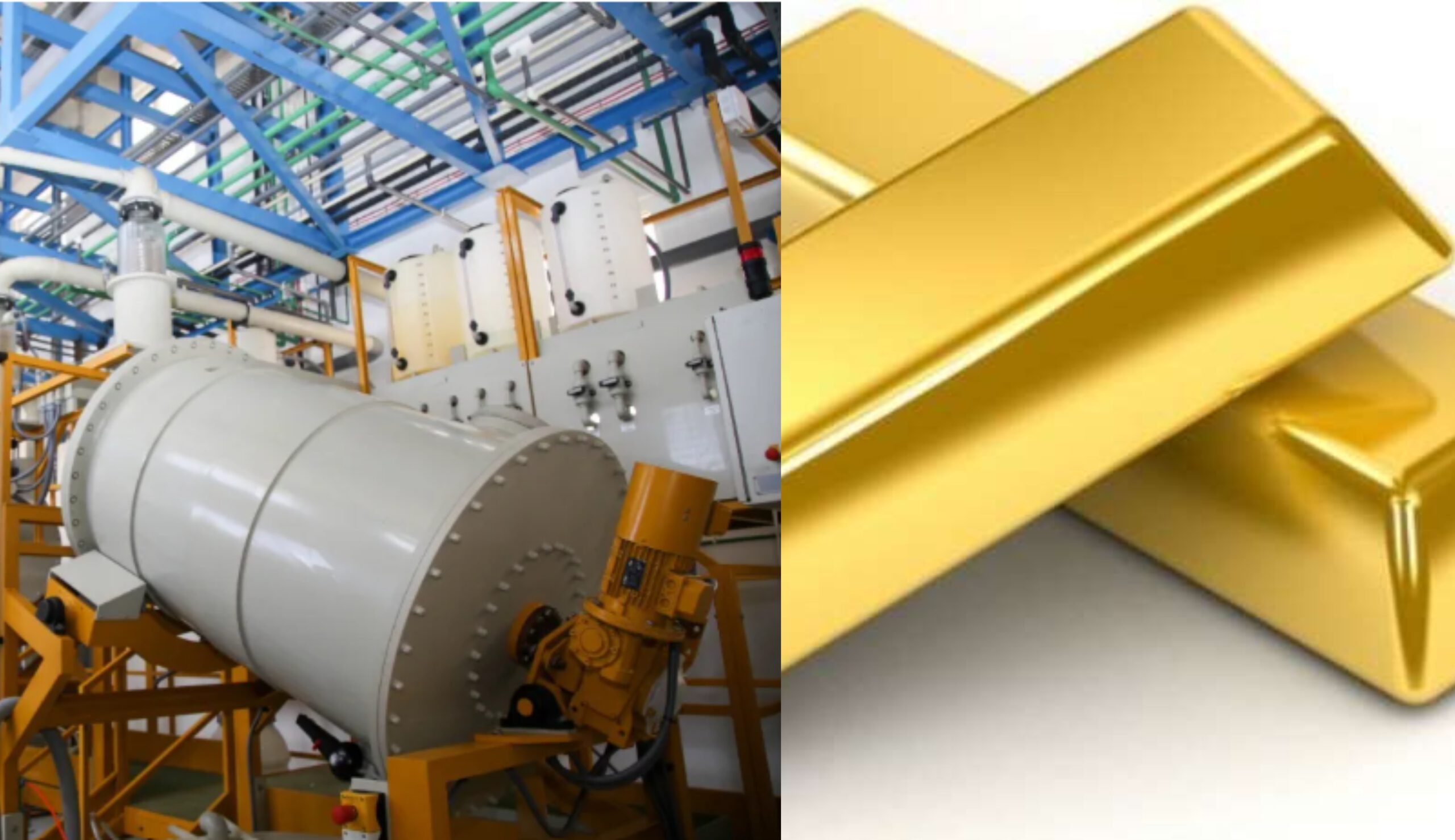
Africa is not only seeking to produce more gold. Across the continent, countries are increasingly trying to control what happens to the metal after it leaves the mine, from refining and assaying to export and trading.
Some already have established refineries. Others are building national plants, expanding existing facilities or introducing rules designed to require more gold to be processed domestically.
Ghana Wants To Join BRICS: What Could The Country Gain And What Could It Risk?
The scale and stage of these projects vary considerably. Installed capacity does not necessarily mean a refinery is operating at that level, while a licence or government announcement alone does not establish actual production.
Here are 12 African countries with documented gold-refining capacity or significant new refining initiatives.
1. South Africa
South Africa has one of Africa’s longest-established gold-refining industries, centred on Rand Refinery in Germiston.
Rand Refinery has operated since 1920 and is on the London Bullion Market Association’s Good Delivery List. The LBMA identifies it as Africa’s only LBMA-accredited gold refinery.
The refinery has also processed gold from other African countries, giving South Africa a role beyond its own mine production. Its established refining infrastructure and international accreditation distinguish it from countries still developing their domestic capabilities.
2. Ghana
Ghana is combining existing refining infrastructure with a stronger regulatory push for domestic processing.
Gold Coast Refinery in Accra, commissioned in 2016, has become central to the government’s refining strategy. On January 20, 2026, the Ghana Gold Board (GoldBod) announced an agreement under which the state secured a 15% free-carried interest in the refinery.
The agreement provides for GoldBod to supply up to one metric tonne of gold weekly for local refining. Operations began in February 2026, and government officials inspected the first batch of locally refined gold on February 4.
The partnership also involves South Africa’s Rand Refinery, which is providing technical support as Ghana works towards obtaining international accreditation for its domestic refining operations.
The policy direction became more significant in August 2026 when GoldBod ordered Self-Financing Aggregators to refine gold doré in Ghana before export, effective September 1. GoldBod said unrefined doré would no longer be approved for export under the directive.
Ghana is therefore using ownership, local processing and regulation to increase the share of the gold value chain conducted domestically. However, the announced weekly supply target should not be confused with independently verified, sustained throughput at that level.
3. Burkina Faso
Burkina Faso inaugurated its first gold refinery, Raffinor-BF, in Ouagadougou on September 28, 2026.
The refinery was inaugurated with a stated initial theoretical capacity of 164 tonnes annually, with a planned expansion to 515 tonnes. The project reportedly cost more than 11 billion CFA francs.
Burkina Faso produced approximately 94 tonnes of gold in the previous year, meaning the refinery’s initial stated capacity exceeds recent national production.
That comparison should not be interpreted as expected output. The refinery’s ability to operate at capacity will depend on gold supplies, operational performance and the availability of material suitable for processing.
The project reflects the government’s broader effort to retain more value from the country’s mineral resources through domestic processing.
4. Mali
Mali broke ground on its planned national gold refinery at Sénou near Bamako in June 2025.
The project is being developed through cooperation with Russia involving Yadran and Swiss Investment Company. The proposed refinery is designed to have an annual refining capacity of 200 tonnes.
Mali’s Ministry of Mines has linked the project to provisions of the country’s 2023 Mining Code requiring mining companies to refine or process mineral products in state-owned facilities located in Mali.
The initiative is intended to increase domestic value addition and strengthen state oversight of the gold sector. However, the refinery’s planned capacity should not be presented as operating capacity until its completion and commissioning have been confirmed.
5. Tanzania
Tanzania already has a large-scale gold-refining facility in Mwanza.
The Mwanza Precious Metals Refinery has technical capacity of up to 960kg of gold per day, although the machinery currently in use has capacity for 480kg per day.
In January 2026, the refinery’s operator, State Mining Corporation, reported actual production of around 50kg to 100kg per day because of limited raw gold supplies.
The figures illustrate three different measures: the plant’s technical capacity, the capacity of the machinery in use and its reported daily production.
Tanzania demonstrates why a refinery’s advertised capacity does not necessarily indicate how much gold is actually being processed. Securing reliable supplies is essential if a facility is to operate closer to its full potential.
6. Zimbabwe
Zimbabwe has an established state-linked refining and gold-marketing system centred on Fidelity Gold Refinery.
Fidelity describes itself as the country’s official buyer, refiner and exporter of gold, with authority to procure gold from both small-scale and large-scale producers.
The refinery occupies a different position from projects in countries still developing their first major national facilities. Zimbabwe already has an institutional framework connecting domestic gold production with refining and export.
The effectiveness of that system nevertheless depends on formal gold deliveries, traceability and the ability to limit the movement of gold through unregulated channels.
7. Democratic Republic of Congo
The Democratic Republic of Congo added another domestic refining facility in 2026.
DRC Gold Refinery SA was inaugurated in Kalemie on March 11, 2026. The Ministry of Portfolio said the project, backed by DRC Gold Trading and Lunga Mining, forms part of the government’s effort to increase local processing and strengthen control over gold produced in the country.
The Kalemie project represents an attempt to move beyond exporting gold in less processed forms and retain more of the value generated within the country.
Its longer-term significance will depend on the facility’s operational performance, gold supplies and the effectiveness of systems used to establish the origin of the material it processes.
8. Côte d’Ivoire
Côte d’Ivoire is preparing to expand its domestic refining capacity through the Société ivoirienne des métaux précieux (SIMEP).
Mining Minister Mamadou Sangafowa-Coulibaly said in September 2026 that the refinery unit was expected to become operational in the first half of 2027, with a stated capacity of approximately 100 tonnes of gold at full operation.
The project adds Côte d’Ivoire to the growing group of major West African gold producers seeking to process more of their output domestically.
Until commissioning and production are confirmed, however, the 100-tonne figure should be treated as planned capacity rather than actual refining output.
9. Guinea
Guinea is seeking to establish itself as a regional gold-refining hub as West African countries push to capture more value from their mineral resources.
In June 2026, President Mamady Doumbouya announced a ban on raw gold exports as part of a wider policy to promote domestic processing. The government also pursued measures aimed at formalising artisanal mining and improving traceability across the gold supply chain.
Guinea had built a private refinery costing approximately US$30 million. In June, officials said the facility was expected to begin commercial operations in July, subject to final regulatory approvals. Its stated initial annual capacity was 530 tonnes, with a planned expansion to 733 tonnes.
The project subsequently reached an important milestone. In October 2026, reports said Guinea had shipped its first gold bars refined domestically at the Nimba Gold Refinery in Conakry.
The development provides evidence that the country’s refining ambitions have progressed beyond construction and policy announcements. However, the facility’s stated annual capacity should not be confused with the amount of gold it has actually processed.
Guinea’s strategy combines local refining with broader efforts to formalise production, strengthen traceability and develop industries further along the mineral value chain.
10. Uganda
Uganda has a private refining industry alongside its gold-trading sector.
The country’s mining regulator maintains a public register of mineral-refining licences, including licences for gold refiners such as Euro Gold Refinery, Fargo Commodities Trading Uganda and Shinewithus Mineral Refinery.
This distinguishes Uganda from countries whose refining ambitions currently centre on a single state-backed national project. Its framework includes multiple licensed private operators.
However, the existence of active licences does not by itself establish the amount of gold each company processes or whether every facility is currently operating at commercial scale.
11. Rwanda
Rwanda has an established gold-refining operation in Gasabo Gold Refinery.
The company says its facility can refine up to 480kg of gold within 30 hours, equivalent to approximately eight tonnes a month if that operating rate is sustained.
That figure represents the company’s stated processing capability rather than independently verified monthly production.
Rwanda’s role in the regional gold trade also makes provenance and traceability important considerations. The location of a refinery does not, by itself, establish where the gold was mined or whether it entered the formal supply chain legitimately.
12. Zambia
Zambia has developed private-sector refining capacity through facilities such as Noble Metals Refinery in Lusaka.
The company describes itself as a gold and precious-metals refinery and says it can produce bullion with purity of up to 999.5 parts per thousand using aqua regia refining.
Unlike countries announcing large national refineries, Zambia’s model includes privately operated facilities serving miners, dealers and other market participants.
The extent of the value retained domestically will depend on the scale of actual refining operations, access to reliable gold supplies and the quality and market acceptance of the resulting bullion.
What The Refining Push Actually Changes
Domestic refining can shift more of the gold value chain into the producing country, but a refinery by itself does not guarantee higher national earnings.
Three distinctions matter.
Capacity is not output. Tanzania’s Mwanza refinery demonstrates this clearly: a plant can have substantial installed capacity while processing considerably less because of raw-material constraints.
Refining is not the same as traceability. Knowing where gold was refined does not automatically establish where it was mined or whether it entered the formal supply chain legitimately.
A refinery is only one part of the value chain. Assaying, aggregation, financing, logistics, bullion trading and access to recognised international markets can all determine how much value a producing country ultimately captures.
The upstream side of the industry also carries environmental and social costs. In Ghana, illegal mining has polluted water bodies in some communities, affecting livelihoods and activities that depend on clean rivers. These challenges underline the need for stronger environmental enforcement alongside efforts to expand domestic gold processing.
Community resistance is another part of the picture. Protests over mining activities and government-backed programmes have highlighted tensions between expanding formal mining operations and concerns about environmental damage, land use and local livelihoods.
That is why Africa’s current refining expansion is more significant than simply the number of new plants being announced.
The continent is gradually moving more of the journey from mine to market inside Africa. The extent of that shift will depend on whether facilities can secure reliable supplies, meet international standards, establish credible traceability systems and operate at meaningful commercial volumes.