


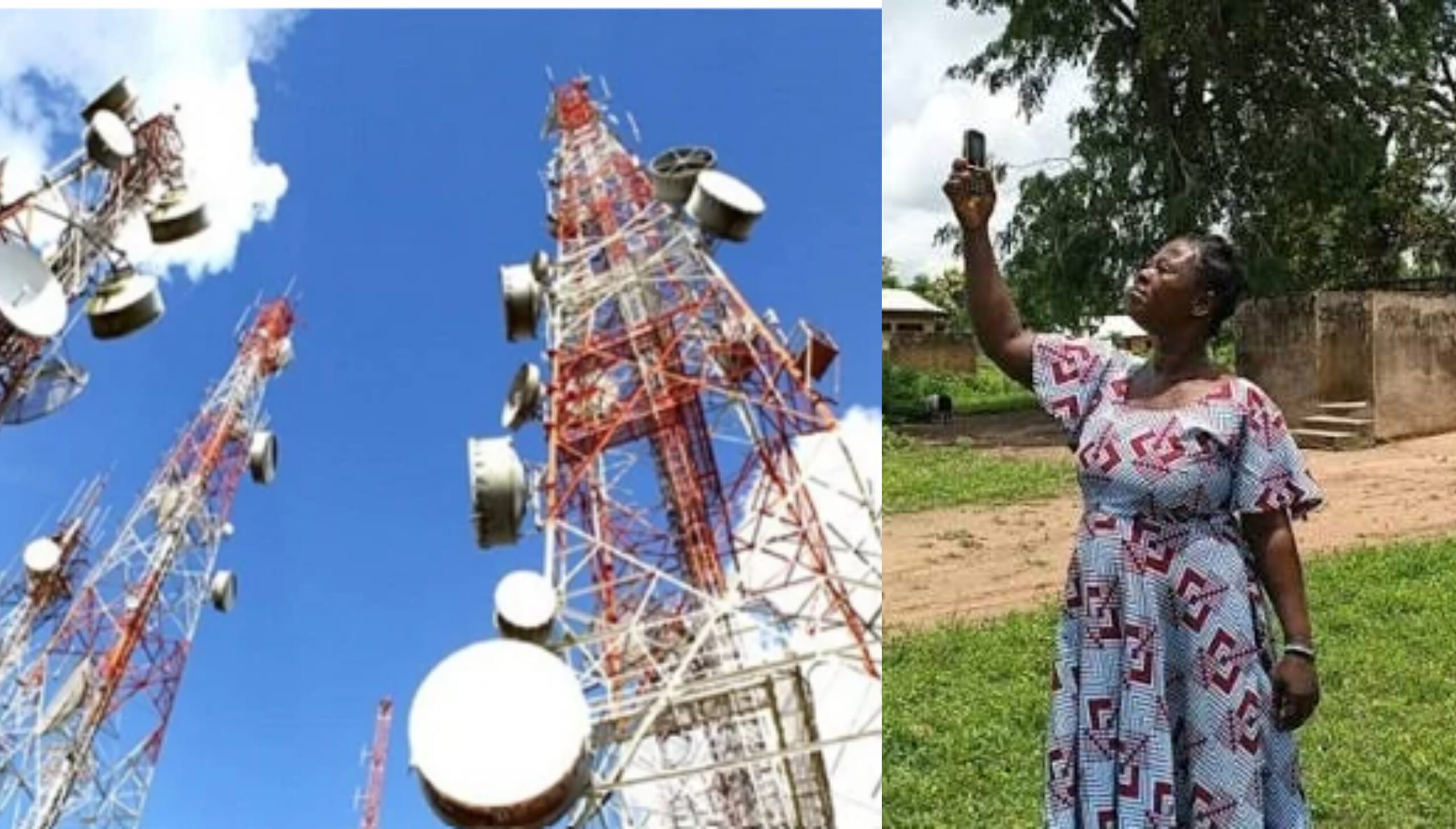
Ghana’s telecommunications sector is growing faster than expected. But for millions of people who depend on mobile networks for work, business, banking and everyday communication, a more immediate question remains: are they getting better services?
Communications Minister Samuel Nartey George announced on November 27 that the sector had recorded 27.2 per cent growth by the middle of 2026, exceeding the 25 per cent projected for the full year.
Speaking at the Ghana Chamber of Telecommunications’ 15th Anniversary Gala and Recognition Night, he said the industry had also exceeded its 2025 growth projection of 17.2 per cent, recording 20.2 per cent instead.
“Last year, we were billed to grow at 17.2%. End of year last year, we grew at 20.2%. This year, we are billed to grow at 25%. By mid-year, we’ve grown 27.2% already,” he said.
Mr George attributed the performance partly to cooperation between government and industry, as well as policy measures intended to support investment. He cited spectrum allocations in the 700MHz, 2.3GHz and 3GHz bands as part of efforts to expand network capacity.
The government is also targeting 5G coverage for 70 per cent of the population by March 2027.
These are significant developments for an economy increasingly dependent on digital connectivity. However, growth in the telecommunications industry does not automatically mean faster internet, clearer calls or more reliable connections for consumers.
Indeed, the minister’s own remarks at the event acknowledged the gap between industry performance and the experience of subscribers.
“Going into Christmas, they want a sound, reliable network. That is something that we owe the people of our country. These are not unreasonable demands,” he said, urging operators to invest in their infrastructure ahead of the expected seasonal increase in network traffic.
More Subscriptions, But Are Consumers Getting Better Service?
Figures from the National Communications Authority’s second-quarter 2026 telecommunications industry dashboard show that mobile voice subscriptions increased from 43.5 million in the first quarter to 44.2 million.
Mobile internet subscriptions also rose from 29.7 million to 30.5 million, while mobile internet penetration increased from 87.7 per cent to 89.5 per cent.
The figures point to the expanding reach of mobile connectivity. However, subscriptions should not be confused with the number of individual users, as one person can hold multiple SIM cards.
Nor does a subscription necessarily mean that a customer enjoys a dependable connection.
The NCA’s historical figures also show that average mobile voice minutes per subscription declined from 794 minutes in the fourth quarter of 2023 to 701 minutes in the second quarter of 2026. That change alone does not establish that consumers are dissatisfied or using telecommunications services less. The growing use of internet-based messaging and calls may also influence traditional voice traffic.
The more important question is whether network expansion is keeping pace with the expectations and needs of users.
Network Quality Remains a Concern
In May 2026, NCA Director-General Edmund Yirenkyi Fianko identified poor service quality as a major threat to public confidence in the telecommunications industry.
“The public is telling us in growing numbers and in increasingly clear terms that the service they are paying for is not the service they are receiving,” he said.
He cited dropped calls, slow data and unreliable coverage beyond major urban areas, including peri-urban settlements and rural communities.
The Communications Minister has also acknowledged that smartphone adoption has grown faster than network infrastructure expansion.
Figures he presented in September showed smartphone penetration had reached 71.8 per cent by June 2026, compared with 27.5 per cent in 2016. Yet some rural and remote communities still depend on older 2G and 3G infrastructure.
This creates a practical problem. Owning a smartphone does not guarantee meaningful access to digital services if the available network cannot reliably support mobile banking, online learning, digital marketplaces or other data-dependent activities.
For businesses, poor connectivity can disrupt payments and communication with customers. For students, it can limit access to online educational resources. The digital divide is therefore not simply about whether a community has a mobile signal, but whether that connection is good enough to support everyday needs.
NCA Tightens Service Quality Standards
The regulator has introduced stricter requirements in an effort to address these problems.
In February 2026, the NCA amended its Quality of Service indicators for mobile network operators, setting tougher performance thresholds for voice, data and messaging services.
The maximum allowable call drop rate was reduced from three per cent to below one per cent. Operators must also achieve a call connection success rate of more than 95 per cent in over 90 per cent of operational cells within each Metropolitan, Municipal and District Assembly.
The revised standards also include a minimum average download speed requirement of more than one megabit per second for 3G networks and a 98 per cent success rate for SMS and MMS delivery, with messages expected to arrive within five seconds.
Operators are additionally required to extend coverage to all constituent towns within every MMDA.
The NCA says it will monitor compliance through field measurements and performance assessments, with operators that fail to meet the requirements liable to regulatory sanctions.
The challenge now is enforcement. Consumers need more than new standards on paper. They need consistent monitoring, transparent information about network performance and evidence that operators are being held accountable when they fall short.
Will 5G Close the Connectivity Gap?
The government’s target of extending 5G coverage to 70 per cent of the population by March 2027 is an important part of its digital development plans.
Mr George has pointed to spectrum allocations in the 700MHz, 2.3GHz and 3GHz bands as measures intended to increase network capacity and support the deployment of advanced technologies.
But 5G expansion should not overshadow the need to improve basic connectivity in communities that still struggle with reliable 4G access.
For many consumers outside major cities, dependable and affordable 4G may be more immediately useful than access to 5G. The priority should be to ensure that investment in newer technology does not leave underserved communities further behind.
The government and operators must therefore pursue two objectives together: improving the quality and reach of existing services while expanding access to next-generation networks.
How Consumers Can Complain About Poor Network Service
Consumers who experience persistent network problems have a formal route to seek redress.
The NCA advises customers to first lodge complaints with their service provider. If the matter is not satisfactorily resolved, they can escalate it to the regulator through its consumer complaints channels.
The authority accepts complaints about persistent poor service, wrongful billing, unauthorised subscriptions and other telecommunications-related concerns. Customers can contact the NCA through its toll-free number, 0800 303 030, or email [email protected].
The complaints process is useful, but its value ultimately depends on how quickly concerns are investigated and whether they lead to corrective action.
The regulator’s responsibility is not only to receive complaints but also to ensure that service providers meet the standards expected of them.
The Real Measure of Telecom Growth
Ghana’s 27.2 per cent telecommunications growth is encouraging, particularly as the country relies increasingly on digital connectivity to support businesses, public services and emerging technologies.
But the industry’s success should not be measured only by economic growth, spectrum allocation, subscription numbers or 5G targets.
It should also be evident in the everyday experience of consumers: clearer calls, faster and more reliable internet, wider coverage, affordable access and fewer service interruptions.
The NCA’s revised standards provide a framework for improving service delivery, while the government’s expansion plans offer an opportunity to address gaps in connectivity. What remains is to demonstrate that these interventions are producing measurable improvements.
As the minister himself acknowledged, Ghanaians are entitled to reliable networks. The sector’s growth will mean more to consumers when they can experience its benefits in their homes, workplaces, schools and communities.
The industry has exceeded its growth target. The test now is whether service quality can catch up.

