


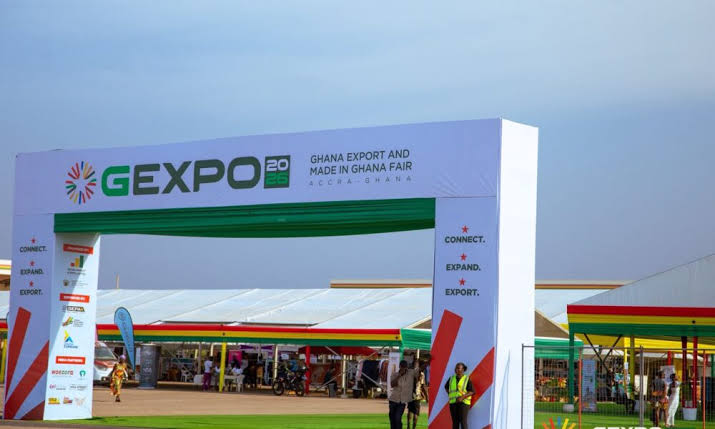
From locally made skincare products and fashion accessories to processed foods, pharmaceuticals and handmade crafts, Ghanaian businesses are putting their products before consumers and potential buyers at the Ghana Export, SME and Made-in-Ghana Fair (GEXPO 2026).
The five-day exhibition, which opened on Wednesday, November 18, at the Black Star Square in Accra, has brought together more than 500 exhibitors showcasing locally manufactured products and services across several industries.
But GEXPO is not simply a marketplace for displaying and selling Ghanaian products. It is also designed to help local businesses meet potential buyers, understand export requirements and explore opportunities to expand beyond the domestic market.
Organised by Accra Markets and Expo Limited under the auspices of the Ministry of Trade, Agribusiness and Industry and the Ghana Export Promotion Authority (GEPA), the fair is being held under the theme Connect. Expand. Export.
With activities running until Sunday, November 22, here are five things Ghanaian businesses and consumers can expect from GEXPO 2026.
1. A Chance to Discover More Ghanaian Products
One of the biggest attractions of GEXPO 2026 is the range of locally made products on display.
The exhibition brings together businesses from agro-processing, textiles and apparel, cosmetics, handicrafts, light manufacturing, digital trade and other sectors.
Products showcased include indigenous jewellery, traditional beads, garments, paintings, black soap, shea-based skincare products, processed foods, pharmaceutical products, handbags and locally crafted accessories.
This gives consumers an opportunity to discover Ghanaian brands and products they may not ordinarily encounter in supermarkets, shopping centres or online stores.
It also provides a closer look at how local businesses are turning Ghanaian materials, skills and creative ideas into products for the consumer market.
For manufacturers and entrepreneurs, the diversity of exhibitors offers an opportunity to observe competing products, identify emerging trends and assess how their own offerings compare with those of other businesses.
2. Direct Shopping and the Opportunity to Support Local Businesses
GEXPO is also an opportunity for consumers to buy directly from local producers.
Rather than relying solely on conventional retail outlets, visitors can interact with businesses, explore their products and make purchases at the exhibition.
The range of products on display covers several everyday consumer interests, including clothing, food, personal care, accessories, beauty products and household-related items.
Buying directly from exhibitors also gives shoppers an opportunity to ask questions about ingredients, materials, production methods and the businesses behind the products.
For small businesses, direct sales can provide immediate revenue while helping them introduce their brands to new customers and receive feedback on their products.
Consumers should nevertheless compare prices, check product quality and examine relevant labelling before purchasing. A product being locally made does not automatically guarantee that it offers the best quality or value.
3. Opportunities to Meet Buyers and Build Business Relationships
For businesses, one of the most commercially significant aspects of GEXPO is the opportunity to connect with potential buyers and business partners.
The fair includes a Business-to-Business (B2B) Deal Room, where structured meetings are intended to connect Ghanaian producers with buyers, procurement networks and institutional off-takers.
These engagements could help participating businesses explore supply agreements, distribution arrangements and partnerships that may open up new markets.
The organisers are targeting buyers across West Africa and the wider African Continental Free Trade Area (AfCFTA), as well as markets in Europe, North America, Asia and the Middle East.
This is particularly relevant for SMEs that have developed products but lack access to established distribution networks or international buyers.
However, meeting a potential buyer is only the beginning. Businesses must still demonstrate that they can meet product specifications, maintain consistent quality, supply the required quantities and offer competitive prices before commercial relationships can translate into sustained orders.
4. Practical Training on How to Make Products Export-Ready
GEXPO also offers participating businesses access to seminars and capacity-building sessions designed to improve their competitiveness.
The programme covers areas such as product packaging, labelling and compliance, export marketing, digital branding and the use of social media to reach customers.
Businesses are also being sensitised on how to secure off-takers, wholesalers and retailers.
These are important areas for SMEs seeking to expand beyond local sales. A product may attract interest at an exhibition, but entering a foreign market requires more than an attractive label or good marketing.
Businesses must understand the standards and regulatory requirements of their target markets, including product quality, packaging, labelling and, where applicable, phytosanitary requirements for agricultural goods.
Understanding AfCFTA rules of origin is also important for businesses seeking to benefit from preferential trade arrangements within Africa. These rules help determine whether a product qualifies for preferential treatment under the agreement.
The fair’s focus on these issues gives local entrepreneurs an opportunity to identify gaps in their operations and better understand what is required to compete in regional and international markets.
5. Food, Entertainment and Networking Beyond the Exhibition Stands
GEXPO is also designed to attract members of the public who may not necessarily be attending for formal business meetings.
The programme includes a food bazaar, live performances, music showcases and networking activities, giving visitors additional reasons to spend time at the exhibition.
The organisers have also incorporated entertainment and happy-hour sessions into the experience, creating informal opportunities for exhibitors, visitors and business representatives to interact.
For food vendors, performers and other participating businesses, these activities provide additional exposure to potential customers.
For families and other visitors, they add a social and leisure element to the opportunity to explore and purchase locally made products.
Why GEXPO Matters to Ghana’s Economy
The exhibition comes as Ghana seeks to increase the value of locally produced goods sold in international markets and strengthen its non-traditional export sector.
According to GEPA’s 2025 Non-Traditional Export Statistics Report, earnings from the sector reached approximately US$5.006 billion in 2025, representing a 30.7 per cent increase from about US$3.83 billion in 2024.
More significantly, processed and semi-processed products generated approximately US$3.09 billion, accounting for 83.47 per cent of total non-traditional export earnings.
The figures highlight the growing importance of value addition to Ghana’s export performance. Instead of relying only on exporting raw materials, the country stands to gain more by developing businesses that can process, package and manufacture products for local and international markets.
GEXPO provides a platform for businesses to showcase that productive capacity and explore opportunities to reach more customers.
However, the number of exhibitors and products on display will not, on its own, determine the fair’s success. Its longer-term value will depend on whether businesses secure meaningful buyers, improve their production capabilities, meet export standards and turn new contacts into sustainable commercial relationships.
For consumers, the exhibition offers an opportunity to discover more Ghanaian products and support local businesses. For entrepreneurs, it presents a chance to build relationships, learn about export requirements and explore markets beyond Ghana.
GEXPO 2026 continues at the Black Star Square in Accra until Sunday, November 22.

