


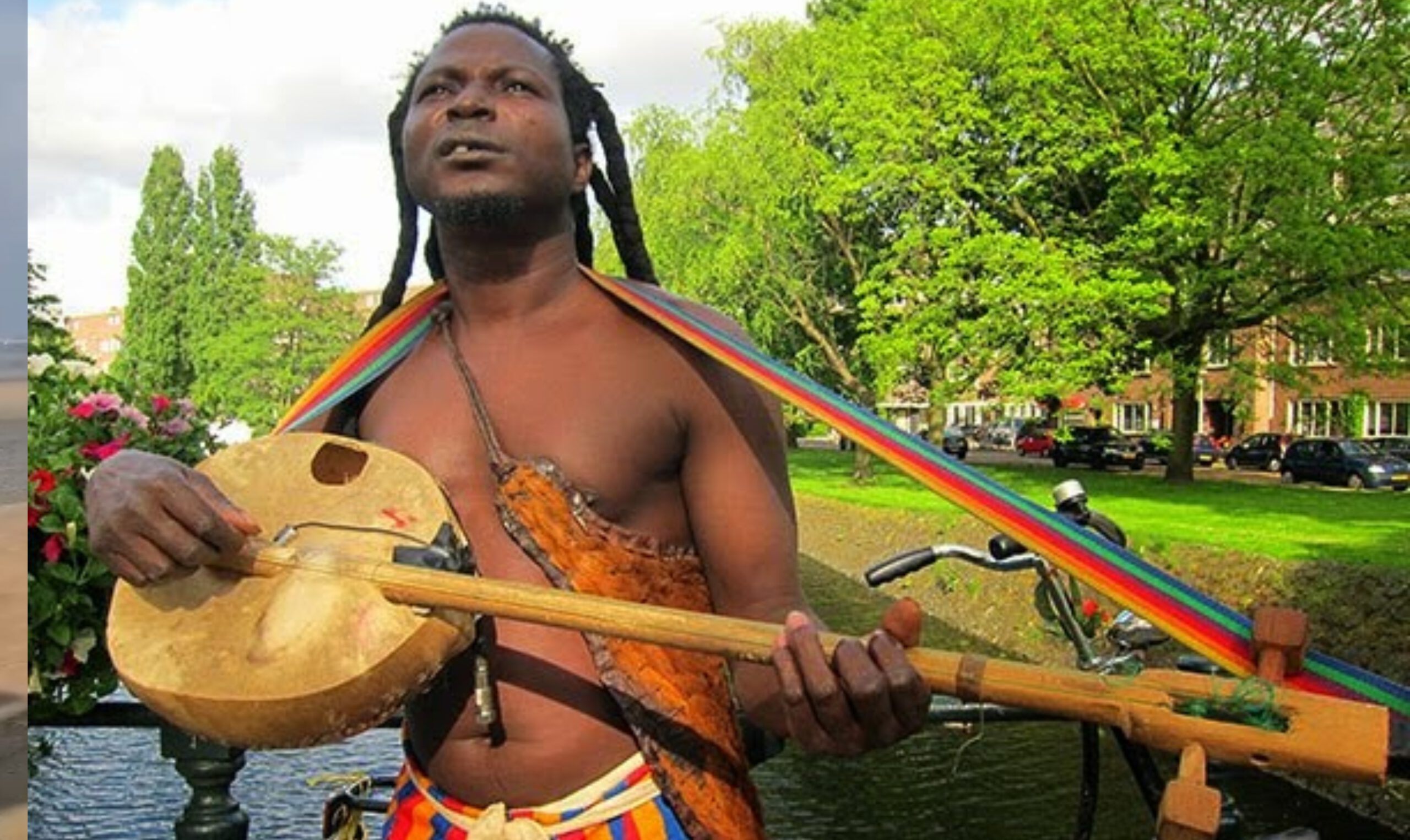
How King Ayisoba’s Underrated Kologo Sound Reached the 2027 Grammy Stage
King Ayisoba has spent nearly two decades taking a traditional Ghanaian instrument to audiences around the world without abandoning the sound that defines his music. From performances at major international festivals to collaborations with musicians across different genres, he has built a career around a style that remains distinct from much of Ghana’s mainstream music.
In 2017, he described the ambition behind that journey in an interview with Rhythm Passport: “I want to make the world love kologo music like Bob Marley made the world like reggae music.”
Nearly a decade later, his first Grammy nomination suggests that the ambition is beginning to materialise.
Ayisoba, born Albert Apoozore, has earned a nomination for No Tradition, No Africa, his collaboration with Rocky Dawuni, in the Best African Music Performance category at the 2027 Grammy Awards. The recognition places his distinctive kologo sound before an international audience through one of music’s most prominent awards platforms.
How the Kologo Became His Signature Sound
Ayisoba’s musical roots are in northern Ghana, particularly the Upper East Region, where he grew up with the traditions of the Frafra people. The kologo, a traditional two-stringed lute, became his defining instrument, accompanying songs marked by distinctive vocals, energetic rhythms and lyrics addressing social issues, culture and everyday life.
His breakthrough came in 2006 with his debut album, Modern Ghanaians. Its hit song, I Want to See You My Father, introduced his unusual sound to a wider Ghanaian audience and established him as a distinctive voice in the country’s music scene. The album earned him recognition at the 2007 Ghana Music Awards.
Rather than move towards more commercially dominant styles, Ayisoba continued developing his own approach, combining traditional instrumentation with contemporary production.
His music subsequently attracted attention beyond Ghana. One important partnership was with Dutch musician and producer Frank de Boer, known professionally as Zea. After encountering Ayisoba’s music in Ghana in 2006, de Boer began working with him, a relationship that developed into recordings and repeated European tours.
The partnership helped connect Ayisoba with Glitterbeat Records, the European label that released his albums 1000 Can Die in 2017 and Work Hard in 2023. These projects and his international performances helped introduce his music to audiences well beyond Ghana.
Taking Northern Ghanaian Music to International Stages
Ayisoba’s international profile has grown through years of touring and performances at established festivals and cultural venues.
His appearances include Roskilde Festival in Denmark, WOMAD in the United Kingdom, Le Guess Who? in the Netherlands and the Barbican in London. He has performed across Europe for audiences who may have had little previous exposure to the musical traditions behind his work.
His performances are not simply presentations of an unfamiliar instrument. They combine the kologo with powerful vocals, percussion and energetic dancing, making the music an experience as much as a listening exercise.
That international journey gives added significance to his 2017 statement about wanting the world to embrace kologo music. At the time, it was an expression of ambition. His Grammy nomination now offers a tangible measure of how far that ambition has travelled.
Why Rocky Dawuni Calls Him a Trailblazer
Ayisoba’s contribution has also earned recognition from Rocky Dawuni, whose own career has taken Ghanaian reggae and Afro-roots music to international audiences.
In an interview on Joy Prime’s Prime Time on October 15, 2026, Dawuni praised Ayisoba for taking the kologo beyond its traditional setting.
“What King Ayisoba has done is remarkable. He took an instrument that many people looked down on, the Kologo, and made it a global instrument. He paved the way for many of us who believe in the power of our own indigenous sounds,” Dawuni said.
His comments recognised Ayisoba’s decision to build an international career around indigenous Ghanaian music while retaining its identity.
Their collaboration on No Tradition, No Africa brings together two musicians whose work draws on different African musical influences. It also gives the kologo a place in a recording now competing for one of the industry’s major awards.
The Song Behind the Grammy Nomination
No Tradition, No Africa combines Ayisoba’s kologo-driven sound with Dawuni’s Afro-roots and reggae influences. Produced by Panji Anoff, the recording explores African identity, cultural heritage and the importance of preserving traditions.
The song was released on May 29, 2026, and later appeared as a bonus track on Ayisoba’s seventh album, Pure Confusion, released on September 4. The album’s first eight tracks were recorded and produced by British producer Adrian Sherwood, while Panji Anoff produced the collaboration with Dawuni.
At the 2027 Grammy Awards, the song will compete in the Best African Music Performance category against Gratitude by Asake, Aye Kan (Are You Coming Back?) by Angélique Kidjo and Ayra Starr, Big Daddy by Tems, and Jogodo by Wizkid and Asake.
For Ayisoba, the nomination marks his first Grammy recognition. But its significance extends beyond an individual career milestone. It brings international attention to a musical tradition he has spent years carrying from northern Ghana to stages around the world.
In 2017, he said he wanted the world to love kologo music as it had embraced reggae through Bob Marley. His Grammy nomination does not mean that ambition has been fully realised, but it is a significant step towards it.
The instrument he chose to build his career around is now part of a Grammy-nominated recording, placing a distinctive sound from northern Ghana alongside some of Africa’s biggest contemporary music names.

