


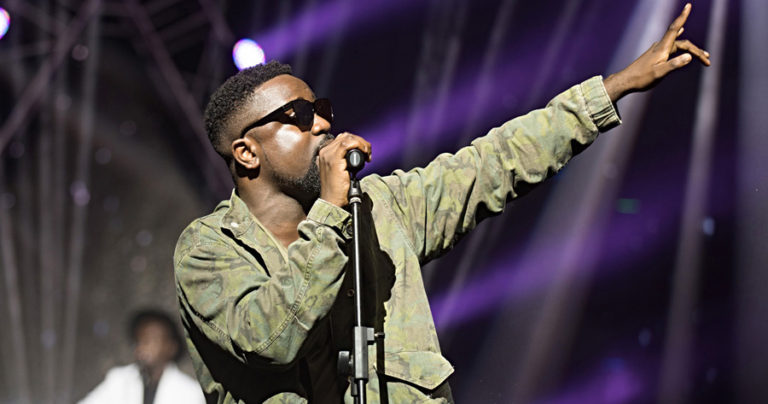
Ghanaian rapper Sarkodie has challenged the government to stop treating filmmaking as an afterthought during budget approvals and instead fund cinema as a strategic tool for national branding and investment attraction.
In a post on X on Thursday, November 19, 2026, the award-winning musician pointed to how Hollywood shaped global desire to visit and invest in the United States, arguing that Ghana and the wider continent have barely tapped into visual storytelling to sell themselves to the world.
“How many of you wanted to visit the West so badly because of the Hollywood movies you grew up watching? Almost all of us! They successfully sold the world an image of America, making it look like heaven through films, storytelling and visuals,” he wrote.
Sarkodie stressed that achieving that level of visual impact requires hiring skilled directors and cinematographers whose craft comes at a significant price.
“Every other sector will present a budget and have it approved, yet the creative sector is often overlooked, despite the enormous role it plays in nation-building,” he stated, adding that compelling visual work relies on intentionality and detail rather than random camera shots. “Let’s revive our film industry. It’s time government recognised film as a powerful tool to communicate its vision, tell our stories and sell Ghana and Africa to the world.”
A Wider Chorus Across the Industry
Sarkodie’s intervention lands amid mounting pressure from filmmakers, actors and political leaders over why Ghana’s movie sector still struggles to compete internationally, even as Ghanaian music and visual directors command global attention.
Just a day earlier, on Wednesday, November 18, 2026, former Vice President Dr Mahamudu Bawumia met with film industry stakeholders and accused successive governments of paying lip service to cinema’s job-creation potential, calling for tax incentives, a dedicated streaming platform and the passage of a Broadcasting Act.
Within the industry itself, practitioners have repeatedly warned that funding alone will not fix deeper structural bottlenecks:
- Distribution bottlenecks: Veteran actress and producer Selassie Ibrahim has argued that weak exhibition and streaming channels remain the single biggest obstacle holding Ghanaian cinema back. Speaking on the state of the sector, she noted that while producers in Nigeria shoot continuously, many Ghanaian filmmakers struggle to shoot even once a year because there are too few reliable cinemas or platforms to recoup costs. “Until we fix our distribution channels, all the funding, all the training, and all the talent will continue to hit the same wall,” she warned.
- Piracy and irregular production: Film producer and casting director Mawuko Kuadzi has similarly pointed to a combination of inadequate financing, weak marketing, rampant piracy and irregular production schedules as key factors undermining the profitability of Ghanaian movies.
The Budget Reality Behind the Debate
While Sarkodie suggested the creative sector is routinely bypassed when national budgets are approved, state financing for film is not entirely absent. In the 2026 Budget Statement, Finance Minister Cassiel Ato Forson allocated GH¢20 million as seed money for the Film Development Fund, which the National Film Authority (NFA) formally launched in May 2026.
However, pitching figures released by the NFA in November 2026 underscore the gap Sarkodie is pointing to: Ghanaian filmmakers submitted nearly 100 applications requesting almost GH¢100 million from that GH¢20 million seed pot, representing five times what the fund currently holds.
By linking high-end cinematography directly to national soft power, Sarkodie has framed the debate around a practical test for policymakers: whether Ghana is prepared to back professional storytelling at a scale capable of competing globally, or leave its international image to be shaped by outsiders.

