


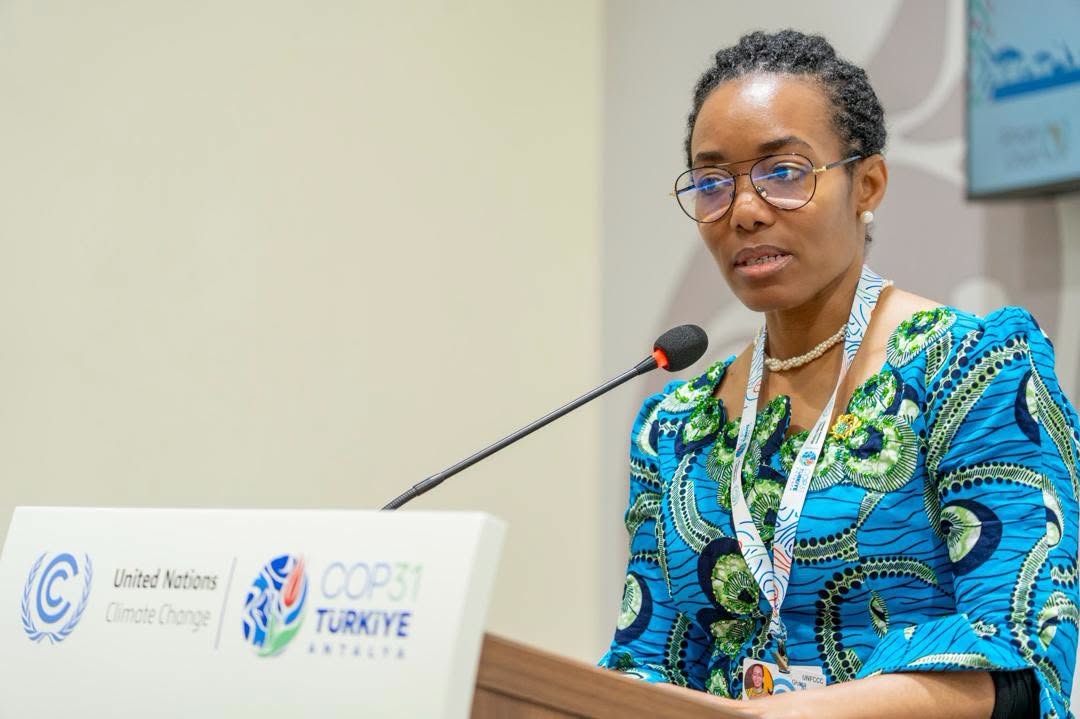
Ghana’s push for stronger climate-finance commitments is facing a major test after a revised draft agreement at COP31 removed an earlier proposal calling for accelerated action to phase out fossil fuels and dropped a proposed target of at least US$120 billion in annual adaptation finance by 2035.
The nine-page draft, released on Thursday, November 19, is significantly shorter than the earlier version published on Monday. It removes explicit language calling for an accelerated transition away from fossil fuels, one of the most contentious issues in the negotiations.
The changes have drawn criticism from climate campaigners and developing countries, particularly over the weakening of proposals on adaptation finance as the conference approaches its scheduled conclusion on Friday, November 20.
However, the revised text retains a broader commitment to at least triple adaptation finance by 2035. What it no longer provides is the specific US$120 billion annual target and a clearly established financial baseline for measuring progress.
For Ghana and other African countries, the changes raise questions about whether the final agreement will provide the predictable financial support needed to protect vulnerable communities from the effects of climate change.
Ghana Leads Africa’s Push for Climate Finance
Ghana has a prominent role in the negotiations, with Nana Dr Antwi-Boasiako Amoah chairing the African Group of Negotiators on Climate Change (AGN).
The country also has a ministerial leadership role, with its Minister for Environment, Science and Technology, Dr Zanetor Agyeman-Rawlings, chairing the African Group of Ministers for Negotiators.
At a high-level consultative meeting in Antalya, Dr Agyeman-Rawlings challenged the repeated failure to translate climate-finance promises into tangible support for African countries.
“What happens when decades of repeated promises, shifting goalposts, and unfulfilled commitments push an entire continent to question its continued participation in a process that demands so much of her, yet delivers so little in return?” she asked.
She warned that the delays in delivering climate commitments had consequences beyond diplomatic disagreements, particularly for communities already dealing with droughts, floods, wildfires and coastal erosion.
“How many more lives must be lost before we recognise that delay is not merely a diplomatic failure, but a human tragedy?” she asked.
The minister made clear that Africa wanted concrete outcomes from the negotiations rather than another round of promises.
“We will not leave Antalya with words alone,” she said.
Dr Agyeman-Rawlings has urged African countries to defend three key priorities: maintaining the commitment to triple adaptation finance, rejecting additional climate obligations without adequate financial and technical support, and preventing climate finance from being double-counted or provided mainly through loans that could worsen developing countries’ debt burdens.
She has also emphasised that climate finance is an obligation under the Paris Agreement, not charity.
Why the US$120 Billion Target Matters
The removal of the proposed US$120 billion annual adaptation-finance target is significant because it would have given a specific financial value to the commitment to triple adaptation funding by 2035.
The earlier draft proposed the figure as a minimum annual amount. The revised version retains the broader commitment to at least triple adaptation finance but removes the specific amount and the baseline against which progress would be measured.
Instead, the new text proposes further technical work to identify possible baselines and develop an implementation pathway. It also proposes an Antalya-to-Addis Ababa Roadmap on Adaptation and Resilience Finance, with a report expected for consideration in 2027.
The revised draft also acknowledges that developing countries need an estimated US$305 billion annually for adaptation until 2035, highlighting the gap between their requirements and available financing.
For African countries, the distinction is crucial. A commitment to increase funding may carry little practical value without a clear target, predictable financing arrangements and an agreed way to track whether developed countries are meeting their obligations.
What Climate Finance Could Mean for Ghana
The debate has direct implications for Ghana, where communities face growing risks from floods, droughts, changing rainfall patterns and other climate-related threats.
One example of the potential impact of adaptation financing is Ghana’s US$70 million Climate-Resilient Landscapes for Sustainable Livelihoods project, developed with the United Nations Environment Programme and supported by the Green Climate Fund.
The initiative, which includes a US$63.2 million grant from the fund, is designed to strengthen climate resilience in 120 communities across eight districts in the North East, Upper East and Upper West regions.
It is expected to benefit approximately 619,000 people directly, while early-warning alerts could reach up to 2.9 million people. About 120,000 people are also expected to experience improved food security through climate-resilient farming practices.
The project demonstrates how adaptation funding can support practical interventions, from early-warning systems and improved access to climate information to more resilient agricultural livelihoods.
It also illustrates why African countries are pressing for financing that is accessible and sufficient to support implementation, rather than commitments that remain largely on paper.
African Negotiators Criticise Retreat on Fossil Fuels
The removal of explicit language on accelerating the transition away from fossil fuels has become another major source of disagreement at COP31.
The earlier draft contained proposals calling for accelerated action to phase out fossil fuels and an immediate transition in energy systems. Neither proposal appears in the revised version.
The change is significant because countries agreed at COP28 in Dubai in 2023 to transition away from fossil fuels in energy systems in a just, orderly and equitable manner.
Nana Dr Antwi-Boasiako Amoah, chair of the African Group of Negotiators, criticised the contradiction between countries advocating climate action and pursuing arrangements that could increase the supply of polluting fuels.
“This is a hypocrisy in the whole process,” he told reporters.
His criticism highlights the frustration among climate negotiators who believe that international commitments to reduce emissions must be matched by consistent decisions on energy production and investment.
Mohamed Adow, director of climate and energy think tank Power Shift Africa, also criticised the revised draft, arguing that it weakened the direction established earlier in the week.
“This new text has gone backwards from the one released earlier in the week,” he said.
Adow warned that the revised wording could undermine the summit’s outcome if it remained unchanged.
COP31 Presidency Defends Revised Draft
The Turkish presidency has defended the changes, arguing that the negotiations must produce an agreement acceptable to participating countries.
COP31 President Murat Kurum said the summit had a responsibility to reach a successful outcome and that negotiators would continue working until an agreement was reached.
“We have an obligation to make COP31 a success,” he told reporters.
“We will not leave the negotiating table until the solution has been reached,” he added.
The position reflects the difficult balance facing the presidency. Decisions at the UN climate conference require consensus among participating countries, meaning the final text must accommodate competing positions on fossil fuels, climate finance and the pace of the energy transition.
However, the concessions made to secure agreement have raised concerns among countries and campaigners who want stronger commitments on emissions reductions and financial support.
COP31 Faces Final-Day Test
COP31 is scheduled to close on Friday, November 20, although negotiations could continue beyond the deadline if countries fail to reach consensus.
For Ghana and the wider African bloc, the final negotiations will be an important test of whether the continent’s demands for predictable climate finance and stronger adaptation support can be reflected in the conference outcome.
The revised draft retains the broad promise to increase adaptation finance, but the removal of the proposed US$120 billion annual target leaves the scale and delivery of that commitment uncertain.
With explicit language on accelerating the transition away from fossil fuels also removed, the final hours of COP31 could determine whether the summit produces a meaningful agreement or leaves some of its most contentious climate issues unresolved.

