

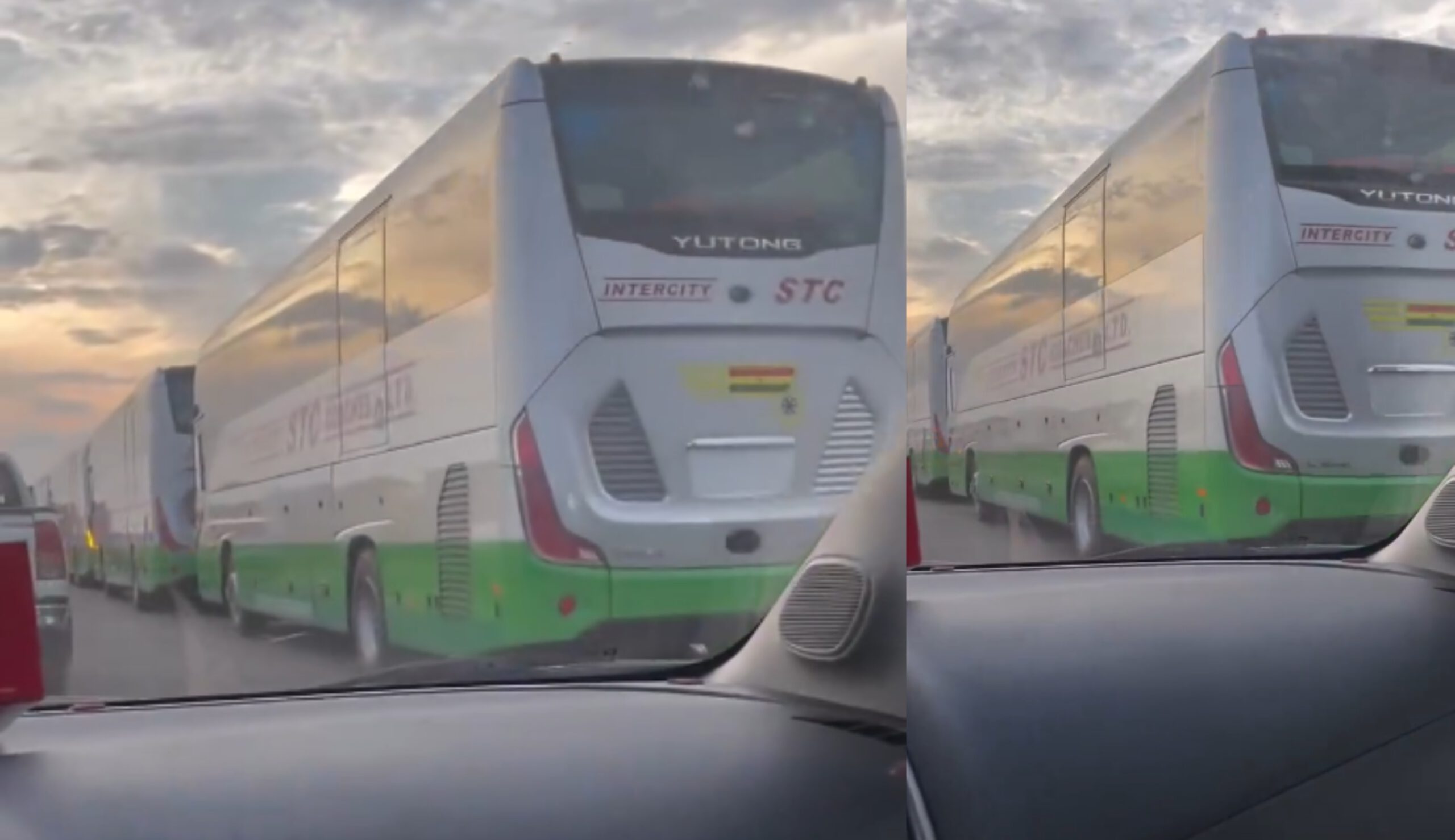
Ghanaian commuters could be heading towards some relief from persistent transport challenges following reports of the arrival of 10 new buses for the State Transport Company (STC) and the introduction of the Aayalolo contra-flow system in Accra.
While the additional buses could strengthen STC’s capacity to serve passengers, early reports from the Aayalolo pilot suggest that the traffic management initiative is already helping some commuters spend less time travelling to work.
Government Allocates GH¢400 Million for Public Transport Buses
The developments come as the government moves to strengthen the fleets of state-owned transport companies.
During the 2026 Mid-Year Budget Review on July 23, Finance Minister Dr Cassiel Ato Forson announced a GH¢400 million allocation for the acquisition of high-occupancy buses for STC and Metro Mass Transit (MMT).
“Government is reallocating GH¢400 million for the acquisition of high-occupancy buses to strengthen the fleets of state-owned transport companies, including Metro Mass Transit and the State Transport Company (STC),” he said.
The reported arrival of the 10 STC buses comes amid this broader effort to improve public transport. However, there has been no confirmation that the particular buses were acquired through the GH¢400 million allocation.
Aayalolo Contra-Flow Offers Relief to Accra Commuters
Meanwhile, the Aayalolo contra-flow pilot, which began on September 29, 2026, is providing another intervention to ease congestion during peak hours.
The service operates along four corridors: Amasaman–Accra, Pokuase–Accra, Adenta–Accra and Kasoa–Accra. Buses run from 6 am to 9 am and from 4 pm to 8 pm, using designated lanes to move against the main traffic flow.
The Greater Accra Passenger Transport Executive (GAPTE) reported encouraging results on the first day. Its Managing Director, Awudu Dawuda, said a journey from Adenta to Accra that could typically take about two and a half hours during peak periods took approximately 23 minutes.
GAPTE also reported that about 8,000 passengers travelled from Adenta towards Accra during the first two hours of the morning service.
Commuters Report Shorter Journeys and Lower Fares
Accounts from passengers have also highlighted the potential benefits of the initiative.
In a report published by the Ghanaian Times on October 28, a commuter identified as Foster said his journey from Adenta to Accra took less than 30 minutes, compared with as much as two hours using commercial transport.
He also reported paying GH¢8 for the journey, against approximately GH¢13 previously.
Another commuter, Nancy Ohene, said her journey from Accra to Adenta took less than 45 minutes. Edward Osae, a public servant who travels from Kasoa to Accra, called for the service to continue.
These accounts offer an indication of the relief some passengers are experiencing, although they do not establish average journey times across all four corridors.
Can the Improvements Be Sustained?
Additional buses could help increase passenger capacity and service frequency, particularly if they are deployed on routes where demand is high. The Aayalolo pilot, meanwhile, demonstrates how traffic management can complement an expanded transport fleet.
However, sustained improvements will depend on more than the arrival of buses or the introduction of dedicated lanes. Reliable schedules, adequate vehicles, effective enforcement and affordable fares will all be important.
STC is yet to provide details on when the reported new buses will enter service, the routes they will operate on and how frequently passengers can expect to use them.
For commuters, the real measure of progress will be whether these developments translate into dependable, affordable and less time-consuming journeys over the long term.