

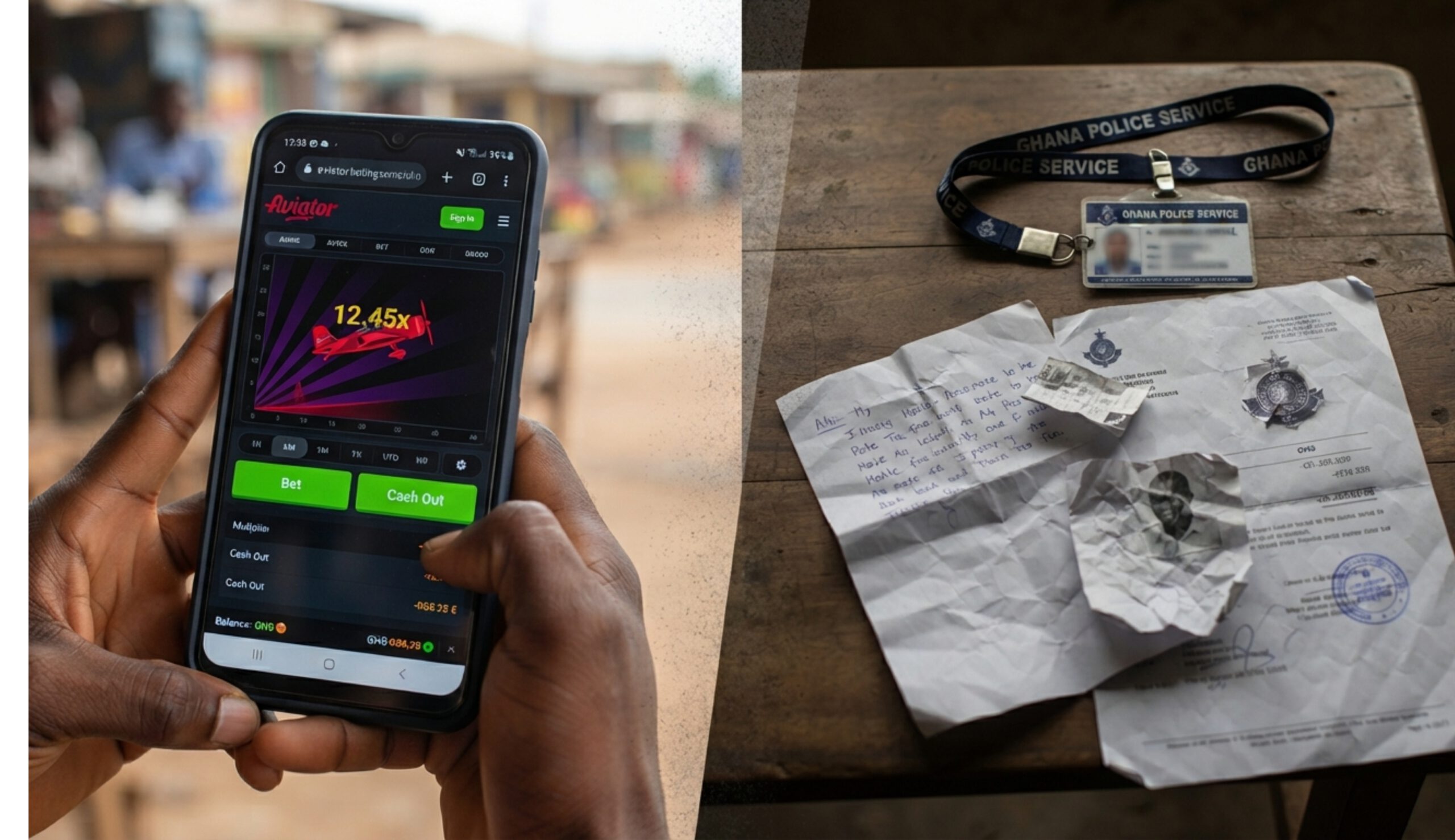
From borrowing money and selling personal belongings to struggling with mounting debts, some Ghanaians are paying a devastating price for gambling addiction. As online betting becomes more accessible, the stories of those caught in its grip raise urgent questions about financial vulnerability, mental health and the need for stronger safeguards.
The human cost of this crisis hit home when Bright Gyan Koomson, a former MTN employee and well-known member of the Wesley Methodist Cathedral, reportedly died by suicide. Behind his outgoing personality was a man drowning in hidden debt and emotional exhaustion. In a final note dated September 30, 2026, he left behind a raw account of his silent battle:
“I’m sure you are reading this or will see this after I’m gone… This happy person you all knew was silently fighting addiction… The first time I tried sharing my pain, it was seen as a joke. The after judgment? Well I don’t know… Let’s learn to listen rather than to judge… make sure this never happens to anybody else.”
Koomson remembered finding peace at the Wesley Methodist Cathedral, specifically naming Rev. Ebenezer Arhin and church leadership while recalling how parishioners knew him as the young MTN staff member who loved to dance and entertain the elders. He expressed deep guilt over the debt he left behind for his parents, admitting that trying to borrow his way out of one set of losses only created a bigger mess. He urged society to pay closer attention to young people who appear happy on the outside but are struggling in silence.
If you or someone you know is struggling with depression, gambling addiction, or thoughts of self-harm, support is available. Please reach out to local healthcare professionals, trusted counsellors, or mental health support services.
Koomson’s tragedy is part of a broader pattern now reaching directly into Ghana’s essential public services and corporate workforce, mirroring how working Ghanaians are increasingly turning to betting to manage debt and rising living costs.
Inside a Police Officer’s Struggle With Aviator
An investigation by PSK News reveals that even security personnel tasked with maintaining public order are caught in the destructive cycle of fast-paced online betting games like Aviator.
Sergeant “Benjamin” (not his real name) has served in the Ghana Police Service since 2011. Despite earning between GHc7,000 and GHc10,000 a month including extra duty allowances, an income he admits should easily support his wife and child, he describes his bank balance as simply “minus.”
As detailed in our exclusive report on the police sergeant’s betting addiction, salaries, loans, and motorbike sale, his struggle with Aviator started around 2022. The game uses a rising multiplier attached to a moving plane on a phone screen, promising to turn small mobile money deposits into quick profits within seconds if the player cashes out before the plane crashes.
“You don’t know where actually it will end,” Benjamin explained. “So you’re just betting blindly, hoping that it will increase to your ideal multiplier in order to make a profit, only to disappoint you.”
That uncertainty repeatedly pulled him under. Over four years of playing, Benjamin lost his entire monthly salary to Aviator on three separate occasions. In one instance, a full monthly pay of about GHc4,300 vanished in under two hours.
To cover basic household expenses after losing his pay, he took out microfinance loans against his payslip, only to gamble away part of the borrowed money on his walk home. Last December, after losing his salary again at a duty post, he was forced to sell his Royal motorbike for GHc5,000 just to buy food and survive the festive season. Even then, part of the sale money went straight back into the game.
He tried extreme measures to stop: breaking his mobile phones, burning SIM cards, and surrendering his Ghana Card to prevent himself from re-registering mobile money accounts. Yet, browser access and borrowed phones repeatedly pulled him back in.
“Greed is the right term,” Benjamin said. “If you appreciate what you have, you make your budget with what you have. But if you don’t appreciate it, you end up throwing it away in order to make it cheaply, at ease and without sweat.”
His account was backed by another senior officer, Chief Inspector “Sampson” (pseudonym), who admitted over the phone that gambling has been his personal “bane” for years, though he declined a recorded interview with PSK News out of fear of damaging his professional standing.
Economic Pressure Driving 30% of Working Ghanaians to Gambling
These personal accounts align with disturbing national data on Ghana’s workforce.
The latest Old Mutual Financial Wellness Monitor reports that nearly 30 percent, or three out of every ten working Ghanaians, now rely on gambling and betting as a coping strategy to pay for daily living expenses and manage debt.
Even though 37 percent of workers reported higher earnings in 2026 compared to previous years, financial insecurity remains widespread across the country:
- 39 percent of working respondents constantly fear losing their primary source of income.
- 53 percent say they would completely run out of money in less than three months if they lost their jobs.
- 27 percent now work multiple jobs or side hustles to get by, a figure that rises to 32 percent among young adults aged 20 to 29.
The mix of job insecurity, high living costs, and instant mobile money transfers has turned online betting from a leisure activity into a desperate survival attempt for working citizens.
Breaking the Cycle
For those trapped in the loop of chasing betting losses, recovering gamblers and counsellors say the first step toward recovery is accepting that lost money cannot be gambled back.
“I don’t hope on Aviator to do it. Maybe I have to start anew,” Benjamin said. “If you have 20 cedis in your hand, it’s worth more than your investment of 1,000 Ghana cedis into Aviator. It will bring you back nothing. No one should take betting as a means of making a living.”
As mental health advocates and community leaders call for stricter regulation on instant online betting platforms and better addiction support, the growing toll on Ghanaian lives remains a stark warning about the true cost of unmonitorek warning about the true cost of unmonitored gambling.