


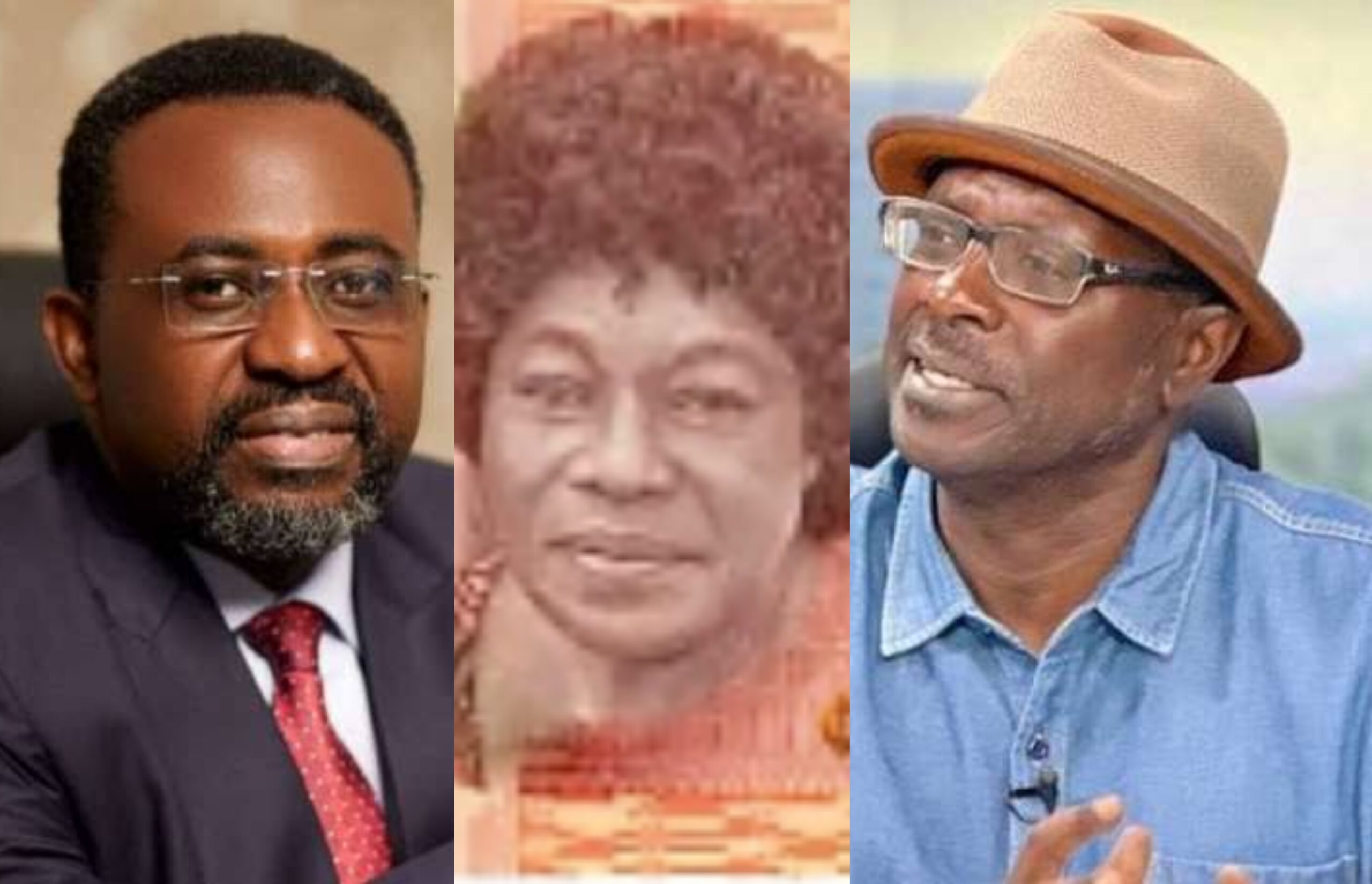
The Bank of Ghana’s explanation of how it produced the portrait of Theodosia Salome Okoh on the new GH¢50 banknote has failed to convince Professor Kwaku Asare, who has described the response as “unbankable” and demanded greater transparency from the central bank.
The US-based Ghanaian legal scholar’s reaction comes amid growing questions about whether the portrait on the new Heritage Series note actually depicts the woman who designed Ghana’s national flag.
The controversy started after Professor Eddie Obeng, a nephew of Mrs Okoh, questioned the identity of the woman on the note. He said the portrait appeared to resemble his mother, Dr Letitia Eva Takyibea Obeng, rather than his aunt.
In a clarification shared by Bank of Ghana board member Beatrice Annan, the Bank said it had used three authentic photographs of Mrs Okoh to develop the image. Two were taken during her younger years and one in later life. The photographs were combined to produce a portrait showing her as a mature woman.
The Bank also explained that adjustments were made to her hairstyle to meet the technical requirements of banknote engraving.
For more on the wider significance of the new currency, read our analysis of what the Bank of Ghana’s Heritage Series banknotes mean for Ghanaian businesses.
But Professor Asare believes that explanation leaves the most important question unanswered.
Why Prof Asare Is Not Convinced by the Bank’s Explanation
Describing the clarification as “com ci, com ça” and “unbankable”, Professor Asare argued that explaining the technical process behind the portrait does not establish whether the final image genuinely resembles Mrs Okoh.
His concern is not simply about how the image was produced. It is about whether the person depicted is correctly identified.
He also questioned whether Mrs Okoh’s family was consulted before the final portrait was approved, arguing that Ghanaians deserve a proper explanation of how the image was selected and verified.
Prof Asare’s ‘REBAR’ Argument
One of the most striking parts of his reaction was his use of the term “REBAR”, which stands for “Reconstructed Beyond All Recognition”.
He used it to describe a situation in which an image has been altered so extensively during reconstruction that it no longer bears a recognisable resemblance to the person it is meant to represent.
Professor Asare outlined two possibilities behind the controversy: that the portrait resembles Mrs Okoh’s sister, Dr Letitia Obeng, or that the reconstruction process changed the image so much that her identity has become difficult to establish.
“Neither mistaken identity nor REBAR is acceptable,” he argued.
His point is that the technical demands of producing a banknote portrait should not come at the expense of accurately representing the person being honoured.
What Prof Asare Wants the Bank of Ghana to Do
Professor Asare has called on the Bank to release the three photographs it says were used to produce the portrait and explain how they were combined to create the final image.
Making the source photographs public, he believes, would allow Ghanaians to examine the material behind the design rather than rely solely on the Bank’s explanation.
He also wants the Bank to acknowledge the mistake, apologise and correct the portrait if it turns out that the wrong person was depicted or that the reconstruction failed to preserve Mrs Okoh’s likeness.
“That is accountability, not weakness,” he said.
The Bank has said it is engaging members of Mrs Okoh’s family to explain the work involved in creating the portrait and address their concerns. Whether that engagement will resolve the dispute remains to be seen.
When Will the New GH¢50 Note Enter Circulation?
President John Dramani Mahama launched the Bank of Ghana’s Heritage Series banknotes on November 12, 2026. The GH¢50 denomination honours Mrs Okoh for designing Ghana’s national flag, which was adopted at independence in 1957.
The launch also raised questions about what the new currency means for businesses and the wider economy. Read more in our report on what the Bank of Ghana’s Heritage Series banknotes mean for Ghanaian businesses.
The new notes are scheduled to enter circulation on December 1, while existing banknotes will remain legal tender.
As Ghanaians prepare for their arrival, the Bank has also cautioned the public against spraying and mishandling the new currency. Read more about the Bank of Ghana’s warning against spraying the new cedi notes.
The portrait controversy has, however, placed the Bank under pressure to provide a clearer account of how it arrived at the image chosen to honour one of Ghana’s most recognised national figures.

