


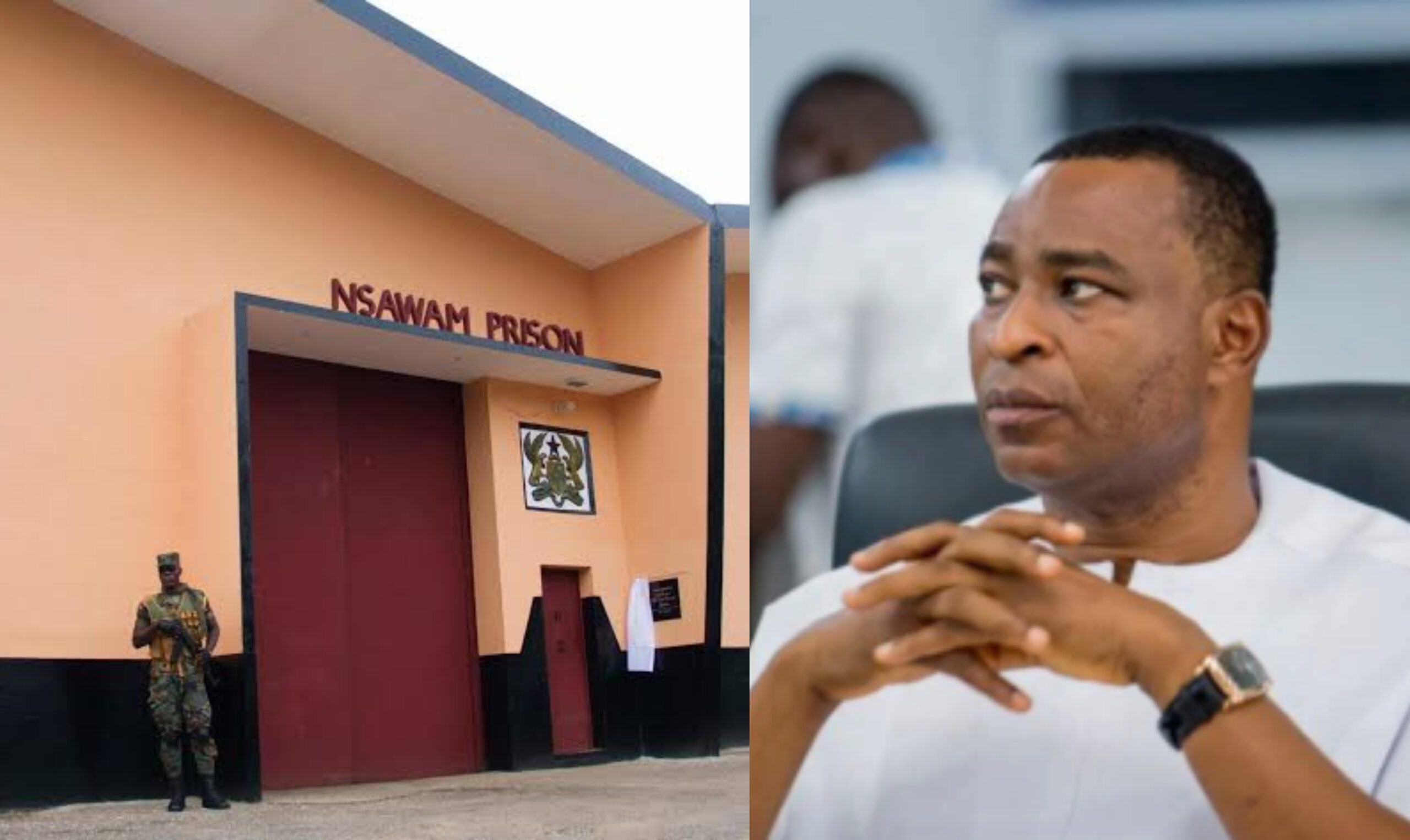
Bernard Antwi Boasiako, popularly known as Chairman Wontumi, will remain in prison after the Accra High Court dismissed his application for bail pending appeal against his 20-year sentence for mining-related offences.
The former New Patriotic Party (NPP) Ashanti Regional Chairman had asked the court to release him while he challenged his conviction over illegal mining activities involving Akonta Mining Company’s concession at Samreboi in the Western Region.
However, the court ruled on Monday, November 16, 2026, that he had failed to demonstrate that his grounds of appeal were sufficiently arguable or had a reasonable prospect of success to justify his release.
The decision is a setback for Wontumi, but it does not mean his appeal has failed. His lawyers intend to pursue the matter at the Court of Appeal.
Why Did the Court Reject Wontumi’s Bail Application?
Wontumi’s legal team, led by former Attorney-General Samuel Atta Akyea, relied on 19 grounds of appeal to argue that his conviction was affected by serious errors of law.
One of the central arguments concerned the interpretation of the Minerals and Mining Act, 2006 (Act 703), particularly provisions relating to the assignment of mineral rights without ministerial approval.
The defence argued that the trial judge had failed to properly consider the relevant provisions before convicting their client.
His lawyers also challenged the basis for holding him personally criminally responsible, arguing that Akonta Mining Company Limited had a separate legal identity.
They maintained that Wontumi was not a flight risk, citing his compliance with bail conditions during the trial and the fact that his passport remained in the custody of the Economic and Organised Crime Office (EOCO).
The State opposed the application. Deputy Attorney-General Dr Justice Srem-Sai argued that Wontumi had not established the exceptional circumstances required for bail pending appeal. The prosecution also raised concerns about his two other pending criminal cases.
In its ruling, the High Court found that the defence had not demonstrated that the grounds raised were sufficiently arguable to justify his release.
On the interpretation of Act 703, the court said the lawyers had not established a basis in the law to support their claim that the trial judge had misinterpreted the relevant provisions.
It also rejected the argument concerning the treatment of the third accused person, holding that Wontumi had been convicted on the basis of his own conduct.
The court further considered the prosecution’s evidence and the defence arguments but found insufficient grounds to grant bail.
Does the Ruling Mean Wontumi Has Lost His Appeal?
No. The court’s decision concerned his request for temporary release, not the final determination of his appeal against the conviction and sentence.
The distinction matters because the two proceedings address different questions.
The bail application sought to establish whether Wontumi should remain in custody while challenging his conviction. The substantive appeal will examine whether the trial court made errors of law or fact that justify overturning or varying its decision.
Although the High Court considered some of the defence’s arguments when deciding the bail application, it has not finally determined the grounds of appeal.
The Court of Appeal will have to examine the legal challenges, the trial record and the applicable law before deciding whether the conviction and sentence should stand.
The rejection of bail is therefore a setback, but it does not automatically determine the outcome of the appeal.
Which Legal Issues Could Determine the Appeal?
Two issues stand out from the arguments reported so far.
The first concerns the interpretation of Act 703 and whether the trial court correctly applied the law governing the assignment of mineral rights without ministerial approval.
The second concerns Wontumi’s personal criminal responsibility for activities involving Akonta Mining Company Limited.
His lawyers have argued that the company is a separate legal entity. However, that fact alone does not settle whether an individual can be held responsible for their own conduct.
The appellate court will have to consider the evidence and the legal basis for the trial judge’s findings.
These questions will be central to determining whether the conviction can withstand the appeal.
What Happens Next?
Wontumi’s lawyer has indicated that the defence intends to renew its bail application at the Court of Appeal, where the substantive appeal is pending.
Speaking after Monday’s ruling, Atta Akyea said he was disappointed but not discouraged. He also indicated that the legal team would take steps to expedite the preparation of the record of appeal.
The 20-year sentence was imposed on July 20, 2026, after the High Court found Wontumi guilty of assigning mineral rights without the required ministerial approval and intentionally facilitating unlicensed mining operations.
The prosecution also cited two other criminal cases against him when opposing his release. Those proceedings are separate from the Samreboi mining case and could expose him to further legal consequences if they result in convictions.
For now, Wontumi remains in prison as he challenges his conviction. Whether he can overturn the 20-year sentence will depend on the Court of Appeal’s determination of the legal and evidential issues raised by his defence.

