


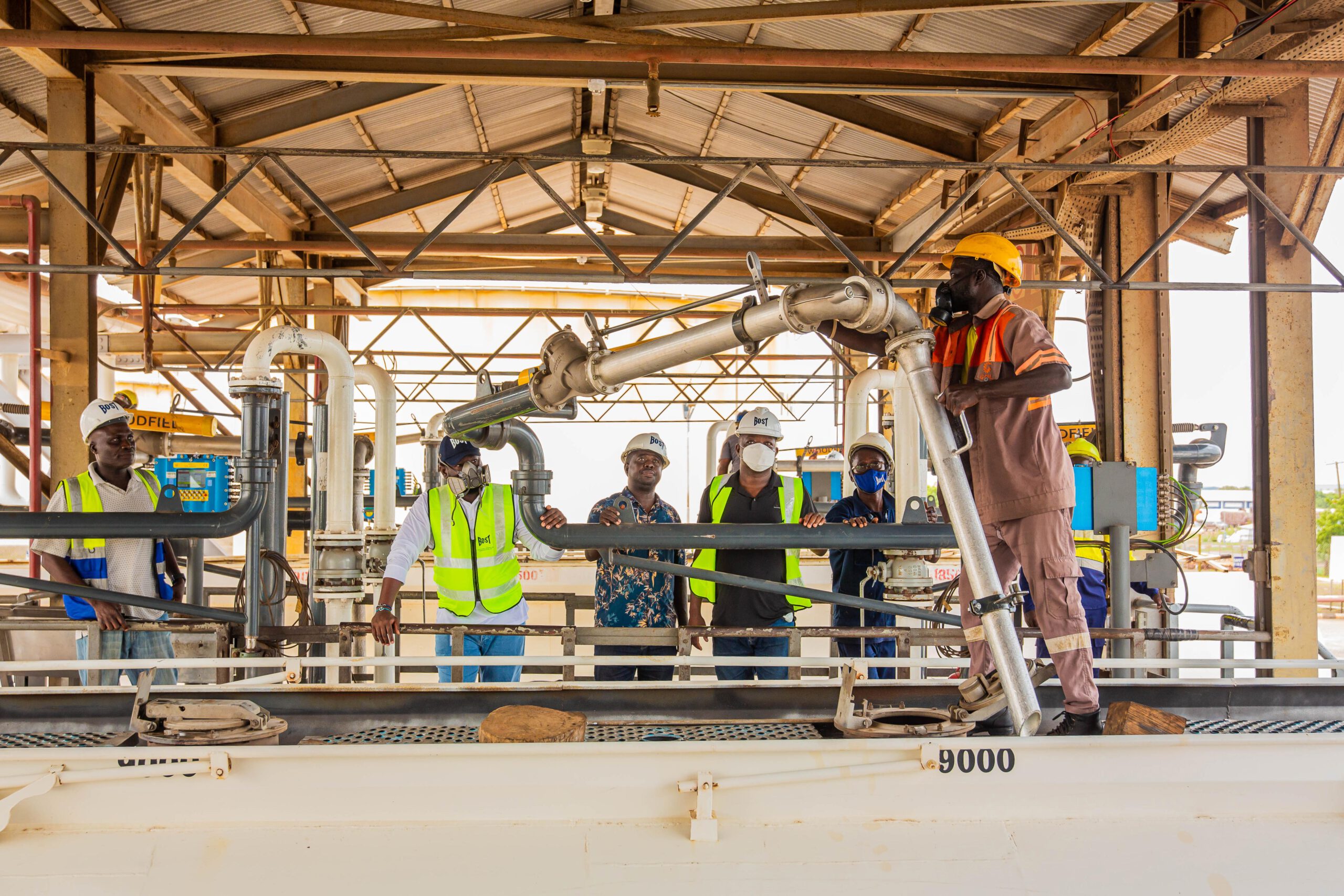
Petroleum workers in Ghana are threatening a nationwide strike if Parliament passes the proposed National Petroleum Authority (NPA) Bill without addressing concerns over a provision they say could weaken state-owned BOST Energies, put jobs at risk and disrupt the country’s fuel distribution network.
The General Transport, Petroleum and Chemical Workers’ Union (GTPCWU) says its objection centres on Clause 103, which would open the development, ownership, operation and maintenance of inland petroleum depots to private operators, ending BOST’s exclusive mandate over those facilities.
The union argues that the proposed change could leave BOST competing for business without giving it the commercial freedom to operate on equal terms. It has warned that workers across the downstream petroleum sector could take industrial action if Parliament approves the Bill in its current form.
But what exactly would Clause 103 change, and why has it become such a major point of disagreement?
What Does Clause 103 of the NPA Bill Propose?
Inland petroleum depots are facilities used to receive, store and distribute fuel transported from coastal import terminals and refineries to other parts of the country.
They are particularly important for supplying petroleum products to communities far from the coast.
BOST Energies currently plays a central role in this system through its storage facilities and pipeline network, which connects locations including Tema, the Accra Plains, Akosombo and Buipe.
Under the existing arrangement, the state-owned company has an exclusive mandate over the development, operation and maintenance of inland petroleum depots and their interconnecting infrastructure.
Clause 103 would open these activities to private operators, allowing them to develop and operate inland depots.
The proposed change is intended to encourage private-sector participation in the downstream petroleum industry. However, the union believes the arrangement could put BOST at a disadvantage if the company continues operating under its existing commercial restrictions.
Why Are Petroleum Workers Opposing the Bill?
The union fears that private operators could attract petroleum volumes that currently pass through BOST’s infrastructure, reducing the company’s revenue and leaving some of its facilities underused.
It also argues that this could affect the company’s ability to maintain its pipelines and storage facilities, particularly in areas where private investors may have less commercial interest.
Employment is another major concern.
National Chairman of the GTPCWU, Bernard Owusu, said BOST’s permanent workforce increased from 440 in 2024 to 743 by November 2025, adding 303 permanent unionised jobs.
The union fears that opening inland depot operations to private competition could put some of these positions at risk.
It has also raised concerns about fuel distribution to northern Ghana, arguing that private operators may prioritise commercially attractive routes while less profitable locations receive less attention.
Another point of disagreement is BOST’s ability to sell petroleum products directly to Oil Marketing Companies (OMCs).
The union questions why private operators would be allowed to compete in inland depot operations while BOST remains restricted from selling products directly to OMCs.
In its view, that would expose the state-owned company to competition without giving it equivalent commercial opportunities.
These are the union’s concerns, however, and not established consequences of the proposed legislation. The actual impact would depend on the final law, its implementation and the safeguards put in place.
What Does the Union Want Parliament to Do?
The GTPCWU says it is not against private investment in the petroleum industry. It wants investors to work with BOST Energies through partnerships under the Public-Private Partnership Act, 2020 (Act 1039).
The union believes this would bring in private capital and expertise while protecting the state’s investment in existing infrastructure.
It is also demanding changes to Clause 103, publication of the final stakeholder engagement report and the release of the Energy Ministry’s impact assessment on the proposed changes.
The union says it has petitioned President John Dramani Mahama, engaged the Energy Ministry and submitted proposals to Parliament, but remains dissatisfied with the Bill’s current provisions.
It has warned that failure to address its concerns could trigger industrial action involving BOST Energies workers and employees across the downstream petroleum sector.
No date has been announced for the proposed strike.
What Has the Energy Ministry Said?
The Energy Ministry has indicated that the disputed provision can still be changed during Parliament’s consideration of the Bill.
Its spokesperson, Richmond Rockson, said the government did not necessarily have to withdraw the entire legislation to address the union’s concerns.
“If that is what you need to amend, I’m not sure that we have to withdraw the entire bill. The amendment can be done at the committee level,” he said during an interview on JoyNews’ Eyewitness News on November 23.
He added that Energy Minister John Abdulai Jinapor remained open to further engagement with stakeholders.
The Ministry has also assured BOST that the government will not take decisions that undermine the state-owned company’s interests.
That leaves room for further negotiations, with Parliament able to consider amendments before the Bill becomes law.
Could the Dispute Affect Fuel Supply in Ghana?
BOST’s storage facilities and pipelines are important to moving petroleum products across the country. A disruption involving workers across the downstream petroleum industry could therefore affect depot operations and fuel distribution.
However, there is no confirmed strike date or evidence that fuel shortages are imminent.
Beyond the immediate industrial relations dispute, the debate raises a bigger question about the future of Ghana’s petroleum infrastructure.
How can the country attract private investment and encourage competition without weakening a state-owned company responsible for critical national facilities?
That is the question Parliament must confront as it considers Clause 103. For petroleum workers, the answer could determine not only the future of BOST Energies but also the conditions under which they work.

