


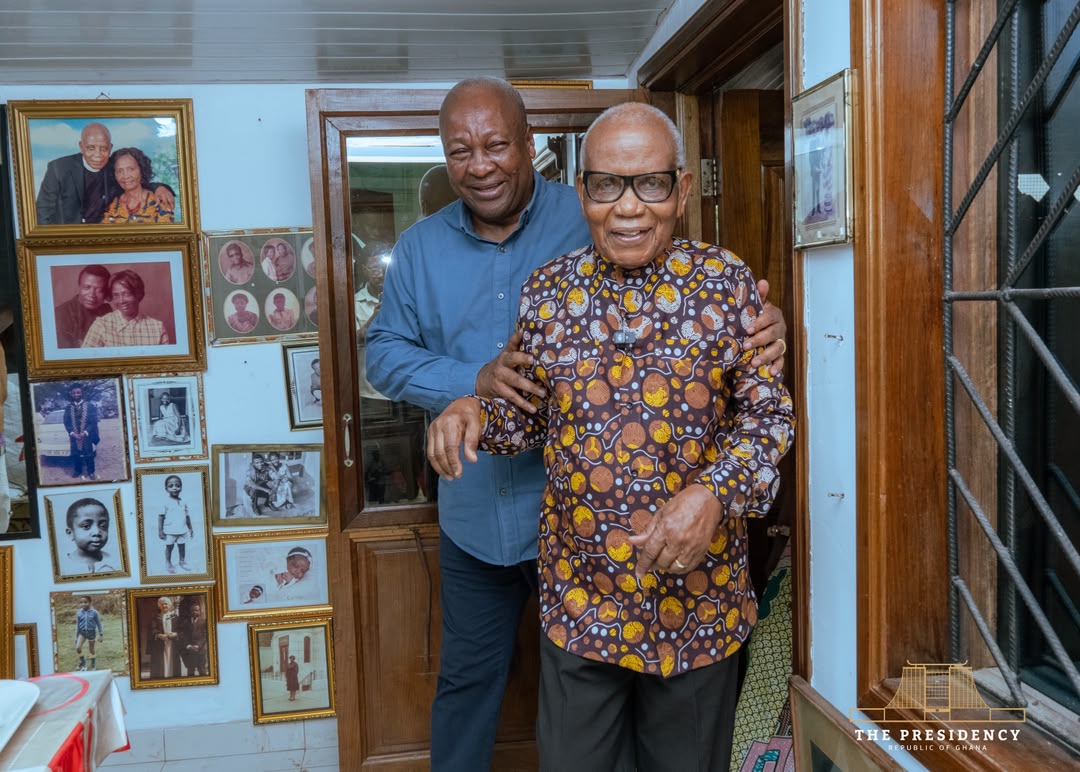
President John Dramani Mahama has paid tribute to veteran cinematographer Rev. Dr. Chris Tsui Hesse for helping save thousands of historical film reels documenting Ghana’s past, including the country’s independence era and the presidency of Dr Kwame Nkrumah.
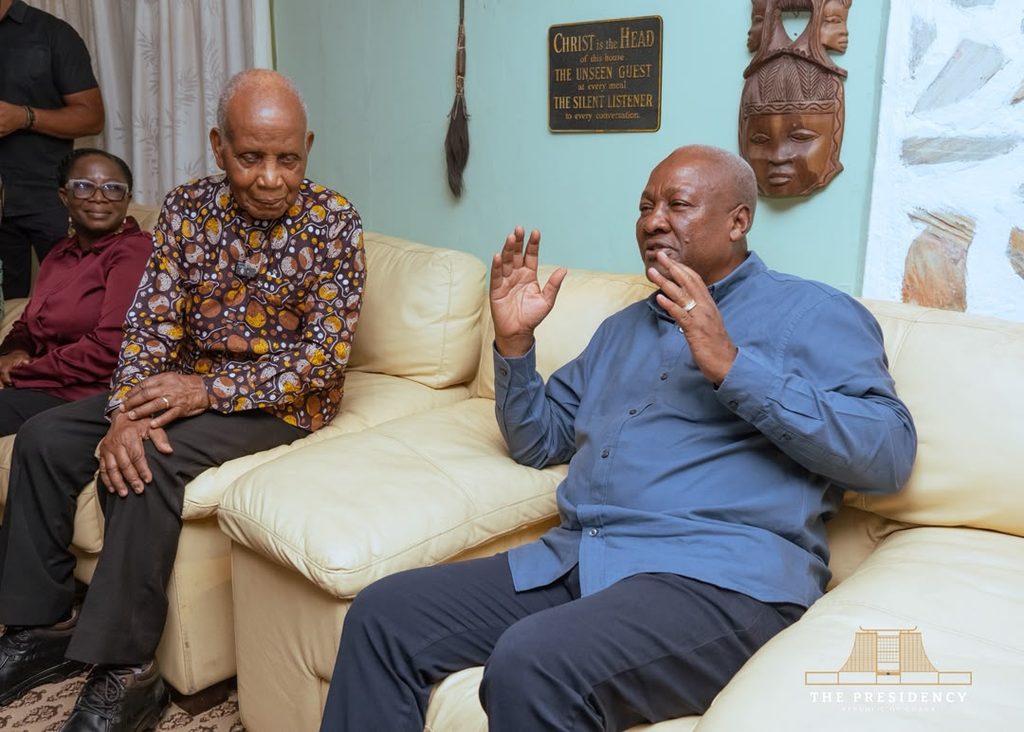
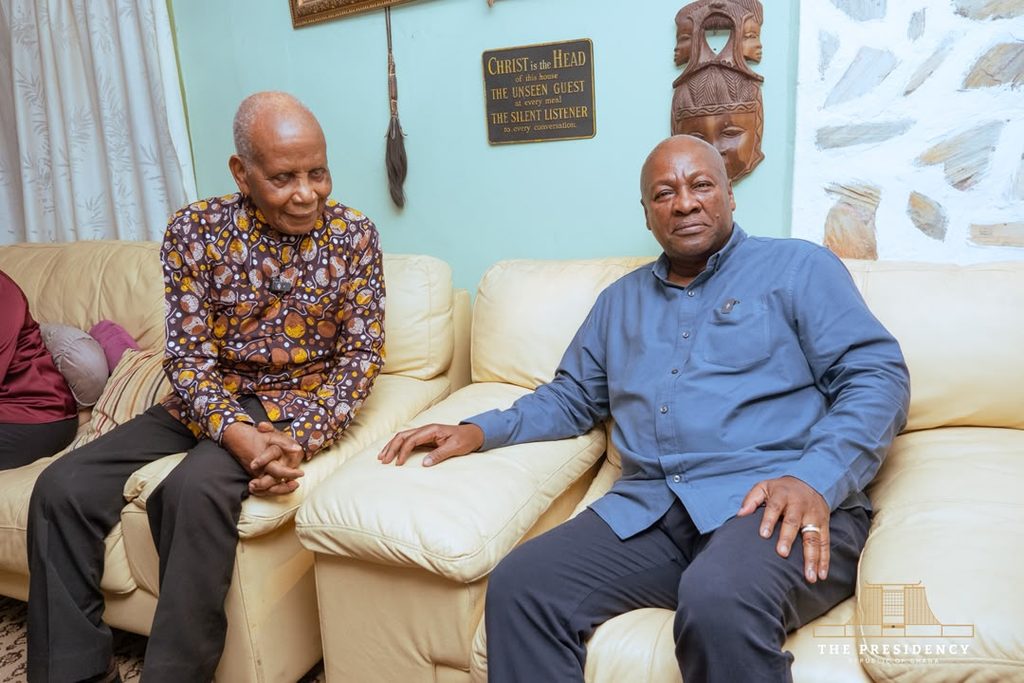
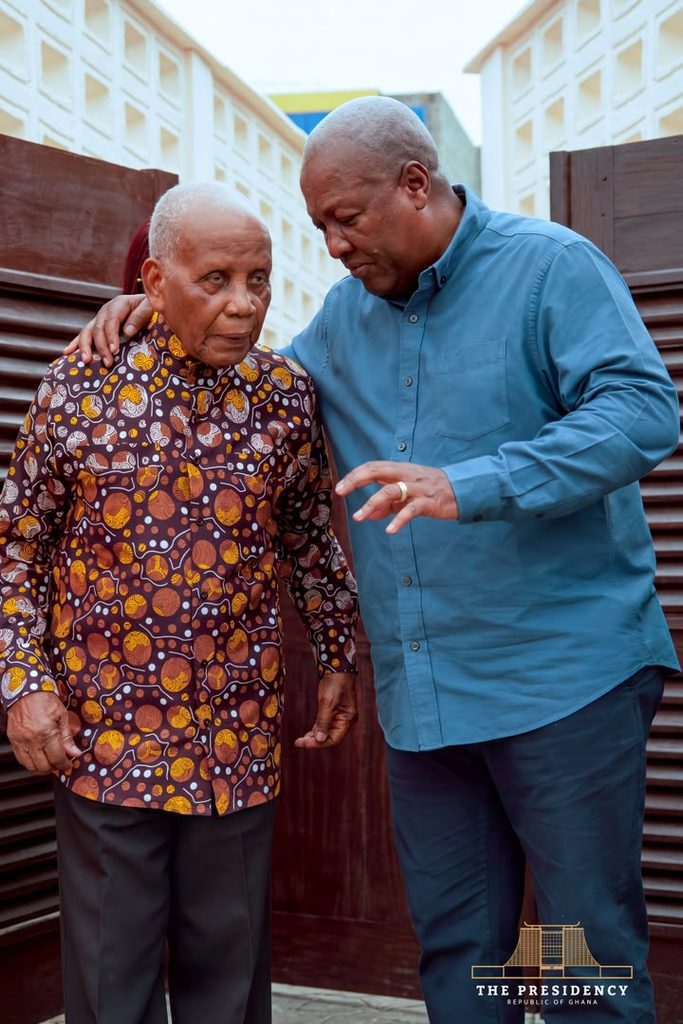
During a visit to the 93-year-old filmmaker, who served as Nkrumah’s personal cameraman, Mahama praised his determination to rescue footage that was at risk of being lost through years of neglect and deterioration.
The President said Hesse deserved recognition while he was still alive, rather than having the country celebrate his contribution only after his death.
“Uncle, we came to honour you. Of course, you have been honoured by Eyes of Ghana, which has become very popular and famous. And so we said that we must honour you, not posthumously. When you die, then we will start crying. We must do it while you are alive,” he said.
The visit follows renewed interest in Hesse’s work through the documentary The Eyes of Ghana, which tells the story of his efforts to preserve a remarkable collection of historical footage.
How Ghana Nearly Lost Its Film Archives
Mahama recalled that he learnt more about Hesse’s work when he served as Deputy Minister of Communications.
He said the veteran filmmaker once took him to the Information Services Department to see reels of film documenting Ghana’s history. Many had deteriorated because of age and mould.
“I went to the Information Services Department, and there were miles and miles, kilometres of real film that were deteriorated,” the President recalled.
Although attempts were made to salvage the material, Mahama said some of the films were already beyond recovery.
The situation became more urgent when Hesse told him that preserved copies of some footage were being kept at a Rank Xerox laboratory in London. Ghana owed the facility money for storing the films, and Mahama said there was a risk they would be discarded if the outstanding bill was not paid.
He recalled that the amount involved was about £10,000, although he was not certain of the exact figure.
“And they said if we did not come and pay, they would throw the films away. They would come and dump them in the embassy. And so I remember I made a case and then we paid. And then we kept paying every year,” he said.
Mahama said the payments stopped after the NDC lost power in 2000. The films were subsequently delivered to Ghana’s Embassy in London and kept in its basement.
Chris Hesse’s Race to Digitise the Footage
With the old reels vulnerable to further deterioration, Hesse turned his attention to digitisation, which offered a way to preserve their contents beyond the lifespan of the original film.
Mahama said the veteran cinematographer made it his mission to transfer the material into digital formats, allowing some of the footage to be viewed again.
“Uncle Chris’ mission was to archive them. By then digitalisation had come. So how to digitise all those reels so that they would last forever is what his mission was,” he said.
The collection contains more than 1,000 reels documenting Ghana’s political history and the wider African independence movement.
The footage is significant not only because it captures Nkrumah’s time in office, but also because it provides a visual record of a period when several African countries were emerging from colonial rule.
Some of the material has since been made available digitally, with historical clips from Nkrumah’s era now reaching audiences through social media.
Why Preserving Ghanaian Film History Matters
Hesse’s story comes at a time when the future of Ghana’s film industry is again attracting public attention. The preservation of older films and the ability to finance and distribute new productions are different challenges, but both speak to the need for a sustainable film culture.
The industry’s difficulties remain a subject of debate. Nigerian actor Kanayo O. Kanayo and Ghanaian filmmaker Socrate Safo have offered contrasting explanations for the decline of Ghana’s film industry, highlighting some of the challenges facing local productions. Their different perspectives on the industry’s decline form part of a wider conversation about its future.
Musician Sarkodie has also called for serious investment in the sector, arguing that Ghana needs to give its film industry the support required to grow. His position is explored in PSK’s report on Sarkodie’s call for investment in Ghanaian films.
There are also efforts to expand the reach of Ghanaian productions beyond the local market. Actor and filmmaker LilWin, for instance, has brought established Nigerian actors into his projects as part of a strategy to attract wider audiences. Read more about LilWin’s use of Nollywood stars in his film projects.
Hesse’s contribution adds another dimension to that conversation. Beyond producing films, a country must also protect the stories and images that document its past. Without preservation, important parts of its cultural memory can disappear.
Mahama ended his tribute by expressing admiration for Hesse’s health and appearance.
“I am happy you are looking very fit and healthy. I am copying you,” he said.
At 93, Hesse’s legacy extends beyond the films he captured. His work to preserve the footage has helped protect a visual record of Ghana’s past, giving future generations an opportunity to see and understand the events that shaped the country.

