


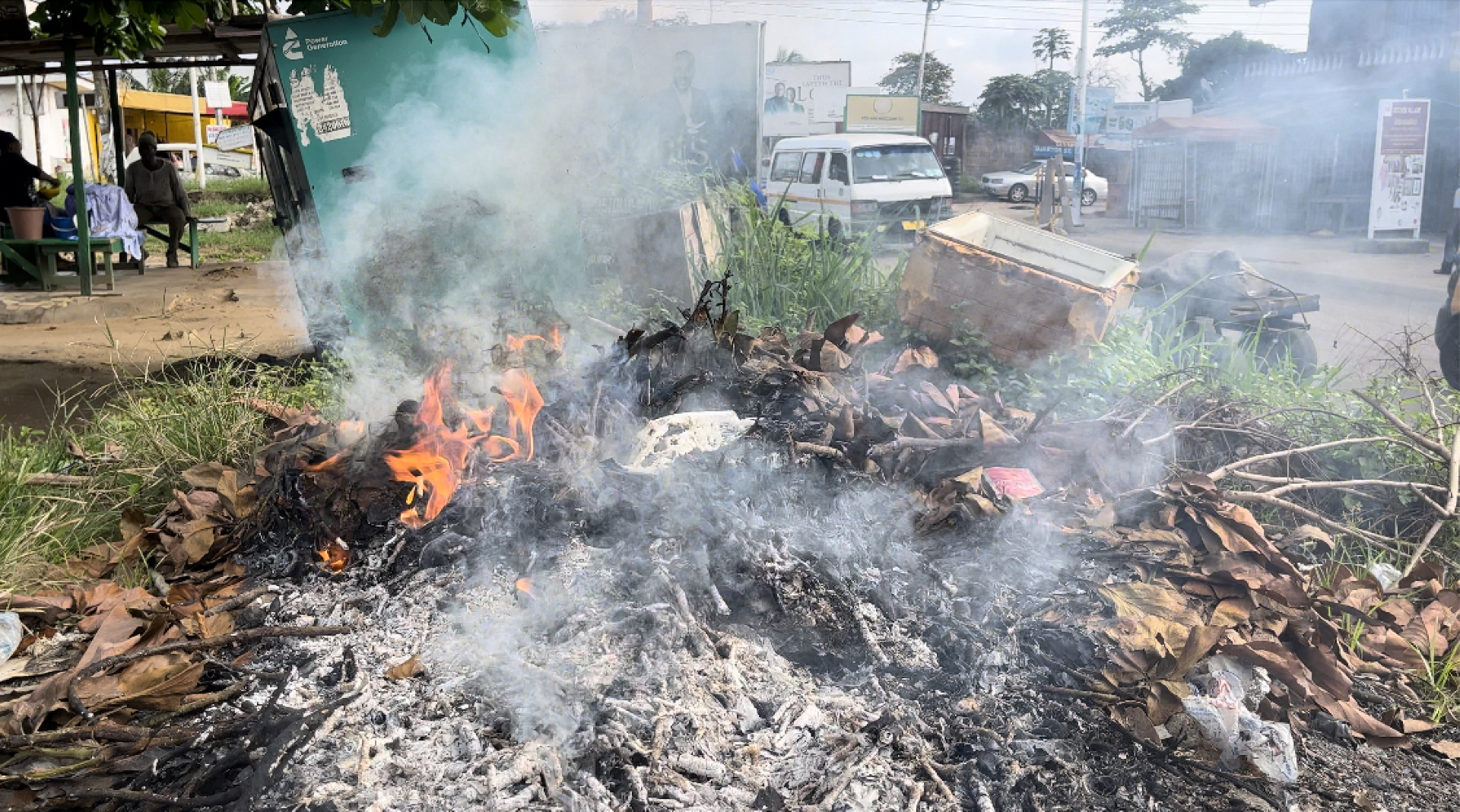
Ghana loses an estimated US$1.9 billion every year to ambient air pollution, a cost equivalent to about 2.3 per cent of the country’s Gross Domestic Product (GDP). More than 12,870 deaths and over 316,000 cases of disease are linked to the problem annually, according to a United Nations Development Programme (UNDP) investment case.
The figures put the scale of the crisis into perspective. But as the Greater Accra Regional Coordinating Council rolls out a new air quality by-law, the question is whether tougher rules and financial penalties can translate into cleaner air.
The Country Lead of the Clean Air Fund, Desmond Appiah, cited the economic cost during an interview on Citi Breakfast Show on Friday, November 27, arguing that air pollution deserves greater attention in the fight against non-communicable diseases.
“UNDP has done a work which we supported and established that Ghana loses about $1.9 billion a year to ambient air pollution,” he said, calling for some resources under the MahamaCare programme to be directed towards tackling the underlying causes of such diseases.
The UNDP investment case puts the human cost at more than 12,870 deaths in 2024, with about 64 per cent occurring before the age of 70. Stroke, lower respiratory infections and heart disease were among the leading causes.
The Scale of Accra’s Air Pollution Problem
One of the pollutants of concern is fine particulate matter known as PM2.5. These particles are small enough to penetrate deep into the lungs and can contribute to serious health problems.
At the launch of the new bye-law on November 26, Deputy Director at the Ministry of Local Government, Chieftaincy and Religious Affairs, Charlotte Akwaah-Adjei Marfo, cited a World Health Organisation (WHO) assessment which put Accra’s annual average PM2.5 concentration at nearly 50 micrograms per cubic metre.
“That is about ten times the WHO’s current annual guideline of five microgram per cubic meter,” she said.
She added that reducing the concentration to the WHO’s interim target could prevent nearly 1,800 premature deaths each year across the wider Greater Accra Region.
The sources of pollution are not limited to traffic. Research presented at a Clean Air Leadership Bootcamp in November found that waste burning accounts for about 35 per cent of Accra’s air pollution, compared with 18 per cent from traffic.
A separate study involving more than 1,400 vehicles across 25 assemblies in the Greater Accra Metropolitan Area found that most exceeded the recommended emissions standard. The findings point to problems with vehicle maintenance and the way emissions are tested.
These figures suggest that tackling air pollution will require action across waste management, transport, commercial activity and local environmental enforcement.
What the New Air Quality Bye-Law Requires
The Air Quality Control Bye-law 2025 was officially launched on November 26 for the Accra Metropolitan Assembly and 12 other municipal assemblies in Greater Accra.
The participating assemblies are Okaikwei North, La Nkwantanang-Madina, La Dade-Kotopon, Adentan, Korle Klottey, Ayawaso West, Ayawaso North, Ayawaso East, Ayawaso Central, Ablekuma North, Ablekuma Central and Ablekuma West.
The bye-law prohibits individuals and groups from causing air pollution within the assemblies’ jurisdictions. It also bans open burning.
Businesses involved in vehicle body works and spraying, carpentry and woodwork, metal works and welding, artisanal block-making and commercial food operations will be required to obtain permits from their respective assemblies and the Environmental Protection Authority.
They must also operate from locations approved by the assemblies and away from homes, schools, hospitals, water bodies and wetlands.
Those who violate the provisions risk fines ranging from GH¢1,200 to GH¢3,000, imprisonment of between 30 days and six months, or both.
The rules give local authorities a clearer basis for regulating activities that contribute to poor air quality. However, having penalties on paper is not the same as ensuring that offenders are identified and prosecuted.
Enforcement Will Determine Whether the Rules Work
That is the concern raised by the Clean Air Fund. Appiah has warned that the bye-law could have limited impact if the assemblies do not commit the resources required to enforce it.
His argument reflects a wider challenge in Ghana’s environmental regulation: national rules often depend on local authorities to make them work.
At a Clean Air Leadership Bootcamp earlier in November, Appiah said: “That is where the rubber hits the road. That is where the real action happens.”
He was referring to the role of assemblies in turning government commitments into practical action. He also warned that even well-designed national policies would struggle if local authorities lacked a clear understanding of the rules and the mechanisms to implement them.
The Environmental Protection Authority has made the funding requirement explicit. Its Head of Environmental Quality Unit, Selina Amoah, said: “We expect the assemblies to dedicate resources to implement actions identified in the plan and provide periodic reports.”
That means implementation will require more than announcing fines. Assemblies need trained environmental health officers, regular inspections, reliable air quality data and clear procedures for handling complaints and prosecuting persistent offenders.
The problem also extends beyond individual assembly boundaries. As Breathe Cities Executive Director Cecilia Vaca Jones noted at the launch, air pollution does not respect municipal borders. Smoke and other pollutants can move from one area into another, making coordination and reliable monitoring important.
Residents Need Alternatives, Not Just Penalties
The new rules also raise a practical question about how residents and businesses will comply.
Open burning, for example, cannot be discouraged through punishment alone if households and communities lack reliable waste collection and disposal services.
Marfo acknowledged this at the launch, saying that efforts to stop open waste burning must be accompanied by effective service delivery. She also urged the assemblies to explain the bye-law in plain language and give residents channels through which they can report concerns.
The same principle applies to businesses. Operators need clear information about permit requirements, approved locations and the steps they must take to comply. Enforcement should be consistent, rather than leaving businesses uncertain about what is expected of them.
There are already examples of local action. The Municipal Chief Executive for Ga Central, Emmanuel Allotey, said his assembly educates residents about the dangers of burning waste before taking persistent offenders to court.
“For those who are not listening, we take them to court for sanction when they burn their waste,” he said.
That approach shows how public education and enforcement can work together, although it will need sustained resources and wider adoption to make a meaningful difference.
The Measure of Success Must Be Cleaner Air
The launch of the bye-law is an important step, but its success should not be judged by the number of fines announced or the severity of the punishment.
Residents need to know whether inspections are taking place, whether offending businesses are being brought into compliance, whether open burning is declining and whether air quality is improving.
The assemblies should also publish regular information on enforcement, including violations recorded, prosecutions, resources committed and progress against their air quality management plans. Such reporting would allow the public to assess whether the regulation is producing results.
Ghana already has evidence of the human and economic cost of air pollution. The challenge now is to turn that evidence into sustained action.
The new by-law gives 13 Greater Accra assemblies a framework to act. Whether it makes a difference will depend on what happens after the launch: the resources committed, the consistency of enforcement and the willingness of local authorities to address the everyday sources of pollution.
For residents who breathe the air every day, the real outcome is not a tougher fine. It is cleaner air and fewer lives put at risk.

